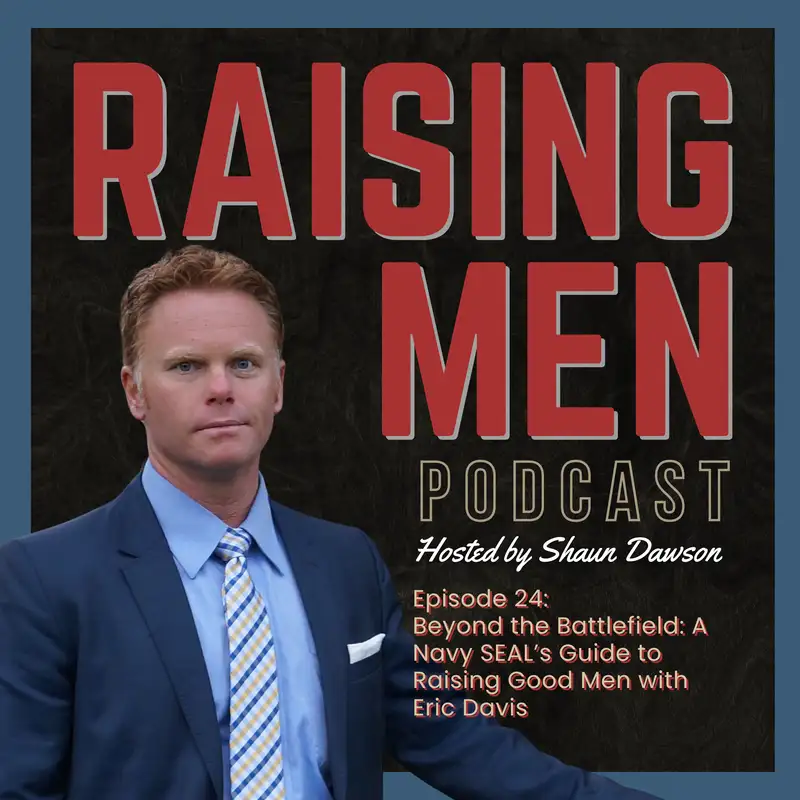
Beyond the Battlefield: A Navy SEAL’s Guide to Raising Good Men with Eric Davis
think about our country
so if you look at our country like okay
well what if that's what families were up to
what if a family had a mother and a father
that was using their passion to fulfill their purposes
and then
they were able to articulate all of the language
and all of the frameworks that they used to do it
to their children
so that they can raise their children
see who's you know what I'm talking about
like that is a very powerful country
that supersedes warfare and any
everything like that as far as I'm concerned
because that is the core of human existence
and that's what makes this country strong
it feels like that is what has made the country strong
the way and it feels like maybe that's a skill that is
that is slipping through our fingers now
and we need to get it back
welcome back to the Raising Men podcast
Today's episode is a special one for me
not just because of our guest
but because
his work is part of the very foundation of this show
Eric Davis is a decorated US Navy seal
a master sniper instructor
and the best selling author of Raising Men
Lessons Navy Seals Learned from their training
and taught to their sons
long before this podcast existed
his book helped shape many of the principles
we talk about on the show resilience
clarity purpose
discipline and the unshakable role fathers play
in developing strong
and emotionally grounded young men
this conversation gets to the core
of why this podcast exists
so let's get on to it Eric welcome to Raising Men
ah thank you
glad to be here well
let's dive right into it you know
the reason that this podcast exists is because
I believe that there's a masculinity crisis
and um
you I think
came from the same place
when you started writing your book of the
same name
and now you've got three daughters and one son
but you decided to focus on raising men
as opposed to just raising kids why did you do that
oh so
that would have to come from
what happened to myself and my father
so when I was about 15 or 16 years old
this story is in the book
Raising Men as a matter of fact
but I'd come downstairs in our house
where we lived in Foster City
it's up in the Bay Area and around the corner
and my parents were waiting there for me
and how the story goes is my dad goes hey
I'm sick and I have to go to the hospital to get better
and what had happened was he was suffering from like
some pretty severe mental illness
I think they called it at the time clinical depression
so there was some chemistry that was off
uh and then he went into a series of treatments
of electric shop shop therapy at Stanford
and this was back you know
in the 80s so it wasn't super uh
kind yeah
it wasn't that wasn't coming
it was yeah
not at all so for all intents and purposes
I lost my father and my father was everything to me
I was my father was the bishop of our church
he was the captain of our sheriff's department
all I ever was gonna do was following his footsteps
and when he got sick
I at that age
how I how I describe it is
I was too young to be without a father
but I was just old
enough to know that I still needed one
yeah and that sent me on a search
and then I had an older brother
who ended up being an addict
I had a former father in law that was killed
prematurely and um
just as you go through life
you know there's a male and a female role
when it comes to raising a kid
and I started to feel the impacts of having
lost that masculine role uh
in my life really
we're right at one of the most important times
you know 15
16 that's when a father
typically
is gonna drop the hammer with some of your behavior
right so that's how
that's how it all started
wow that's fascinating
now how
you know would you agree with me that that
that there's kind of a masculinity crisis going on
well uh yeah
it it is for this reason
that I cannot go on social media
without a very tight algorithm
like I have to I gotta make sure it's very careful
not notched down to a fun thing really
really curate your feed with that yeah
you really have to curate your feed
otherwise you'll be driven mad
oh yeah
it it'll freak you out
but yeah there definitely is um
there's a big problem with masculinity
and the problem is
is everybody's operating from an antiquated system
so
it's what I would describe as traditional masculinity
and here's the problem the biggest problem
it is a one size fits all kind of a deal
so we have all these young men
these boys on social media
the messages that are getting fed to them
are all over the place
and the masculine role models are
the more masculine channels
they're still operating with the old school stuff
you know it's grow a beard
hop in a chill you know
what is it called an ice bath
it's it's gun
gun gun
it's like this physical this physical uh
presentation of man
which is a totally legitimate form of masculinity
back in a time where our primary role was protect hunt
fight you know
things like that and not that
we don't still need that type of masculinity
but now the world has changed
it's more competitive it's more dynamic
and it requires a lot of creativity
it requires a lot of ability to sit down and design
so now we have young men
who might find themselves in front of a computer
or a video game
and there's some negative things that can happen
from that but there's some
also very positive things that can happen from that
they understand how to focus
they know how to get into flow
they can continuously create hour after hour
so now these kind of kids and probably a five
you know probably a couple hundred
other variations that don't fit that normal
traditional masculinity
they're left with no nothing to hold on to right
if all they got is a bearded dude
jacking a bunch of weights
and jumping in a cold bathtub
they're like well wait
where do I go where's my masculine role model
and I think that's a big reason
a lot of these poor guys are left
really questioning themselves
in a way
that leaves them vulnerable to what's suggested
on social media
so it's a failed it's a failed um
model not because it was broken
but because the environment has changed
and if you think about this
this was something I Learned or yeah
Learned not too long ago somebody
was describing women as the ones who get to choose
who procreates
and it like blew my mind um
because I know
women will talk about not being empowered and
and things like that but for me
I've always had tremendous amount of respect for women
they've always been very powerful to me
but I lost my father so my mother was everything to me
yeah
so my point there is if women are choosing who they
lack of a better term breed with well
now we're gonna start getting different breeds
of young men
they're going to be breeding with the creatives
they're gonna be breeding with
some of them who might be more sensitive
and they need something to hold on to
and that's what everything
the second book
is the framework
for what I would consider modern masculinity
and everything I teach online
all of my courses
everything I do is geared towards that
so how do you define a modern healthy masculinity
so I'll speak it in well no
here's how I would define it
the reason why I paused right there is
I also believe this sentence would apply to femininity
like feminine side sure
except for well
you'll see why
so here's what I believe the role of a father is
the role of a man I believe
the role of a father
is to learn how to use his passions
to harmoniously fulfill and care for his personal
financial and professional purposes
so if you break that sentence down
and I'll do it real quick and we dig in if you want
when I say use passion sometimes that's referred to
if you're in the spiritual world
they're gonna say it's your gifts
some people will call it the talents
but when I talk about passions
which we can unpack but what I'm talking about is
if you're inside of your passion
you are living your authentic self
so now this is important
so now matter what the young man or even a young group
lady whatever they got going on
if they're using passion as a guide
then they know
they're operating inside of their authentic self
now here's the other part
because we're in a competitive environment
passion isn't something
you get to do after you're already wealthy
after you've already made it because it's competitive
we need to be operating in passion
because it's the only way we can produce the incomes
which are quite large nowadays
that we require to survive now
in the 30+ years of old age
when we can no longer work
so when I take passion into the fulfillment of purposes
the whole how do we say it
everything is now covered personal financial
professional purposes and I say Harmon
harmoniously care for those things
and that's the other side of traditional masculinity
what the male job used to be was sacrifice everything
come home drink a beer
ignore little Johnny and that was it
and now we see a bunch of father figures
not able to compete
so now they're living this lackluster life
and then their sons and their daughters
but then their sons can't look at them as the example
it's called tertiary competitors
now we have online
we have people online who are polished
and they've already been through the algorithm
so the things they get to see is
already passed the test of being interesting
and engaging yeah
so now they're now they end up following
kind of like a false prophet there
so that would be my definition of modern masculinity
using our passions
to harmoniously care for all of our purposes
and if you take that sentence
you can't go wrong
I love that formulation I absolutely love it
and it and it
it it
it marries up masculinity and femininity in a way that
I haven't really seen that done before it
it it
because that that does apply regardless of gender
but it respects the differences in um
in the individuals right
and I just absolutely love that formulation
it's very very powerful
thank you for sharing it yeah
no absolutely
and it does it doesn't only respects the
the specific kind of human that person is
it requires it so pulls them forward from all the muck
all of the muck that they're getting surrounded
if you give a young man
then they start to lock onto a purpose
purpose is powerful
purpose is what allows you to say no to things
it clears everything up because you're like no
that's my purpose this is where I'm going
and then when we add the passion thing
it's like OK
all of the muck will start to fall away
it takes a little bit of time
and for fathers it takes
you know probably a good year of study
this is no small you know
it's not like going into a martial arts studio
and getting your black belt
this is more like your GI suit
so it it takes some work
but the the
the important thing I think
or the powerful thing for fathers
and they don't realize this
it's one of those things that
it's like you put energy into your passion
and your purpose well
you start increasing your deployable
levels of time and energy
because it makes you more competitive
um and again
that's important because now they're available
now they're living a good and healthy life
to show their son
so yes it does respect who the individual is
but also requires it too
you know in your
in your book Raising Men
you talk about the lessons that
that seals pass on to to their sons or or
or you talk about the lessons that you got
from your seal training
that you are attempting to pass on to your son
what are some of the top two or three lessons that
every father can apply
whether or not they have a military background
I'm I'm sure that not everybody needs to tie their uh
their son's hands and feet
and throw them into the deep end of a pool
no
not at all but I'll start with that
um so I've had some
some comments or feedback
about some of the things they talk about in the book
uh my favorite story is my son was sharing there
there's a story about him not doing his homework
and his skateboard got smashed against a rock
he got
he got with his PlayStation in the pool during winter
and California is not super cold
but it was a cold and he had to go in and get it
there's and one of his friends was like uh
I think that's abuse yeah
I remember those stories I think they're
they're delightful stories
yeah but
but here's what I just jumped
the dog pile on that we were talking about
the time that the thing
the kids it
there's a whole bunch of behavior science I
I I had a Belgian Malinois
I trained her to be a Protection dog um
it was from Mike Ruddlin's pipeline
um and I Learned so much there
so I think
one of the most important things a parent can do is
understand behavior science and
and I do talk it's like tongue in cheek when I say
raise your kid like a dog um
but if you've ever been around dog trainers
they're crazy I mean
they have spreadsheets that measure their
that will assess the level of joy that their treat
right that their reward
I'm like good Lord that you guys are nutty
but I appreciate it because now I can learn from you
so you know
tying their feet things like that
what's important to understand is that
that was all within their limits right
I was their coach I was their trainer
I was their father
I know how far I can go before they get scared
I know you're or scared
being scared is OK
and because you can build courage with some fear
but I know if I go too far that
that fear will stick right
we'll lose the opportunity to produce courage
and will produce trauma um
so from a context of behavior science
and really understanding your kid
and the way you really understand them
for me
is to be outdoors and doing a lot of kind of adventure
athlete stuff nothing as extreme as people think
it's just like for instance
I was just with my grandkids
and I threw a climbing rope over a tree
put him in I had to tie the harness
I think they called a ranger seat and I chucked him
you know he's swinging from the tree
but you know
people like oh
you know dangling your grandkid
or your son from a tree and tossing him
that's extreme but you know what
really it's not it's more safe than a swing
it's just cooler that you know what I mean
it's much cooler yeah
and you get to see how they react
I love that yeah
I uh
you know it seems to me that
that much of seal training
and a lot of what you talk about in Raising Men is
it revolves around developing resilience
and so first of all would you agree with that
and second of all
how do you develop resilience in training
and how did that
how does that translate into your parenting style
so when we're talking about resilience
um we also have to talk about perseverance
at the same time and here's what I mean
so when we're persevering
that's basically sustained effort right
despite difficulty or failure
persevering by its nature
means
we're going to get tired and a little bit beat up
so we gotta start there
because then when we go to resilience
well what is resilience
resilience is the ability
either maintain
and or restore your capacity to take action
so perseverance could be us getting after something and
right and we get worn out and tired
and then resilience is to be able to recover from that
and come back the next day
as strong or stronger yeah
so if you just take that definition and break it down
and I would encourage this for all parents as well
like all of these words we kind of throw around and use
look it up chat
GPT it however
you do start to really understand these words
and pull them apart so how do we form resilience
well we have to understand
that we're trying to maintain our capacity
or recover so like in seal training
you start to learn things like you run
they run you in soft sand a lot
I don't know if you've ever ran in soft sand
I have I used to play beach volleyball
so did a lot of running in soft sand
it's about three times as difficult as running normally
oh yeah for sure
and then
if you become aware that you're running it soft sand
rather than the hard pack
then it gets five times and you're like wait
look into it the more you pay attention to it
the harder it gets right
yeah so maintaining
so there's little things a lot of
there's something called you're not cheating
you're not trying
and there's all kinds of context for that
in seal training but like
these are things like when I would run in soft sand
I would look for maybe a tire track
or I would look for where somebody else
foot ahead of me already struck right
because I'm resilient
but part of resilience is maintaining my ability to act
going out on the boats they put us in these IBS
inflatable boats small
that's how the Navy names some things
sometimes out in waves right
and guys got paddles and they're not necessarily
they didn't necessarily grow up as surfing
so resilience might mean maintaining
not getting the paddle wrapped around your head
by bailing
before guys start flailing with their paddles
whatever it is
there's obstacle courses where the logs roll right
again resilience is not getting hurt
not falling off with things
so maintenance is a big piece of resilience
and resilience is a skill
it's not some trait it's not something we're born with
yeah now
here's the most interesting thing about resilience
I think when you're talking about seal training
I was a corpsman in the Navy
which means I was their medic
I was a corpsman in Marine reconnaissance
that is their special operations
now I believe they're
that's all connected to Special Forces as well
so I had a lot of experience um
and the instructors knew that
so I was seeing and treating guys in my buds class
which is seal
basic seal training and um fully treating uh
like I said ton of experience
and one of the most interesting things I noticed was uh
secret kind of crafty
how about this uh
maybe the word would be clandestine
um okay covert
covert covert way they would quit
and how they would quit is they would not recover
meaning they wouldn't take the motrin
they wouldn't do the the physical therapy
they wouldn't do the the uh contrast baths
the massage the ice rubs like you name it
they wouldn't do it and at the time it blew me away
and then I really it was not really
until I got into the world of business
and entrepreneurship
that I started to see other people do it
in different ways um
and what that means is
they're gonna run themselves into the ground
um so that they don't have to continue
because in seal training
they're very careful not to run you into the ground
because once you run a human body into the ground
they can't keep going so they want to keep you going
so resilience has a whole lot to
it's a skill set and you're maintaining your capacity
and you're making sure that you recover
you you've got this great scene in the book
where you talk about
the mental aspect of resilience there
and you you describe a situation where I
and this is my recollection
it's been a little while since I read this passage
but um
it was early in the morning and it was cold
and you were looking out at the sea and you were
you knew that you were about to have to go
for a long swim
and because you had been a surfer and because you
you were you were jazzed up about it
you were looking forward to it almost
I mean it was gonna be unpleasant physically
but you were you
your mental state was one of excitement
and your compadre next to you
ended up getting so much anxiety
looking at that and feeling like
anticipating the the horribleness of it
that he ended up tapping out right then and there
he couldn't he couldn't take it
and he decided to quit before it even got
before they even got in the water and
and that's that
that's an example of
of what you're talking about for me
and it's a beautiful scene in that book
I thought
yeah I
it's it's my um
I'm probably most known for that kind of thinking
um and again
if we're talking about resilience
there's you know
80 guys on the beach
who are having to deal with the mental trauma
of getting back in the cold water
there was two of us
myself and a gentleman named Chris Campbell um
he passed away in Team 6 amazing guy
there's two of us that would kind of joke
you know make fun of the other guys
um
and that's a great example of maintaining our capacity
that's part of resilience
during third phase
we were out in the island the entire time
we're out there for a month
the entire time I would we get up early and that's jeez
you go through Hell Week everything like that
you think it's the Pinnacle
then you realize like nope
Hell Week was just to get you used to
what's about to happen to you
for the next four months right
and then wow the island
is a 30 day culmination of that kind of thing
so it's rough but every morning I was like
hey guys I thought
I think this instructors were drinking last night
I think we're good we're not even gonna PT this morning
so don't even sweat it
and there's a guys that would get on board with me
and again we're being resilient
cause we're not dealing with any of that trauma
that's about to ensue that's about to occur
I I don't know what to say
and I I don't
I is it a Mark Twain thing
but like half the worries are
most of our worries
are things that are never gonna happen um
so just take it protects your brain
and it's part of that maintaining your capacity
yeah I heard a quote one time
and I love the way that they put it and
and I I wish I knew what the source was
but it is uh
don't borrow suffering from the future
yeah amen
yeah yeah
yeah I amen
I noticed in the in the book
you use a lot of outdoor challenges
and extreme environments you know
we we joked about tying your
your kids up and throwing them in the water but
and you use those as metaphors for life
uh how can ordinary parents
integrate those lessons into their daily life
so
first we have to have intention
another way we can describe intention is
a purpose for what we're doing
um I've heard you refer to this as a clear end state
yeah yes
my my good friend
Larry Yatch described it as a clear end state
like what is it we're trying to produce
so like with kids for instance
um we might be thinking about things like confidence
courage um
respect like those are three things
so first thing with parents is
like I said before you know
words are powerful look them up
hold your own disposition
so you can describe it to your kid over
and over and over again
for 20+ years before they're like
oh geez dad
that was a I don't know
then they tell you what it is
I'm like dude
I yeah
I told you that 10 years ago
but first you have to have intention
and the intention needs to also include yourself
so um
you know people with parenting be like
it's not about you it's about the kids
I'm like uh
uh it's about all of us right
so for me I'm an outdoor guy
I like outdoor adventure
I like those kind of activities
so I'm going to use those as tools to produce courage
respect responsibility
whatever it is now
I will say this about it
being the only dad doing some things
like that also helps because if we look at
look at the marketplace that we business right
value importance
utility and worth
but one of the key components of value
besides that is scarcity so
I inherently like the outdoors
and doing these adventurous things
but
there's all kinds of things that could be adventurous
and aspirational and inspiring to your kids
so have an intention
and one of those intentions is to show up
to produce identity with your kids as the father
because when we have identity
people listen and people follow us
yeah I
I I love that you kind of have two clear instates there
right you have your own um
you have a clear you have your own
clear state of what your parenting mission is
and what your unique value proposition
if you want to use business speak to it is and all that
but then you have
you're teaching your boys how to define
clear and states for themselves also
and that's ultimately I mean
ultimately what's your job
what what's your job as
as as a parent
your job is to make sure that your boy has the skills
and capability and mental resilience to thrive
and that's it and so what
you know what else is there other than okay
well have a clear instate
and then fight like hell to make it happen
yep and then you center everything on that
like we talked about the beginning
when I was talking about traditional
masculinity versus modern
that's the end state
learn how to use your passions to fulfill harmoniously
care for all of your purposes
same thing now
that conversation as you as you right
that drives everything else
well okay
we do need perseverance we do need um resilience
we do need courage we need respect
we need responsibility
I like all of these things start to
they all not only do they all start to show up
because they're required
but they all start to take on meaning also
and that's another thing now
if you think about a human
when I say use your passion
that means be your authentic self
when I say hormones to fulfill your purposes
that means living a good life right
cause when you don't care for your personal financial
professional purposes you've got breakdowns
now the reason I bring that up again is one
I'll repeat that left and right
because it is what I want to stay focused on
for everything I do
but the other reasons it's important too
is think about a human
that's going to trigger their survival mechanism
it that might not be the first time
but if it's like well
that guy is out there
using his passion to care for all of his purposes
that's how you survive
cause we're autopoietic means we self select survival
and it's another part of pulling them in
is another part of attracting your children
and other people into your leadership
to your authority to whatever it is you're doing
and I don't mean authority
like I'm going to control anyone
I mean authority like hey
this is what's allowed this is what's forbidden
if you want to use your passion to fulfill your purpose
how do you think about rights of passage
you know what role do rights of passage play
in turning boys into men and how can we
it feels like
that's one of the institutions that is crumbling
how do we recreate those in today's culture
yeah um
how I started to address that was something called
seal pups uh
and I wish I had done more of it even
and I wish I was still doing it
although now the grandkids I think another lap
but right's a passage let's talk about a tribe
so my definition of a brotherhood
if I'm talking to men or a tribe
if I'm just keeping it general
is a group of two or more people
that protect automate
and accelerate
the current and future situation of each member
now that's a lot of word but when I say
when I say situation
I mean using your passion to fulfill your purposes
that's a try these are people that protect
accelerate and make it possible
yeah so now write the passage
like we're typically looking at warriors
and I've seen some attempts
I think of filling in the blanks there uh
are you know
doing it outside of a combat unit or any
any unit that is facing life or death circumstances
and I from what little I've seen of it they
they miss the Mark uh
because an important part to a write a passage
I believe is that it's a high stakes game
that is a matter of life or death
um and what you're doing is very serious
very serious and I don't think that many fathers
or men
take themselves that seriously in their own life
and I don't think they take themselves that seriously
in the lives of others either
so when we're talking rights of passage
we're talking bringing up our young men
um and there's a female version of that too
but bringing up our young men to be um
how would I say it
like a Jordan Peterson would describe it
being dangerous being powerful in their minds right to
to be capable to be able to uh
care for people to care for others
to be very important
and I think it's incredibly
important for a young man to transition through that
so that they do take themselves extremely serious
and seriously in their lives
in the lives of others
yeah I I
I like that formulation and
I mean one of the
one of the things that I'm um
that I'm loving so much about this conversation
is how precise you are and you
you spoke in the very beginning
about the importance of language
and the importance of understanding
the definitions of things
and then you're so clear and so precise about
what do I mean by
uh what do I mean by tribe
what do I mean by brotherhood
what do I mean by by uh uh
by masculinity and you're very clear and you're very uh
you're very precise about it
and it's a definition that
that OK
now we can work now now we know what the thing is
we're not just waving our hands at it
but we're we're
we're moving forward and I love that
it is such a powerful
it's such a powerful reflex
and I think it's worth putting a pin in that and and
and saying that that is a really important thing
yeah I appreciate that
and that would be also
an example of how seriously I take it now
it's not like I'm running around like
you know like getting after my kids
like I'm a very laid I mean
I grew up a surfer skater
I'm very laid back but it's like make no mistake
if you watch me do something
I'm doing something for a very specific purpose um
with intention even if I'm just taking a nap
it's what you know
I mean there's a purpose going on there
because it's tied to the it's tied to my purposes
and that stuff is life or death
it really it
if you don't get those things handled
then it really is you suffer
cause other people to suffer and die early
it is it is a big deal and it's a big
not only a big deal for the individual
think about our country
so if you look at our country like okay
well what if that's what families were up to
what if a family had a mother and a father
that was using their passion to fulfill their purposes
and then
they were able to articulate all of the language
and all of the frameworks that they used to do it
to their children
so that they can raise their children
so you know what I'm talking about
like that is a very powerful country
that is
that is to me that like that supersedes warfare and any
everything like that as far as I'm concerned
because that is the core of human existence
and that's what makes this country strong yeah
it it
it feels like that is what has made the country strong
the way and it feels like maybe that's a skill that is
that is slipping through our fingers now
and we need to get it back
it absolutely is
because guys are getting hammered in the marketplace
yeah it's more competitive
it's more dynamic they're using old school strategies
that were built
during this fourth industrial revolution
where the whole idea was to work hard
work hard work hard
right in the factory 12 hours hustle
hustle hustle
and that culture is not going to cut it anymore and
and that and
it is why we have to have a strategy
that is designed for the current environment we are in
because mothers and fathers don't have the time
they don't have the energy
they're cooked just trying to pay the bills don't
not even to mention the 30+ years of old age
when they're not gonna be able to work
so it's a very
very important that's a really
it's a really challenging thing
to identify
and maintain your purpose in everything you do
I've been thinking about that
and trying to figure out to what extent that I
that that I apply that in my own life and
and or have
or have not and I'm realizing that I'm
I'm feeling
I'm feeling resistance to it
and the resistance is
it makes me feel like I don't ever get to have any fun
then right
I always have to be
I always have to be working towards something
but that's not the way it
works it like I
having fun is can can be done with purpose as well
right
yeah so it's always interesting
and I probably
have to figure out a way to say it better
at the beginning'cause I'm always
surprised when somebody doesn't ask me
how do I figure out my purposes
like it's an interesting phenomenon
but the word purpose and passion I mean
you mentioned my language and precision hey
Ford don't think those words
I haven't figured those ones out
so let's talk about that real quick
what is purpose
purpose is to know the 50+ parts of your professional
financial
and personal life that you were created to care for
that's what a purpose is
and to understand what the positive impacts
of that thing being cared for
look like and what the negative
impacts of that thing not being cared for
look like that way we know if we're on par
right and then we need to design
or find the strategy to fulfill those purposes
now here's what people don't understand
if I were to tell you like okay
I hear what are the 50 things
there's about 20+ professional
there's about six or so financial
kind of depending on how you put it
and there's about a dozen personal
and what happens is our professional side takes up
what we do is we start like men
we start with our professional side our career first
and then what happens is we try to
stuff our personal side into whatever time energy
creativity
and currency that thing left over and it falls short
yeah so when I talk about purpose I
it's not the I get it right
remember what I said even when I'm taking a nap
yeah right
all that is is me
putting habits in place
that make sure I'm performing at my highest
but inside of our personal purpose
that's things like personal
I mean excuse me spirituality
that's friendship yes
finances brotherhood or sisterhood
fun and adventure career
right how we work membership
helping others like these are all good things
so I don't how do I say this
like how you establish your purpose is you I
we I teach people using a mind map
and they map those things out
and what they're doing is the
what I call a linguistic filter
what they're doing is becoming aware like oh
I have a purpose
where I'm supposed to have fun and adventure
because it makes me more creative
it puts me into flow it relaxes me
it allows me to be resilient right
like these things are important
so okay
well I can't just white knuckle my way into
to adventure and fun right
so when we define those things
it's just like this um
when I would be overseas um
and somebody get upset with me
like why
are you always worried about somebody
potentially attacking us I'm like
I'm not worried about it
I was just trained at nauseam to identify these things
so I'm just going around
these things are showing up for me
no different than a photographer
walking through a forest and noticing the lighting
and the mist you know what I mean
all the things that they would notice
so all purposes is identifying these things
and basically memorizing them
and there's only a dozen and it
and then what happens
all of our time and energy starts to align
with those things
and when you have those things cared for
we build powers it's not this what people get
it maybe cause I'm intense or so precise
but I'm precise because if I align people's actions
right and efforts with that
their life's gonna get real real good yeah
and I I think it's not even like you have to you're
you're you're creating this they already exist
you're just identifying them
your purpose is already there
you're out there living it
but what you're
what you're not doing is living it purposefully
and you're not having conscious awareness of
that's what your purpose is
and so you're kind of fuzzy about it
you're to to to use another term uh
that that you bring up in your world
you're chasing the ball right
you're you're you're you you
you don't know where the ball is
and so you're just kind of like shooting around it
and but by going through this exercise
and by identifying those things
then you can have conscious awareness of them
and you can realize ah yeah
that's why I'm taking a nap right now
or that's why I'm deciding to play video games
or that's why I'm
deciding to buckle down and work till 2 in the morning
today
yep yeah
yeah and now everything has meaning
we're no longer distracted right
like
all of your time and energy is 100% invested all day
every day right
it's always doing something
might be sitting on a dresser
your money or whatever it is
but like we'll always point it out
the things that if we get right
make our lives really good
and if we prevent them from breaking down
how's our life not hurt right
that that's all I'm talking about here
and it's just not that part of the drill um
but it's but it's not
it's not doing nothing okay
like how many people
how many people out there want to build a harmoniously
care for all parts of their life
so that they can live a good and dignified life
or how many people want their passions to do it
everybody everybody right
anyone in yeah
anyone in the right mind like
okay do it
and then people like you said
you're like oh
I'm like resistant to it that sounds like hard
like I'm locked in all the time
no you're not
I work like four hours a day
I run workout like two hours a day
I go to the wind tunnel
I surf I climb like it's not but why
because I paid attention to my purposes
and I just put my energy into caring for them
and then I got and I realized like oh
if I'm working much more than four or five hours a day
on my professional side
I'm not gonna be able to care for my personal side
and with that realization
guess what
I designed my business to care for my personal side
so it's just a shift in mindset really yeah
that is such a and
and you end up wasting so much less time
because everything
you're always rowing in the direction of the end goal
yeah and yes
here's the thing too those those purposes
they are either going to create
or destroy your ability to live a good life
they're gonna they don't just sit still either
they're out there operating anyway
so yeah I'm merely suggesting
since they're already out there in play
why don't we just identify them you know
get the language in our brain so we can notice them
and then move in a way that aligns them
and have them work together very well
it's it's not it's like I don't know how to describe
it's less effort than a semester of college
but it's not that much you know what I mean
but it's not but it's not a little it's you know
we are talking about mastering life yeah
um but yeah so I could very
you could see as my students
I'm like why didn't you finish this assignment
you don't know what you're missing
it's like right
it's everything what are you afraid of
yeah now
I like to finish up these conversations
by putting people on the spot with the
with the same question
give me one good operating principle
that you think every parent listening
should know about raising sons with excellence
um tell me what
when you say operating principle
tell me what you mean by that yeah
just like what is uh
you know uh
what is a good um
a good rule of thumb to live by or
or um
you you know
just something to keep in mind as uh
as you're trying to define or decide
what kind of parent you wanna be
or what kind of uh
or what kind of interaction you wanna have with your
with your boy
gotcha so if we're gonna have one
it's gonna
it'll sound cliche if you don't know what to do with it
but if you're gonna have one
it's leading from the front
here's what I mean by that
cause I don't want it to become a cliche
my grandfather was in the FBI
my father was a sheriff he was a bishop
a spiritual man all these things
they both weren't you know
they both checked out early right
my life still continued based off of what I observed
as a very young child right
they LED from the front so if we're gonna do anything
uh we need to be somebody that they would aspire to be
as well or at least not exact right
that's why we have the whole passion thing go no
no my purposes are gonna be a little different
my passions how I purposes what we're to get done
passions are how we do it
they can have that variation
but it's like live a good life
live the there is live a good life
um that's the operating principle
because if you're living a good life
they'll be able to follow that eventually
I mean doesn't happen right away
sometimes they have to go get hammered
made in the marketplace first yeah
that's it leave from the front
I mean that
I don't mean be the first one across the finish line
anything like that I mean
live a good intentional life so that they can see that
I think that is a really
really powerful sentiment Eric
thank you so much for spending the time with me
and sharing your wisdom
and thank you all for listening
you can find more of Eric Davis's work including his uh
his books including Raising Men
and his training programs and community at Eric Davis
two one
five dot com
and on Instagram at Eric underscore Davis 2 1 5 Eric
thanks again and
and thanks for being part of Raising Men yeah
thank you thanks
and all of you remember you are a great parent
raising men is produced by Phil Hernandez
this episode was edited by Ralph Tolentino