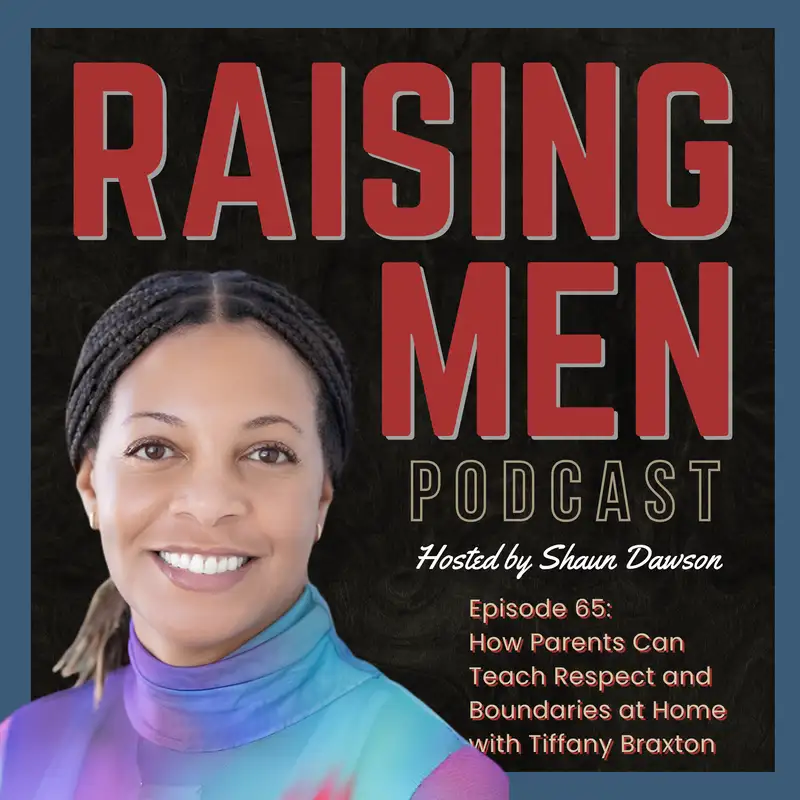
How Parents Can Teach Respect and Boundaries at Home with Tiffany Braxton
there's so many ways that we're trying to say no
without saying you know
the actual word no um
and I think when we realize that as human beings we
we realize that if if anything
you know you want someone's
what I call empowered yes
more than you want anything else
it's like do you really want to do this
are you sure you're okay with doing this
you know
there's those checking in where you could make sure
like
I have someone who fully wants to be in this with me
rather than someone who I've just
I'm okay kind of overlooking all the other
you know signals that say this
welcome back to raising men
now one of the superpowers that we need to instill
in our boys even our girls
especially our girls maybe
is the idea of establishing and respecting boundaries
so joining us today is Tiffany Braxton
she's an author an activist and an educator
and as a mother of four children and a survivor herself
Tiffany has dedicated her work to transforming heavy
often intimidating conversations into approachable
life changing tools
her debut book Consent Comics utilizes vivid
layered storytelling to teach youth
parents and educators about personal power
honest communication and respect
Tiffany welcome to raising men
yeah thank you so much for having me
I'm I'm excited about our conversation
um really love this podcast and the focus
so I appreciate the invite
oh thank you so much
I you know
I think that a lot of uh
that like
a lot of concepts
that you'd think would be totally uncontroversial
the topic of consent
has gotten overloaded with a lot of baggage
in a way that I think is really unhelpful
what do you see as some of the problems we're facing
when trying to cultivate a respect for boundaries
in our boys and young men
yeah I mean
I think the first thing is
it is not at all approachable or welcoming um
to men and boys I mean
it's literally why in my book
you just get into a few pages
and I have a letter to the guys
yeah because
you know I didn't want to wait to say hey
you're welcome you know
this was an invitation to you as well
and not just to what consent teaching typically is
which is usually for more
so for women and girls
this is so much more than just that
and you know
I have to shout out the
the men in my life that I really love
that made it so that I couldn't
you know ignore
you know the half
quote unquote
half of the population um
in my approach to consent
you know um
I have a wonderful father who raised me to be
you know a young woman who used her voice and was
you know was strong along the way and
you know I thank him for that
and you know
as a survivor coming back to my voice I
I went straight to him you know
I went he was my biggest support um
you know I'm close to my mom
but that is that is my dad
and he's wonderful um
and then I also have a a son and
and 4 grandsons um
for my adopted daughters so I
you know I couldn't leave the men out
like I almost
it's like I wanna give you a really big consensual hug
you know and say like
come on come on
you know like you're
you're so welcome here and I want you I
I actually want you in the conversation
I think that I can't
we can't have a conversation without you
yeah I
I think one of the things that really hit me
right off the gate
uh right out of the gate when I was reading your book
mm hmm is that you
a lot of the conversation around this subject
has created
probably unconsciously or whatever
of this us versus them mentality
and that mentality is almost never the right framing
to approach something
especially something as sensitive and as important as
as consent
and you blow that out of the water from page 1 it
it was like oh
this is different yeah
and I really appreciated that yeah
if I mean
like I said it was
it was really important to me and
you know part of my approach
you know it's
it's comics you know
hence consent comics it's pretty self explanatory
but the biggest thing that I had to do
and I can you know
show it here is I had to figure out a character um
that I could have in these stories
where people weren't like
oh my gosh she's
she's showing these people like this and
you know this male is doing this
um because honestly
when I think about it a lot of times when I do see
you know a pictorial example of consent and it has
you know the male female dynamic it
it already kind of takes me out of it as well
even as a female because I'm
you know kind of identifying their features
how they are and I'm thinking like
how much that could realistically be me
and I think even more so for
you know
men to really be able to join this conversation
I had to make sure that the antagonist wasn't always
a male
and I think nine times out of 10 when you see things
it's it's most often a male
but the reality is you know
I think one that you know
assaults are very underrated under
you know just like they're
they're not as um
people aren't telling you as much because
you know with males you have like the um
this almost like this macho like OK
well I'm not gonna
you know I'm not gonna talk about this
or I'm not gonna report this um
and the reality is I think
you know that
there's a lot more assaults on males
than we want to even recognize
in a in a society
I know that even in my approach
um
I had a cousin who was telling me all kinds of stories
of you know
these women that have just completely
you know
like handled him in ways that were inappropriate
and he's not going you know
to a supervisor and saying hey
she just did this to me right
but you know
he has every right to and
and he you know
obviously appreciated this approach
because he felt like he could just tell me his stories
and that I would I would care
you know and I think that's ultimately
you know what my approach does
it shows like I I care about every human being
being treated the way that they should
I don't care if you're male or female
you know if you're gay or straight
if you're black or white like all of those things
I want each and every one of us to feel like we
have the space that is you know
safety around our bodies and
and ultimately our decisions
um regardless of who we are
yeah I
I think another one of the things
that is really harmful about the us versus them
dynamic that
that you so dexterously avoid is
is that it I mean it's
it's painting boys as the aggressors
or potential aggressors almost universally
and you know
how are you gonna
there you're only
you're gonna get two possible responses from that
No. 1 you're gonna browbeat the boy
who's reading this
into believing that he's a potential aggressor
which isn't by the way
that's not a great signal to send that person
no because the other thing he's gonna do is
he's gonna embrace
well I guess that's just who I am and
and I deserve to be who I am
and so I'm just gonna embrace the toxicity of it
and I think that we are seeing
I think that's really the way that
the issue has been framed over the last 10 years
yeah
and I think we're seeing the fruits of that right now
yeah and it's all yeah
I know I have to agree on that
you know I think as a mother to a son
I wanted to give my son something to grasp that said
look at this you know
like of course
you know in each of my stories
you'll see you know
a lines crossed version where someone's not respecting
a boundary at an apology version
where they realize kind of like oh
I'm starting to pressure someone and I need to
you know about face and really apologize
and then they see the version of like
this is how you're respectful
kind of from the beginning um
I wanted my son to know that
that was something he could aspire to
rather than this is who you are
and this is who you don't need to be
um and I think
and in our society unfortunately
we are we really are pushing boys to just
to have that mentality of like
just don't do it and I
I like to say like
even Nike gives us a just do it right
it's a positive affirmation
it's not some negative of like
don't be like this don't be like this
you know and that's what Consent Comics does
is I wanted to show people like
this is what you can be like
and this is what we can all strive to be like
and truly in some ways
you know depending on where you are
it's a journey and this is how you get there
now let me
so there's there's a whole other extreme that
that you can go to in the
in the
in the consent discussion
and you know I
I'm reminded of this uh
of this episode of a show called New Girl where
and she grew up in uh
in Oregon mm hmm
and uh
and so she and her boyfriend they
they they were flashing back to a high school scene
with her and her boyfriend and
and you could tell that they
both really wanted to engage in some physical behavior
but they had to go through this
ridiculous and labyrinthine
um consent ritual
which was just it was
it was intentionally ridiculous
but it's almost like and I mean
that's the other extreme that almost
that in order to
make sure that you're crossing all your t's
and dotting all your I's with respect to consent
you're destroying all the spontaneity of it
mm hmm
and I get the sense that you would disagree with that
perspective yeah
so tell me what your thoughts are about that and
and what a healthy vision of mutual consent looks like
mm hmm I think in any relationship or situation
there's kind of a there's a progression
right of where you start out
and kind of where you are currently
um you know my
my current partner you know there
there was definitely the asking first
over and over and over again
um I
but I think that any relationship there's
there's communication it's kind of like um
I mean if you take like
tea or coffee you know my
my partner no longer has to ask
if I want tea or coffee in the morning
it's it's usually I
I want some tea or coffee in the morning
right and so
but I know
that if I don't want tea and coffee in the morning
he's not gonna say oh my gosh
like I can't believe you
we always do tea and coffee in the morning
so like why are you changing things up on me
and so you know
we you know
we usually have like conversations
but it's you know
there still is very much you
in any relationship there's that spontaneity
but it's it's safe spontaneity
yeah it's safe in the sense that
you know no matter what's going on
no matter where we are in whatever situation
I know that my voice still carries weight
and so if I am saying like
hey I don't wanna do this
then it's a OK
moving on um
there's that safety in me saying no
whenever I want to say no
you know and I think that's something that
you know I
a married couple even like right you're
you're gonna
you're gonna grow into that kind of situation where um
as long as you've built that safety
you know there can be that spontaneity
but I know I can always turn around and say like no
I you know
I'm tired no
I'm not feeling well no
I'm not up for it this time
no I don't want you doing that
you know
and that's really what these comics show is like
that's the respecting of the no is kind of
it's the baseline
and then everything else is like built up
on top of that you know
and once you know
you have that safety of like
there's no consequences whatsoever to my no
then I think everything kind of builds from that
you know and then you don't have to um
you know you can even say I
I always tell people like
you can have a conversation where you say hey
I don't need you to ask me about this anymore
you know if I'm not feeling it
like I'll let you know that I'm not feeling it um
and that's the that's why I try to stay away from rules
you know because when you start putting rules in place
then you know
like people gets too nervous to really do anything
and that's where you get kind of an episode like that
where it's like oh can can
you know and you're so nervous where if we're really
if you're really caring about someone
you know you'll do that
that checking in of like is it okay
you know if I do this
and it's it's just natural
oh yeah
this is great let's keep going
you know um
and so I I really try to give room for
you know relationships and growth and there being
you know fluid moments within those um
but always knowing that like
you know the baseline is
I've made it very clear to you
and you've made it very clear to me
that if you wanna say no you're perfectly fine
if you wanna change your mind
it's perfectly fine all of that is completely good
um and that's
I think really what makes
you know a
a sexual relationship
or any relationship in any kind of way work
when you know that you have the freedom of choice
you know I
I
one of the founding kind of
reasons for this whole project
for me
was because I feel like we're in a masculinity crisis
mm hmm and the nature of that masculinity crisis
is that we're losing sight
our culture is losing sight
of a healthy vision of masculinity
and there's a bunch of reasons that that's happening
and we don't have to belabor them here but um
and and I think that a lot of people
struggle to even define healthy masculinity
uh huh
but one of the key definitions that I think is very
very important is
is someone who's exhibiting healthy masculinity
makes people feel safe right
and secure right
that's what a man does right
in the in the
in the healthy masculinity sense
and the metaphor that I like to use is
is that of a castle and
you know your success as
as a man as a
as a healthy masculine person
is defined by the kinds
and breadth of activities that can thrive
under your domain yeah
your castle is large and the walls secure those people
and the people inside your castle walls
feel like they can do what they
wanna do I love that yeah
that's what it means in in
in my view to be a healthy man
uh huh
and that requires not all the ability to set boundaries
you need to be able to build walls
in order to be a healthy man
mm hmm it also requires the ability to respect them
mm hmm yeah
and I mean nobody
nobody I know wants someone to feel unsafe
and yet yeah
we will often engage in activity that has that result
yeah
and so I I think one of the things that I really liked
um about your book
or that I really like about your book is
is that you you actually
I mean it's very geared towards consent in
as applied to sexuality it
you know consent takes a particular um
wait when it comes to sexuality
it does yeah
cause like
consent about here you know
eat this candy bar I don't want to no
no you have to try it right
like that's still a
that's still a kind of violation of the boundary
but it's not a problem the
the way that that
that that uh
that sexuality would be
but you also have you have all these stories
that make it clear that these are universal principles
it's not just applied to sexuality
it's also applied to hey
this kid you know this
this friend of mine made me eat a cake
yeah right
and it's and it's the
it's the same thing and it applies
it applies to everybody and anybody
can be a person who's crossing the boundary
and anybody
can be a person who's trying to enforce the boundary
in any
in in different situations
and that's that's something that I think is
completely absent from most
of the discussions around consent
it yeah
it feels like it feels like people are giving a recipe
whereas you're giving a philosophy yeah
yeah and and I mean
that's really I think it what we're humans right
you can't a one recipe doesn't fit everybody
and that's really what I didn't want to do was
I didn't want to make sure I was saying like
here now you have I'm forcing you to take this in
if anything I'm giving you a choice because
you know you're reading it
and stories allow for you to interpret it
and you know
I obviously I wrote it in a way where
you're not going to come away with like oh
I want to be someone who like
never ask anybody what they want to do or like
you know I
I don't wanna be you know
I don't I don't wanna be that person that
respects that boundary that looked
you know too wonderful
but I'm writing it in a way where
you can start seeing yourselves in these stories
you know and think about it and like you said
a a more broad way you know
of like how am I
you know how am I when I'm like
you know someone in general is telling me
you know they don't wanna do something that I
you know I wanna do
am I you know
am I accommodating am I like
or am I guilt tripping them
do I guilt trip them you know
when I I really want them to do something
that I want them to do you know
am I someone who holds holds
you know withhold some kind of information
to trick someone into doing something
you know for me
I think a lot of times even we as parents
you know uh
we have to be careful because I think
you know when
when our kids are toddlers and
you know we
we're at a restaurant
and we don't want them to scream and yell
we do a lot of like manipulation for
you know in order to get that to not happen right
um but as they grow older
you know that needs to um
we need to allow them to grow right
and so like
how much are we even manipulating our children
you know in terms of like OK
are we trying to control their feelings by
you know presenting something in a certain way
or should we allow them to like
actually have all of their feelings
you know and
and um
and guide them through it
so I think there's like
there's just a balancing act and
and I'm not saying it's even one or the other
what I'm saying is you know
this this type of approach allows you to just
think about those things you know
and like I said you know
like like you said
build that philosophy within yourself of
what does it look like
for me to be a consensual partner
a consensual you know
parent a consensual friend um
a consensual human being toward others um
and how can I grow in that space
um you know
just as I want other people to treat me
you know how am I gonna treat them
and so you know
it's it's kind of funny because um
just even in in coming on this podcast
I was thinking about I was
you know
I was talking to a woman and she said that her book
or she said that like in you know
in my book it was like
it made her think about consent in a very different way
and she had always thought about it like as a
as a female like OK
am I consenting to something because of
you know like
because of the approach that we've
we've talked about and suddenly
like within my book she started saying
you know OK
am I you know
allowing people to consent when I want something
you know am I how
how often am I asking you know
how often am I approaching someone like they have
you know a choice
you know and
she said
it just completely flipped things around for her um
and so I think that's what happens when you
when you just lay these stories out
you allow for
people to have a much bigger understanding
of what consent really is
and then it's almost like
you don't even want to use the word consent
you want to use the word you know
the words healthy relationships and boundaries and
and respect and value
because I think that really consent comics teaches
you know consent as just valuing other human beings
you know and
and safety even I
I love that word um
because it really is about
having these safe relationships
and that doesn't mean you never like
step on each other's toes
but it more so is like when you do
you know that
that person actually cares
and is gonna try and make up for it um
and make you feel safe again
yeah I
I think that you when I think back to my
um to
times when I feel like I went along with something
that I didn't really consent to
mm hmm um
I recognize how difficult it is to say no
yeah and once you kind of
have that realization about yourself
you now get a sort of a different respect
uh huh to
if somebody says no to you
yeah like
it took a lot of courage for that to happen
in a lot of cases yeah
yeah and so man
you really need to take a step back
and what is what does that mean
because it takes a I mean
it again
it takes a great deal of courage to step up and say no
and try to enforce the boundary
and so like
you still
pushing against the boundary is a real problem
in that circumstance yeah
yeah exactly
and I you know
I really like that you even brought that up of like
the difficulty of in saying no because um
you know I
I think a lot of times about people when they're like
oh they didn't just
why didn't they just say no
you know and then I think about
you know some of those same people
it's like you know
depending on what relationship they're in
you know they realize
oh my gosh like okay
when I'm with my you know
my mom and she's kind of overbearing
and she's pushing this and that
it's it's actually really hard for me to stick with my
no with her um
or even say no you know
cause I'm trying to avoid this or that
uh and
you know
the difficulty in saying no is it's very universal
you know that I don't think anyone has any
the like all relationships where they're like
oh I'm good
I you know
I can just I tell this person no
I tell that person no
and so it's really good to recognize that
that's actually why in my
book I even have like a resource called um
The Different Ways People Say no
and it looks like this here
and it's literally just like
it has non verbal nose and verbal nose
yeah and it's none of those are actually like
quote unquote no
it's something like pausing or tensing up or fidgeting
or you know
look I think one of the
one of the ones that people use a lot now is like
looking down at your phone
you know like just
just trying to avoid um
the tension in the conflict
which you don't you don't wanna do something
you know it's also like saying
I don't know it's saying maybe
you know like
there's so many ways that we're trying to say no
without saying you know
the actual word no um
and I think when we realize that as human beings we
we realize that if if anything
you know you want someone's
what I call empowered yes
more than you want anything else
it's like do you really want to do this
are you sure you're okay with doing this
you know
there's those checking in where you could make sure
like
I have someone who fully wants to be in this with me
rather than someone who I've just
I'm okay kind of overlooking all the other
you know signals that say this
you know and
and nonverbal communication there's
there's nothing new about it
you know like I remember growing up
like my mom just had to have a look and I knew OK
I'm gonna back out of this room right now and
you know I'm
I'm done mom
I'm good you know yeah
um and so
you know it's just like
I think it you know
we as humans we gotta remember that like
these aren't these aren't new principles
there's nothing new
about realizing that someone's saying something
without actually speaking it um
you know or someone's dancing
kind of around with other words
and trying to say something
that's hard for them to say um
and that's really what I try to
get people to understand like
we don't have to look at this as just in
like a consent bubble this is in like all of life
yeah I
I actually I think that some of the
pathology around the way that our culture is handling
and the way that our culture handled me too and
and some of those other things is really rooted in
a kind of cultural illness that we have
around the notion of boundaries
and consent more widely and that the sexual
you know
um transgressions
mm hmm that are the
are just the tip of the spear of what is more broadly
just kind of a a
a immaturity around
setting and respecting boundaries in our culture
at large and part of the resistance that I think that
that we got from men to me too was around or or
was birthed in the fact that
that it was part of something broader
and you're not right
addressing the broader thing
you're just addressing the part where I'm at fault
right right
you're not addressing the part where I'm also a victim
mm hmm and I think if we can
why in that cultural aperture
if we can if we can have the discussion
the way that you're trying to have it where no
it this is
this is a universal thing and it applies to everybody
and right don't you want a willing partner yeah
like in everything you do
don't you want someone who's enthusiastic and is
and is
and is beside you and is rowing in the same direction
who's freaking thrilled yeah
yeah you do
so let's just make sure that that's where we always are
yeah
yeah yeah
I I mean
I think that's like it's like
you know that's a really hard
like topic even because
you know obviously
like me too you know
had some you know
positives that came from it
but I did notice it was like
you know even the males in my life they
they got scared yeah
you know um
they did get scared and it's like
as a female I was definitely cheering on like okay
women feel like empowered to
you know talk about what's been happening to them
but I do think it
I almost wanted to see the same enthusiasm
like if a male had come up and said like
this happened to me you know yeah
um because
you know I know even
like even
and in Hollywood you know
like I don't know if you saw that show
I forget what it was called
it was like oh
baby reindeer um
it was on Netflix and it was like
really popular recently and yeah
I never heard about it yeah
so he um
the main character he basically is
you know is drugged and raped yeah
um by a
excuse me by a male producer
right and it
it's you know
it's horrific but I
it's really highlighting
and this is like based upon his true story
it was highlighting that like
that's not that's not unheard of
just men against women it's men against men
and yeah it is
you know and so
and I know of you know
I have I have friends who have stories
you know same thing
where I'm like oh my gosh
like you know
and so for me it's like
I almost wanted to take the Me Too movement and say
like that's great
but like I wanted to expand it to where
you know I want males to come forward
and to know that they're gonna be cared about too um
because you know
they're humans
and I know that our society is built in a way where
you know it like
you know even in the justice system
you know it
it is catered more to males
I'm not gonna like disagree with that
but I do wanna make sure that like men know that like
hey if you come forward
you know like we who are cheering on
you know all these other people in their bravery
I'm I'm cheering you on too
you know and um yeah
I feel like
it would have been nice to hear more stories of
you know of men saying like
this happened to me and this
you know affected me um
you know and
and I was in this abusive relationship
because a lot of times
I don't think sometimes they even realize um
the abuse I was actually just
on a phone call a couple weeks ago with a male pastor
he's a Baptist preacher
and he was in a domestic violent um
relationship he
and he was the you know
he was the um
with he was the victim in it and
you know it's it
you know it's a shame cause I'm like oh
you know like he was told just like
you know other like
just like the women in the church
he was told to stay in that relationship
you know um
but you know
he ended up you know
getting out eventually thankfully
but it was just just hearing that story
I'm like we need to
we need to see that this isn't just a
you know male versus female and
and female versus male but this is like
this is really just two human beings right
yeah and I want people to see that
like at the very start of it
if we start with the humanity of it all
um then
you know
I'm hoping that every relationship is affected by
learning about consent you know
because it's geared toward
it's geared toward our humanity
it's not geared toward this sex or that sex um
and I truly care like
honestly thinking about the stories that I know of
where men are the victims
and that was the point of
you know that letter to the guys recognize
I mean
we even know about it in the pre with the priests right
yeah priests usually went after the boys
you know um
unfortunately right
so I those stories break my heart
just as much as the stories of the
of the women that have been um
that have been victims as well
I don't want anybody to be a victim okay
like that's just the reality
I don't want I don't want anybody to be a victim
I don't care what you look like um
and and what sex you are
and that's really what I was trying to get at
you know and so
you know hopefully when it comes to movements
it's like me too can be more of a
you know all of us too eventually
you know it had
I think it it had its place and it has its place but um
you know I would love to see
you know kind of the
the male counterpart of that
of like men coming forward as well
cause I like I said um
I do think that it is underreported because of
you know a lot of things that um
kind of go against the culture of it
you know it's not
I mean
I don't know of many stories where men come forward and
and and this is
cause this is a really normal story for us as women we
you know we talk about like a
something that happened with us and
and how we were um
abused and our friends just gather around us
and it's really beautiful
um and
you know
I would love for that to be the norm for males as well
you know
and even if it's like I was in the club and this woman
she started grabbing at me
and it made me feel really uncomfortable
you know like
which would be more so my cousin's story or if it was
you know the preacher's story where he's saying
you know I
I was in this relationship and
you know my wife was
cut me with some knives and things like that
and I was told to stay and we're like
oh my gosh
um it would just be great to see more of that
you know there's
there's that show right now off campus
and it's showing really great
um and I've started
watching some of it because everybody's like
you gotta watch it cause you
of what you you know
what your work is um
and so you know
I really love what it's showing
you know I think it's
it's kind of showing like more so what my book does
it's like it's showing the
like what this actually looks like
rather than just giving people rules right
um and
you know I haven't finished the show
but I'm like you know
it would be great if you know
maybe one of the male characters had a story of abuse
as well you know
and you know
we got an example of what that would look like
for men to gather around them
you know instead of being like really
come on you're not happy that she grabbed you
you know um
and you know
that's kind of an aspect of
of this society that we don't think what
that we don't talk about yeah
I think all of those dynamics that that
that have been brought into such high relief
um about women
women experiencing um
uh
you know like sexual transgressions
um
apply
probably even more for men
I think it
I think it's something that most men would view
is shameful yeah
even if when it happened they were children right right
um I think that
they do not
feel like it would be something that they would want
in the light that they would feel supported right
about right or
or I mean I
and so as a culture we have a lot of work to do there
and I mean I think that
you know I think that this philosophy that you're
essentially espousing in your book is
is such a healthy way to to have that discussion and
you know you're
you're doing God's work with that
and yeah and thanks I'm
it really it really struck me when
when I first opened the book
I was like oh
this is a different way of thinking about it
and I really really like it
yeah let me ask you this
what your
your book is generally geared towards older readers
you know um
and and I mean
it very directly handles
the application of the boundaries in
and consent in a sexual context
yeah
so it's not something I could give to my 7 year old no
yeah no um
in your opinion
how do we cultivate the skill of setting and enforcing
and respecting boundaries in younger children or
or is that even a thing that we should be doing
it seems like it should it seems like
we should be able to lay the groundwork there
uh huh but what do you
how do you think that works
yeah well
I mean I think
you know for me
because I have my you know
I had my kids obviously
and I have my my grandkids
I have my seven year old grandson you
know and boundaries right now and
and you know
relationship dynamics
that is something that we are already approaching um
with him and
and we talk about I always tell him I'm like
you know Chris
if you had just asked about this first
you know like that
cause you know
for them it's like OK
I'm gonna I'm gonna do this and they don't
just don't think about that yet um
and so we we talk a lot about just
just asking about this first
even if it's right now it's like
the amount of noise he'll bring to a room that's quiet
out of nowhere you know
and it's like you know
he's like I'm gonna just I'm
you guys are chilling here
so I'm gonna bring in my banjo and just
you know or I'm gonna start playing
he has a Simon game and it's so loud
you know and he just will start playing it and I said
Chris you know
I just you know
I just need you to ask us hey
do you guys mind if I play this in here
you know you kind of like
you kind of have to start reading the Room as a kid
and realize
I can't just bring whatever I want into this space
whenever I feel like it you know
it's good to ask about that um
the other thing you know
that I make sure I always show him is really respecting
you know his boundaries
you know so a lot of times like I won't always say like
as I think as as a parent
you know like we realize like
you know you're not always gonna say
you know do you want a hug
you know but I like when my kids are upset
I certainly say like you know
can I hug you right now and that
you know do you want a hug right now
yeah um
you know and then even with
you know his his privacy
you know he knows that like
he can set like
the different boundaries when he wants to about like
you know when grandma
you know can see him
like coming out of the bathtub and when I cannot
you know and he's just
certainly just got to the age where he's like
grandma and I'm like alright
so we're there you know
and you just like next time I'll
I'll make sure we I knock and you know
and so
and he knows like he can grow kind of grow into even um
his boundaries and his independence
and so I think it's a kind of a constant um
showing of like
respect and how do you show respect with him
and you know he's he's slowly getting it um
you know less so with the room and and all the noise
but he does understand you know
like just like you know
his his autonomy and other people's autonomy
but we're not using the word autonomy yet
you know yeah
yeah
you know one of the
one of the really
clear principles that has come out of this work for me
is the fact that stuff has to be modeled
as opposed to explained right
you can explaining
is a way of helping people understand what was modeled
mm hmm and then it can take root and
and so I always search for ways to
to to
to model that or or to
when you're trying to create the lesson
to try to figure out how to model it
and I love this
I love this framing that you have of the
even this this making noise in a quiet room thing
yeah is an exercise in
in boundaries in consent
and even that is an opportunity to model both the
you know the
the a way of enforcing the boundary
hey Chris
like
we're all in here enjoying our peace and quiet in here
and you just came in and did this um
you know that's fine that you wanna do that
there's nothing wrong with wanting to do that
but you need to ask first
mm hmm um
and in this case we're probably gonna say no
and we're gonna give you an alternative right right
we usually say you can go into the living room
yeah and go
go crazy in there well
yeah and
and that's okay too there is nothing wrong
and there's kind of a a
shame reaction that they that they might have
I mean if you have the normal reaction of Chris
quiet down what are you doing
like that yeah
that's that's shame producing
and that is not a valuable
that is not a valuable tool exactly
that is a tool to
that is more likely gonna drive people away
and drive people into a into a place where that
uh behavior is lauded yeah
yeah as opposed to
you know as opposed to
to not and
uh huh
and so like
I don't know I don't let
actually let me ask you that question
what do you think the role of shame
if any is in this topic
yeah um
gosh that's a really good question
cause at first
I wanted to say there's no rule whatsoever
yeah that's
that's I'm I
that's my hypothesis but I think yeah
that we're running up against the boundaries here
of where it might yeah
I mean obviously
like we're human right
so like I could
I can give you an answer
but I'll probably be thinking about this for a week
yeah
and then I might land somewhere a little bit different
yeah um
but I do think sometimes shame has a role in um
you know societal shame
I will say that
societal shame can have a role in changing a behavior
maybe like changing a behavior for someone who's like
doesn't care otherwise um
but I think even then there's a delicate
balance of like is there something for them to turn to
after they're like oh gosh
you're right
that was a really terrible thing for me to do
and how could I do that um
you know because we can't land in shame you can't like
you can't like have someone just stay in shame
that's what is that gonna do for anybody
that's not gonna change anything
you know correct so
you know I would say like if um
you know I actually have a you know
there's a group that I support it's a domestic violence
um it's a domestic violence shelter
and they recently started a program that was called um
well I won't say the name
cause I don't wanna like give away which place it was
I don't know and have people look this up
cause even they said this program is new
you know but we're recognizing
especially because it within abusive relationships
on average it takes someone seven times
before they will actually leave
and so they started a program for the abuser and it's
you know it's a very intense therapy
you know it's it's therapy
it's you know a lot of teaching um
but it's really trying to get them to understand
what it is that they have been doing
maybe where that comes from
because their belief is nobody is born an abuser
so these you know
these things that they're doing
they came from somewhere can we unearth it
and figure this out
especially for those relationships where
you know this
um and they usually work with women
but they also say
they have men that come to their shelter
you know um
but where this um
you know where this abuser got these
these issues from and can we do
you know try and help them like
you know
figure it out for themselves so that they can stop
and of course you know
these people come because they want to stop
and you know
I think one of the things that they do feel in coming
is you know
and especially
once they realize what they've been through
is it's kind of like the opposite of a survivor
a lot of times when we realize what we've been through
um and the realities of it like that
then our shame kind of like breaks because we're like
wow this is just terrible for anybody to go through
and I nobody deserves this
um but I think on the flip side
they start feeling that shame right
but this program uses that shame and
you know has them like go through it and
and obviously um
you know I can't ever say
I don't know if they're like
you know get free of that shame later on
but um
you know I
I do think in some ways maybe shame has its place
but you know
not here you will get no shame here
you know yeah that
was not that was not the role of this
this is the place that you
this is what you read after you feel ashamed
and you're like I really wanna change
yeah I uh
I like that okay
what are your thoughts I really struggle
this is one of my hobby horses is yeah
is I wonder what the role of
what the appropriate role of shame is
and right
one thing I do know is as a weapon
it is really overused yeah
I agree with that and
I actually haven't encountered a situation
in my personal life where it was the right thing to do
uh huh it wasn't the right thing for me to be shamed
yeah or the right thing for me
to impose shame on somebody else
to try to make someone else feel that way right
and I mean and the bottom line is one of
one of the
one of the truths there is that
only people capable of feeling shame
will actually feel shame that's true
and you will you by
it's like an antibiotic
you will actually create super bugs
people who are immune to shame
as a result of trying to apply it and to misapply it
yeah no
I think we're seeing that in our culture
a lot of that yeah
yeah cause sometimes the shame doesn't even
it doesn't affect people at all
you know exactly yeah
because you know
I mean it's especially people who are very
hyper online there's
you know a lot of that right
I mean it's just and
and so you just kind of roll your eyes okay
here's you know
another snowflake telling me about
you know what a jerk I'm being by yeah
some relatively minor thing
and then the transgressions get
get greater and greater
to where not a minor thing anymore
and yeah I think that's the mechanism
I wish that happens but um yeah
I don't know it's
it's interesting to think about well
I always like to end these conversations uh
by asking um
a similar question to everybody
and I'm really interested to hear your viewpoint
and I know I'm putting you on the spot
but that's part of the fun
yeah I know
and it's part of the way you get such a great response
but if there is one principle
that you think every parent listening should live by
when raising their kids what would it be
oh you know what
this is good timing cause it was just Father's Day
yes and I was just thinking
about what it is that my dad did with me
to make me feel so safe with him
um you know
like I said after I went through what I did
you know he was actually the first parent
that I called and opened up to um
and so I think you know
and and
you know
thinking about like what it was that he was doing
um with me growing up
he showed me that he was willing to adjust
like there was never any rigidity when it came with
you know to like
when it came to how he approached me
he was always willing to learn and listen and adjust
and and
and adjusting I always
I felt like you know
I was being supported for who I
you know was and am
as opposed to who he might want
you know might be trying to help me grow into
you know and so um
just not feeling like I was always getting
you know hitting a brick wall
but feeling like I was I had someone who was willing to
like learn um
who I was and and
and parent me in those ways that I needed um
as opposed to what he might have thought
yeah was that a surprise to you that
that he was as supportive as it is
you must have known I mean
you chose him
ha ha and so
you must have known at some level
that it was likely to to turn out well what
what do you mean with well
I mean I mean
you know his
you mentioned your your your
your dad's reaction was to be adaptive
and to really see you for who you were
and he was really supportive in that
did you expect that that was gonna be the result
or was that a surprise to you
you know what it was kind of a surprise to me because
you know just like
no matter what the relationship is
it just takes a lot to open up to anyone
sure um
with your story and so
I think honestly you know
here I am years later I realized why
more so than like knowing why I was going to him
you know it was just like now I look back and I'm like
okay I Learned things from that where I'm like
no wonder he felt safe you know
but you know
I didn't it wasn't like something within me
I think you know
there was a part of it where it just
it broke because honestly
the story is he had just spent like a week with me
and he knew something was off
you know he said
you know and his
the way he describes it as a dad like
you know he was hugging his daughter
and she was suddenly not there
you know and so he knew something was off
um and I wasn't opening up
and then he literally is driving away
and I call him and I finally
I just I couldn't do it face to face
and I finally called him and I said like
you know dad
he did some things to me and he's like
I knew it and he's like
you know what this means don't you
and I was like no
he's like it means I'm turning around you
know and then he literally just came and he spent like
a week with me just to be there
he wasn't asking me questions
you know like he was just trying to be there
um and so yeah
I'm trying not to tear up because that's like
one of those stories where I'm like
that will always live with me
you know like when it comes to um
like you said that that safety yeah
he built that castle he was that safety for me
yeah and so
like when I really needed that safety
like I couldn't help but go to it eventually
what a great story yeah
so hurrah for like
all you dads out there trying to be that safe space
yeah good job
good good job
yeah good job
Tiffany's dad hahaha
so where can uh
Tiffany where
where where
do people go to learn more about you and your work
mm hmm yeah
so I mean the
I have a website consentcomics.com
um you can buy the book on Amazon
bookshop.org and Barnes and noble
and I even saw that it was on eBay
but don't do that
cause they're just trying to resell it for like
really expensive I don't know what that's about
but um
you know you can go there
I also have an Instagram I am Tiffany Braxton um
as well as TikTok and all those other things
um but
you know I really more than anything
like the best place is just to start in the book um
because you'll like there's
I can describe it all day
but until you experience it
you know you don't see
you know you can't see and
and know what it is that you'll get from it
and I can't even tell you because a lot of times
like I said like that woman who was like
I always thought about consent
just in terms of my consent
you know
like I never expected to get that story from someone
you know but I
I get so many stories of just people seeing
different things you know
or it's like
even my friend who has like an 11 year old girl
and she's just this girl
has just been reading through it over and over again
um you know
and just you know
loves it and I'm like OK I
I love that for her and
and how great is it that an 11 year
old girl has this in her back pocket already
you know um
and so yeah I just really recommend that you
you know you pick up the book and um
truly
share it with whoever you think will be helped by it
you know
I have a problem with honestly giving it away because
because you know
I was like I just gave it away to one of the
you know women at the domestic violence shelter
right because I know that
you know whatever it is that
they need
they can probably find it within these stories
and so yeah
that's that's really
you know like all I have to say is like
you know buy the book
but you know
whatever it is that you know you're
you're looking for I'm sure um
you'll find it in some way in these stories
or you'll find it for someone else
yeah I
I definitely second that it's a
yeah it
it it is
everybody needs help um
learning how to set and enforce boundaries
and respect boundaries in a healthy way and
and this this book is a really great way to
to help you yeah
I really
I really uh
yeah so and
and the links to all of these things uh
are in the show notes to this episode
Tiffany thank you so much for uh
for just opening up your world to this
I uh
it's it's a tough conversation to have in a lot of ways
and you make it easy and I really appreciate you yeah
I'm so I'm so glad that I make it easy
I try to you know
I'm I'm just honestly
I'm just like a high school
you know teacher still trying to be like
as cool as she can
to each and every person that she meets
so that they gain like
whatever knowledge I'm trying to
you know approach with them
so sometimes that comes off as like corny
but no matter what I always try
to make sure like people know
like even with what you were bringing up right
like the you know some of those were like sticky topics
but I'm I'm actually I'm very open um
to always discussing the sticky topics because if we
if we don't who
who's going to or who's gonna be thinking about that
and it's never prescriptive for me
it's like you know
have your own thoughts and
and work through them on your own
I'm not gonna tell you what to do or what to think yeah
I love it
what's every thanks again to everybody listening
thank you for listening to raising Men
you are a great parent
raising men is produced by Phil Hernandez
this episode was edited by Ralph Tolentino