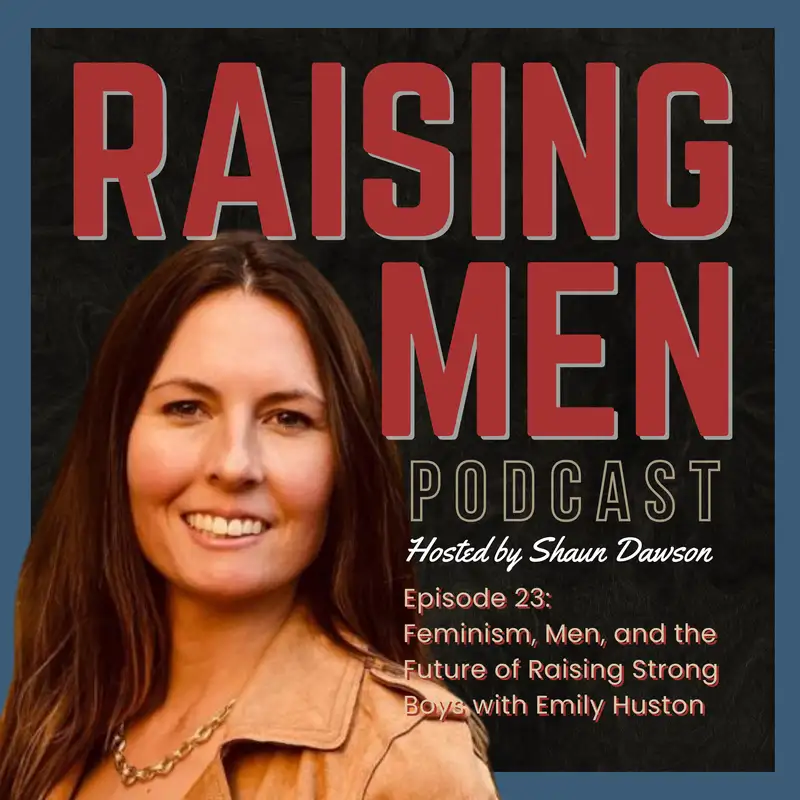
Feminism, Men, and the Future of Raising Strong Boys with Emily Huston
it's the biggest like misconception
I think like athletes
I can't tell you how many say they get into a job
and then they start questioning everything
1 it starts with their agitation
like meaning they're sitting at the desk
and they don't know how to sit in a desk
like they just it's so hard
because they are used to moving their bodies
six to eight hours a day right
and then it's like as they've been sold this
this vision that if you get a job
oh you're gonna be happy
like and everything you know
everything solves itself that is so not the case
hello and welcome back to Raising Men
today I'm joined by somebody
who brings a rare
and powerful perspective to the crisis facing boys
right now Emily Houston is a dear friend of mine
whom I've known for 20 years
which blows my mind to think about
and she has spent her life inside male dominated arenas
first as a professional volleyball player
and then later is the CEO of Home Team
a community dedicated to serving elite athletes
during and after their athletic career
Emily welcome to Raising Men
thanks so much Shawn
I'm elated to be here honestly
now you've
as I said
you've lived your life inside male dominated arenas
and how has that shaped your understanding
of men and masculinity
wow well
you're starting
you're hitting hard from the very beginning haha
I you know
I feel like I mean
working in male dominated fields has
it's had it it pros and cons
um I love working with men
I think that there's so much like
there's just so much richness there
and obviously between men and women
there's a lot of like
there's a lot of work that we can do together
um and then on the other hand though
I've also experienced quite a bit of discrimination and
sure um
abuse and um
just some awful awful stuff
so um
you know I feel like I really have seen it all
to be honest
yeah and I
I think that that kind of experience
for a lot of women is radicalizing
and it turns them maybe
anti man but that's not the experience
or that's not the result that
that you have no
no it
I mean it
I think for me like
in terms of the coincide of my involvement with men
it's just given me more understanding of like
of what women go through every single day
of being a woman myself you know
I've experienced these things but um
you know these are not
these are not exaggerations
these are real things that are happening in our culture
and in our world and I
but I like I said earlier
I think that it's really going to take men and women
working together to create a healthier um
a healthier relationship with oneself
and with you know
the communities
and the people that we get to interact with every day
yeah I
I think that you know
so the the
the types of experience that you're talking
the experiences that you're talking about um
tend to cultivate actually
a lot of what is happening in our culture today
tends to cultivate this us or them mentality a
a kind of zero sum game mentality
where it's viewed that every gain
that women have in our culture
is at the expense of men and vice versa every
and so you can get really
you can get this attitude where
where you really pitted against each other
and that's actually how the bad guys win
the bad guys are out there trying to make that happen
so that they can you know
benefit from the demagoguing
oh it's yeah
that's so true
but I also think we need to acknowledge history
yeah I think we need to acknowledge historically
you know what
what has taken place between men and women
and if anything like we could consider perhaps repair
being a part of that process
um but historically
you know some women have described as
if men are standing on their necks
and won't let them stand up
you know and
and I don't disagree with that
I do think that women have historically been put down
and and put in positions to
so that they're not able to thrive
um but I
I don't think that that's always the case today and um
there is more equity um
not 100%
I think that there's still more work to be done for
for women in terms of equity
but there is also now work to be done on the male
the the male side of that equation
yeah so I look at it
I mean
it's my opinion that there's a masculinity crisis today
and I think I mean we
you share that opinion what
from your perspective
what is at the core of the masculinity crisis
I you know
I think that if we again
if we look at the progress that's been made
for women and girls empowerment
and we
you know we
maybe this has been going on for 20
30 years
of a real emphasis on lifting up women and girls and
but I think that
that has been at the expense of lifting up boys and men
and in some ways
I think that boys and men have been left behind
yeah it's that zero sum mentality
yes yeah
and and I don't think that it's been intentional
um in my opinion
um I think that it's been an outcome
but I also think that at the
another core issue
is just the development of our culture and our society
um social media certainly plays a role obviously
um and
you know the world is moving faster
um we also have less third places in the world um
meaning places for people to come to um
maybe I'll step back on that
so first place is like your home environment
where you spend time with your family
second place is your workplace um
where yeah
or your school if you're younger yeah right
yeah or
or school yep
um
which is also a place where we spend most of our time
right um
except less and less now I mean
in work now a lot of people are remote
and so there's less offices and true and
and those sorts of all these institutions are crumbling
that's that's another component and that
you know that obviously ties into technology um
and then the third place
are places that used to be quite abundant um
that are diminishing
and those can include like a cafe or libraries or um
parks people going in
sitting out in parks and and meeting other people um
but I think that there's less opportunity
for people to feel connected
um without technology
I can't tell you how often
I drive around and see empty parks in
in in the city it's
it's crazy and
and I don't know maybe it's always been this way
and I've just never noticed
now that I have kids it's oh
there's a park there but uh wow
I mean there's never anybody in any park yeah
and there's and
you know part of it is
I guess kids are in school and stuff like that
and I'm not necessarily driving around
but sometimes you know
sometimes it's the middle of the day on a Saturday
and the park is completely empty yeah
and I mean so the question is like
what are people doing you know yeah
well they're inside playing video games
watching TV or on their phones yeah yeah
yeah and what
so what do we do about it
well I
I mean I don't
I don't claim to have all the answers
but sure you know
I in terms of what we do
I think that one
it takes just acknowledging that men and boys
and really they're
so in terms okay
so best to step back again
where they're behind is I
is I think that is
has a lot to do with a relationship with themselves and
um and
and connected to other people
so you have the relationship with yourself right
and then you have
the relationship that you have with other people in
in the world and in your communities
and that's where I see men and boys really struggling
is that they they have a hard time identifying
their own personal experience of what's going on
and how to interpret whatever is happening to them um
and then
and then it's also because of that it's difficult
difficult for them to understand themselves
it's difficult to connect with other people
and so you know
the result is going inward
you know hanging out in the basement
hanging out closing closing their
bedroom door and hanging out in the bedroom
playing video games yeah
you know addicted to their phones um
and so not dating
I mean that's another big one right yeah
so yeah not
not having interest in dating
and not being interesting to the opposite sex right
and yeah so there's a another feedback loop yeah
and not working as well I mean
I think we're seeing unprecedented levels of uh
young men who are not working yeah
you know and and also falling behind in education
so these are all like these are all places
second places where we can go to meet people
and we can engage and we can grow and we can thrive
but if we're not if we're stuck in our bedroom
it's not gonna happen
yeah when I when I hear stuff like that
it feels like an opportunity to me
I mean it's
you know so it's an opportunity
it's it actually can make things easier for my son
to some degree because if we
if we surmount this problem
then he's in rarefied air
so to speak and so I I think that's
you know
I don't have I don't think that I'm gonna solve any
I don't have any
any way to solve any big societal problems
I don't have a big platform
I don't you know
I'm I'm not in government or anything like that
what I can do is decide how I'm gonna respond
and for me it really is about okay
what are the what are the tactics
and what is it that I need to do
to make sure that my boy can thrive in the world
and how do I
how do I keep those influences
away from him
and cultivate the kinds of things that are positive and
and part of it is that
a lot of what our modern technology is enabling in us
is particularly caustic or toxic to young men
so
you know ubiquitous availability of porn
this is not something that you
a lot of women a high percentage of women struggle with
but a high percentage of men really do
yeah gambling
you know it
all of those things that that prey upon a um
an immature prefrontal cortex
are things that are going to disproportionately
affect men and so we're seeing that
we've been we've had it for 10 years
we've had social media for 10 years
and so now we're starting to see the effects of it
I think that's that feels like part of the
the cause to me and I think part of the solution it
you know to
to bring this back to your
your domain expertise part of the solution is sports
uh huh and
and I think you know
you were you were part of an elite sports program
both in college and then and then post college
you play professional volleyball
you know what that and
and you did it at a time where
you know
women's sports was not even as celebrated as it is now
and not that it's all that celebrated now even
I mean it was a pathway to college still
but you know
even professionally it
it it
it it doesn't even now
but certainly back when you did it
it wasn't it wasn't really the same way it is for men
what what is your perspective about that
what is
what is kind of a healthy relationship to sports
and how to cultivate that in our boys
so
I think it actually goes back to
to generations before um
what we the system that I grew up in
and that some of my colleagues grew up in
is a very militaristic type of sporting environment um
like no pain no gain type mentality
sure it's like
you do everything at the expense of yourself
for your sport yeah
um it's
you just complete sacrifice for your sport
and um
that that's
to paint a picture
that's the umbrella that we grew up in
and um
and we also see I see in my work
that there's a lot of trauma in sport as well
and you'd be really surprised how
how many like
traumatic experiences there can be for men and women
um in their sporting careers
and so
you know we
we move forward and the athlete
the coaches of today are probably people like me and um
but what we're seeing is a
younger generation that's involved in sports
and they're growing up in a culture that's um
has beginning to destigmatize mental health
beginning to promote the idea that
you're a human over an athlete
um and that
you know that being balanced is important um
for yourself as a human
but also in your sporting career
um and what I
what I believe is that that will
these athletes that are coming up in a more um
holistic environment and sporting environment
will become the coaches of tomorrow
yeah and so I have hope that um
you know that this next generation will
will carry that down and and we will see um
teams that are much healthier
um that um
you know don't necessarily
it's not the no pain no gain type thing
um it's about enjoying your sport
working hard as you can and of course
it takes an incredible amount of sacrifice
to be an elite athlete
but not at the expense of your well being
and not at the expense of your family
and not at the expense of yourself
and um
so I can go into more details about like
what the current sporting environment is like
um but that's
that's kind of where I think we're
we've come from and the direction that we're moving in
yeah if I look at
you know kind of the trends in terms of youth sports
it feels like it's gone in
absolutely the opposite direction of what you're
talking about I mean
these days if you want
if I want my son to be an elite volleyball player
then he better specialize at the age of 11
and he better get into the best clubs in our area
you know forget
forget school athletics that's not a thing anymore
it's now elite clubs it's very expensive
it's very time consuming we're driving all over the
all over the the state to
to go to volleyball tournaments
we're flying places to go to
to go to volleyball tournaments
and that's what it takes
in order to even have a shot at becoming
you know getting up to the next level
and that that works against what you're talking about
I think it sets the stage is
is there is there a pushback against that sort of thing
no not
not not like at a systemic level
yeah you know
because what you're describing is true
you know the
the you have to specialize at a younger age
you have to commit at a younger age
meaning you like moving from a
being a high school athlete to a college athlete
you know it's freshman and sophomores committing
you're talking about you know
a 15 or a 16 year old talking about their
their future careers that are even just four years away
insane I mean
it is insane yeah
so um
and to talk about volleyball
one of the I coach for fun at a
at the club level what you were just talking about
um and it's now nearly year round
so they will they do have the high school season
but they'll after the high school season
no during the high school season now they will um
the season will begin
and then it'll go all the way into the summer
and then they'll have two or three weeks off
and then they'll have tryouts immediately
and so it's it's crazy
honestly what's happening
um
but it doesn't mean that there aren't people out there
who are promoting you know
human over athlete
and trying to destigmatize mental health
that is what one of our objectives with Home Team is
that we're trying to
um we're trying to
fill these systemic gaps that are occurring and um
so the athletes
of today don't have to experience what
the athletes of yesterday experienced
yeah I would love to drill down further into that it
it does seem to me that the
that that home team is a possible antidote to this
and so how are you addressing those kinds of problems
yeah so well
one of the things is that with um
with athlete mental health
there's still a ton of stigma
you know I think that from the work that I'm seeing
mental health is becoming more and more destigmatized
generally um
but because of um
the pressure that athletes are under
and because of N I L too
um N I L is
stands for name image and likeness and it's a pathway
um that is now ubiquitous within the
the NCAA and uh
it's a pathway for athletes to make money
when I was an athlete
I wasn't able to make money off of
the pictures that Baylor was using or
you know
we also weren't allowed to have any sort of income
outside of our of our scholarship
and let's let's call a spade a spade
these athletic institutions are financial machines
I mean it is all about making money
and at the expense of athletes often
and so um anyway
so with nil and also now increased pressure
with funding and all that um
it's it's created a dynamic
where athletes are even more famous
you know they're
and and they're making so much money
I can't it's it's crazy
and that comes with its own challenges
I mean you have people who never made any money at all
and then all of a sudden they've got
you know endorsements worth millions of dollars a year
oh yeah
yeah and it's not just the endorsements
it's also the institutions
the institutions who are paying them to play
yeah and the other thing that for
for the athletes
that aren't quite at this million dollar level
or more um
what has become normalized within I N
I N I L is influencing
and I don't think I need to explain that
because that's probably something we all
we all understand today um
but what that means for the athlete
is that they're constantly on
through social media they have
and let's be real about this
like especially for women um
but men too is you have to look good
you have to be traditionally like
beautiful or hot or sexy you know
and if you are those things
like you're more likely to get deals
because you're gonna sell stuff right
um yeah
you you
there's also an incentive to be controversial
I don't think there's anything wrong with that
personally uh
maybe tell me what you're
what you're thinking well
it depends so
yeah so
one of the ways to get likes on social media
and get exposure and influence on all those things
is to be controversial and there's
there are healthy ways to be controversial
and there are unhealthy ways to be controversial right
yes hundred percent haha
so I mean
so I'll give you I'll give you an example
so I mean
we have so there's Riley gains is
was a um
was a college swimmer
who swam against a trans athlete named Leah Thomas
and I mean she ended up
you know she
she ended up tying for 5th place with with uh
with Leah Thomas and used that to
to to launch herself into the
into the kind of MAGA sphere as an essentially an anti
trans
um activist
and I mean I think that there is a an absolutely rich
a conversation that can be had about
the appropriateness
and inappropriateness of trans athletes in sports
and frankly
I think that the NCA will probably figure that out
just fine
um but what
what I'm focused on
with respect to the Riley Gaines thing is literally
while she was at the university of Kentucky
her coach was it
it was found to have raped two of her teammates
this is a male coach I assume
this is a male coach
and he literally raped two of her teammates
and so she's out there on Fox News
talking about how the biggest threat to women's sports
is transgender athletes
of whom there are a handful in the world
yeah
and her coach was raping her teammates and
and that's she
she she got rich talking about the other thing
but nobody wants to talk about
what I would think is a much bigger threat
to women's sports
are you with me I'm with you
and so I mean
I don't know I don't
I don't feel like that's a good healthy controversy
and and I
I mean I
I also doubt that it's something that
you know it is that
that people are gonna be proud of 10 years from now
yeah I mean
I feel that way about a lot of things it's like
there's a book out there it's
it's some called something like
like you know
so many years from now
nobody's gonna have believed that they were
they're not gonna say that they were on that side
yeah or like yeah
nobody admits to being a Nazi
yeah exactly right
and that that's kind of the sentiment
and especially with like
we're talking about Israel and Palestine
you know I mean
that like
that
like I'm really curious to see where that lands
with Israelis who are anti
Palestine and pro genocide
you know I like man
it yeah
it is yeah
you know that's so interesting
yeah I mean it's
it's devastating and
you know
there are terrible things happening in the world
including in the sports world
as you're bringing up that's right
and you know
that's to be honest with you
that's one of the reasons
why I'm doing the work that I'm doing
is because
you know I'm old enough now where I
it I don't necessarily use the word legacy
but I feel like that's a word that people understand
is like when
is yeah
what Mark am I gonna leave on the world
you know and I have the ability to change things
and so I want to use my position
I wanna use my power
I wanna use my experience to change the
the landscape um
especially when within athlete centered care
um because there are so many
there are so many issues um
so yeah
so here we are yeah
so so basically
I mean if I were to
if I were to paraphrase
essentially what you're trying to do is bring it is
is be kind of a marketplace between the athletes
or ex athletes or or
or soon to be ex athletes
and the resources that they can leverage to thrive
and that means financial help or
or um
mental health and that sort of thing right yeah
so maybe it
it might be helpful if I share part of my story
and yeah yeah
let's hear it yeah
what took me to to today
um so I was
as you said Shawn
I I played volleyball in college
I was a D1 setter at Baylor University
um and I retired
and then about three years into my retirement
I became extremely depressed
I
yeah I was really
really struggling and it absolutely um
was attached to my retirement
I had this idea that you know
I was going to transition into the real life
and I was gonna get married
and I was gonna have kids
and I was gonna have this beautiful life
and all these things and three years into it
like that was not happening um
I'm still not married and I still don't have kids
so this will you know
tells you a little bit
you can borrow my kids anytime you want
I will I will ship them to you
and they can go to Aunt Emily and they can hang out
as long as you're willing to keep them
take them that's
you can send them on over haha
um so
but like life wasn't happening
it wasn't things
weren't lining up the way that I thought they would and
um and I was really struggling
I I thought that my issues were my own issues
and I thought it was a me problem and um
and so anyway in my depressive thinking
I was just desperate to get out of like
this headspace that I was in
and I you know
said to myself like
I need to do something that I'm good at
and something that I I enjoy
and the conclusion that my depressive
mind came to was that the only thing I was good at was
volleyball yeah
now of course that was not true
like of course I've had many other strengths
but I didn't have anybody to help me and I was
I felt very alone um
and so I just decided that OK
I'm gonna I'm gonna go back to volleyball
and so that's so that's what I did
I ended up um
going back and playing volleyball professionally
um I will just for storytelling purposes it
this three year time frame is when I met you
yeah so
you know we were playing volleyball in Dallas together
and those were good times
that's when we became friends
yeah yeah
that's when we became friends
um and so
but what LED me to play volleyball professionally
was my depression so I
you know left the United States
went to Europe played volleyball professionally um
and I played two seasons there
and did end up retiring because of an abusive coach
who was a male um
he absolutely had anger issues
um which we
we now know typically um
like male I'm not saying that he was depressed
I don't
I didn't have enough insight into his mental health
but male depression can um
like the symptomalogy can be aggression and uh
and so that's
was what was coming out in his work with us
is he was fighting other coaches
um he was berating us
um there was
another time where he got in a fistfight with a coach
and we had to call the police
yeah I mean
it was very very bad
and so it got so bad
to the point where I had a dream
that he was going to physically
hurt me like punch me
and I just was like I
this isn't worth it so I quit
um and I did try to transfer
but in my position like it just wasn't possible
but anyway so I quit
and I went back to the US
and then I went to grad school
studied counseling psychology and um
and then ultimately
found myself working in another
very male dominated field
which was private single family offices
and so it was there that I got a ton of world class
operational experience but also experienced
significant issues related to
related to men um
so I'm happy to go into that if you want
but yeah let's do it
let's get into it okay
well um
I experienced um
pay discrimination twice once because my employer
um was attracted to me and had like
had a fantasy that I would be taking care of him
for his for his entire life basically and um
and when I asked for a raise
it confronted this fantasy that he had so um
I was screamed at I was yelled at
I mean it was like
and I was
this asking for a raise was held against me for months
wow um
uh meanwhile
he was in therapy and eventually through his
on therapy sessions
he was able to communicate with me what had happened
which is how I know how I can tell you this interesting
wow yeah
that's fascinating um
and then let's see
another family office that I worked for
I should probably clarify what a family office is
a family office is the um
financial arm of extremely wealthy individuals
and so um
at scale it's more than just financial management
it also goes into operations
and so I manage large teams
like drivers and cooks and all that stuff
um hiring and firing and yeah
all the all that
it's a different world um
yeah that's yeah
but um
so then I
in one of the largest family offices of the world that
that I was working in um
I again
I experienced pay discrimination
I experienced sexual harassment
um bullying
the bullying was really really bad um
by a male family member um
but that must be so tough to deal with cause it's
they're not quite your employer
but they are your employer
and so it the the
the protections that you might get in the
in a normal workplace don't necessarily apply
I guess in
in no
they don't yeah
yeah they're almost a client
yeah almost
I mean I was an employee
but yeah um
but you can't fire the family
so right
so
you know it's
it's a very it's a difficult world to navigate uh
or industry to navigate um
but the sexual harassment came from my colleagues um so
and the pay discrimination
obviously came from my employer
sure so um
yeah anyway
so um
but to go back to my story around like
how we got to home team um
I decided to leave the family office world
I just
after 10 years of working in that environment again
I was like no
like I'm just so done with this
and it was around that time that I reconnected
with a former teammate of mine
and she had written a book called always an athlete
and it described the trajectory or
or the the developmental cycles of a young athlete
from the time that they start committing to
to play a sport like you said very
you said 11 earlier
but it's actually like five to eight years old really
wow yes
it's five to eight years old
and then they
and she equated this experience as if the athlete
developmentally is climbing up a mountain
and the top of that mountain was retirement
and then when she got to the retirement phase
she described it as if the athlete falls off a cliff
and all I just
it just blew my mind like
it must have resonated with you
oh and
and spectacular ways like it honestly
like it changed my life
because of where it brought me to today and
but what I saw through the illustration of her book
in this this cliff effect is that one
like
this is what every athlete experiences
right yeah
it's they retire
your experience is universal
turns out my experience is universal
um and what is
so what is that experience
your support systems evaporate
your team you know
becomes fragmented
everybody moves to different locations
you leave the institution that so much revered you
but now has quite literally discarded you
um I can't tell you how many people have
have shared a similar type of description
um yeah
I've never thought of it that way
um oh you're
you're used to it
you're no longer valuable because remember
this is a financial
you just got fired you
well you're not making money for them anymore
so you're no longer of value
um and
and then to get back to so that's kind of like the
the
like bigger systems that are at play
but within the athlete experience you um
there's a grief process there's a often times a
a realization that your
your full potential was not actualized um
that you now you you don't know how to make friends
because you're now in the real world
and your friends have always been athletes
but you don't know how
you don't have to make friends as an athlete
you're just friends with your teammates
yeah and when you go into the real world you um
you don't know where the athletes are
because there's so few of you
at honestly there are so few athletes
like they're just kind of hiding right
um and then
what everybody seems to tell the athlete is that hey
go get a job
like as if that's going to solve everything
and let me tell you it's like one of
there's so many services out there that are connecting
athletes to employers
and it's the biggest like misconception
I think like athletes I can't tell you how many
say they get into a job
and then they start questioning everything
1 it starts with their agitation
like meaning
they're sitting at the desk
and they don't know how to sit in a desk
like they just it's so hard
because they are used to moving their bodies
six to eight hours a day right
and then it's like as they've been sold this
this vision that if you get a job
oh you're gonna be happy like and everything you know
everything solves itself that is so not the case
like what happens with athletes is when they leave
they are actually behind their non athlete peers
yeah and the reason for that is because the non
at
their non athlete peers have spent 4 years in college
having um
having you know
applied to internships having done the internships
have had jobs you know
they've yeah
they're doing worky stuff
you're doing yeah
I mean they're trying to enter into the real world yeah
um and all
you know in order
but in order to get a job or an internship
there's so many things that have to take place
before that but with athletes
they don't have the time they don't have like
it's mostly a time issue but also energy issue sure
um anyway
so that's that's part of the dynamic
um you're an athlete's relationship to food changes
right an athlete goes from fueling their body to eating
and you don't really know how to eat
when you're not training
you're not expending six calories
or 6,000 calories a day yeah
I mean and that
and then that touches on another thing is
an athlete has been training nearly their entire life
right and I use the word training very carefully
because training and exercise are way
two separate things that's true
and they are on very opposite ends of the spectrum
yeah and so when an athlete is on their own
they don't know how to exercise
which sounds really weird to say
because they've had professionals supporting them
and their technique
and improving their strength and agility
and all that stuff what to do and when to do it
and show up at this time
and do these drills and all that stuff yeah
yeah all that
I mean they just don't know how to exercise for fun
like going on a walk is not exercise to an athlete
you know yeah
yeah it's like
the difference between being in an orchestra
and being a solo guitarist
I imagine I don't know
I'm not familiar with the music world yeah
well I mean
I mean just like you're part of this grand thing
you're part of this big team
you've got your your sheet music laid out
you have it's
it's very highly planned
and you're doing that same thing versus owning
having your own domain and your own
like you've got to write your own songs
and you have to do your own thing
and you have to book your own gigs
and you have to do all of that stuff
and those are skills I mean ostensibly
oh well
both of them are playing music
but but the
the skills that are required to be successful
as a solo musician are way different than the
skills that are required to be
successful as part of a team yeah
I mean this actually reminds me of like when
when you're an elite athlete
you're part of a system where a lot of support is
is provided to you right
not only your scholarship but um
also like you're provided um
student athlete housing right
and so but a
a non a non athlete peer
they have to go find their own apartment
they have to apply to those
they have to um
you know find a way to get um
car insurance or you know
any of those things and so the non athlete peers are
you know slowly developing skills that are
what an adult would have and then a student athlete is
it's just
they're just so behind because quite literally
all they've been doing is their sport
and their studies yeah
that's fascinating and so
and so how do you
how do you bridge that gap with home team
yeah so with home team um
so we have an emphasis on retired and injured athlete
mental health and
the reason that we focus on these areas is
because this is where we see the most gaps in care
so um
to touch on the injury piece real quick
um when an athlete becomes injured there I
I really like to call it it's
it's an injury of isolation
because you are taken away from your team um
not intentionally but like for example
when the team is practicing
you're not practicing you're not even in the gym
to be honest
you're in the training room with all of the other
injured athletes yeah
if if even that um
you're no longer traveling you um
you might be eating with your team
but maybe not you know
I mean it's just it's
it's a really difficult time
and so during retirement and injury
this is when we see a lot of mental health issues
come up yeah
and um
the normal like
the rate of mental health issues is about 30% around
amongst the general population
and so we see that um
not only with the athletes
but in there is
in fact
an increase in mental health issues during those times
so one of the things that we're looking
or that we're doing is
we've created a community of retired
injured and current athletes
along with all of the professionals
that are in the athlete ecosystem
community is a huge part of the solution
just knowing that you're not alone
yeah right
I thought it was a me problem
and it's it's just not
like this is a systemic level failure on all athletes
all athletes retire all
most athletes at some point are going to become injured
right it's part of the game
and so right now there are zero resources
my friend's book that described the cliff effect
no next steps no
no resources for athletes to reach out to
but I want to just point out
that is not a critique of her
no it's just because the
it's not there no
it's a critique of the system
it's a critique of the system and there are always
if you do the math like the math
math's out like
there are always more retired athletes
than there are current athletes
always of course
yeah of course
right
but think of all of the people that are being failed
yeah right
they they've been
um historically they've been taken advantage of
and financially financially taken advantage of
um their bodies are taken advantage of
I can't tell you
like all the aches and pains that I have
like it's you know
I mean I've met with 22 year olds and they need like
reconstructive surgery on their ankles
like what like what the f
you know um
so yeah anyway what
what elite sports does to your body is very
is it's a lot it's a big toll
um you're trading your body for an education
it's it's a lot
uh so
so community is at the foundation of we're home team
one of the things that we provide to
to this to this ecosystem of athletes
and the professionals in it
um within our community
we also have weekly programming of events
so different professionals
can come in and talk about different subjects
um that support the athletes and
and the people working in the field
and then the other
the next thing that we're building is a
um we're calling it a service based marketplace
if you have a better word
I would love to hear your thoughts actually
I think that's a I think that's a great term
well it's a yeah
it's cause marketplace has it
it sounds very like transactional
um yeah
but one of the systemic failures right now is that
it is can be very difficult
for an athlete to find mental health care
yeah and also their help seeking behaviors
the help seeking behaviors are
which means like when an athlete is in need of support
yeah will they go get help or will they not
and often times they will not
so okay
why is that one it could be um
their time is so like
demanded of that
it's hard for them to go
walk all the way across their campus
to the um
counseling and Psychological Services yeah
like that they might not know where to go
and it's also still or they may not know where to go
or they may not even have access to clinicians
um let's see what else um
another thing that curtails help seeking behaviors is
um confidentiality yeah
so often times
depending on the level of the athletic department
and how much funding they have
they may now have clinician
mental health clinicians but they're
the athletes fear that
they're in communication with the coaches and
you know they
they're they're fearful for their playing time
fearful for their NBA money
like I mean
there's so many different um
like things that take play that can prevent it
like social media stuff yeah right
I mean to go back to
to being an influencer
if it gets out that you're having
you know anxiety attacks
like I don't know
who knows like people are always bashing them online
like they don't need any more fuel to yeah
to you know
attack them um
so anyway um
the marketplace that we're building
centralizes the existing resources around the country
in one location that is for all
for athletes centric care
um with vetted providers
um who were athletes themselves
um and understand
you know what they're going through
I love that offering that is
I can imagine how powerful that is
it sounds like I mean
it basically sounds like you went and built
all the stuff that you wish existed
when you were 22 yeah
no I
I mean it's not all built yet
but we are built sure
yeah but that's the vision
yeah I mean yeah
that's the vision let's go
let's go have 22 year old Emily Houston
not suffer the way that she suffered and
and make sure that the the next one
you know has resources at her disposal 100% 100%
I mean when I connected with my former teammate
and read her book that was just published
you know a year or two ago
yeah um
I honestly could not believe
that after 20 years of being retired
or nearly 20 years um
15 years maybe um
that this the
the landscape had not changed yeah
it just absolutely
maybe it's even gotten worse because of nil
because of the intense pressure that's on there
and it's actually getting earlier and earlier
it's becoming that way in club sports now
and that sort of thing it's
it's it's intense out there yeah
yeah
yeah well
I hope I hope it gets better I mean
I hope that I hope that you're right in your
in your optimism that
the kinds of things that these athletes
need in order to thrive are coming online
and you know
I know that that home team is is is part of that um
but it's gonna take a lot more than that
and it's gonna take a lot of awareness of
of parents and a lot of awareness in the community
to make sure that you know
people don't need to sacrifice their mental health
or their bodies for the four years they get to play
volleyball in high
in college right yeah
yeah you know
to to take this back to men I
I want to point out that um
80% of deaths by by of by suicide
yup are by men right and
death by suicide amongst NCA
athletes has recently risen
to the second leading cause of death
amongst amongst athletes yeah
that's I mean so it is terrifying statistics
second leading cause of death yeah
second leading cause of death
and it just recently came up from the third um so
you know to me
this is not an option like we need to do
we need to mobilize we need to
we need to change things yeah
we ourselves need to change right
and um
this is
one of the reasons that I care so much about male
athlete mental health
and not just athletes
but male and young boys mental health
yeah is because of the tragedies that we're seeing
this is a loss to the world right
I mean it's a loss to their families
it's a loss to their friends
it's a loss to their future and their potential
and you know
often times somebody makes a
a decision that cannot be reversed
in the matter of 20 minutes
is statistically what has been found
so an example of
you know
where we're seeing systemic gaps in terms of these
like these inflection points
or these transitions that athletes go through
there was a young man named Marshawn Neiland
who recently died by suicide
he had he did have mental health issues when he was
I believe it was at the university of Michigan
where he was a football player
and in fact from
from what I've read there
um
during his four or
four or five years that he was an athlete at
at the university there were two um
two wellness checks that were made on him
because people were concerned for his safety
and well being and so it was very well known
in fact I think it was even the coaches that had
one of the coach had made one of the phone calls
and so it was very well known
I think another was a teammate
so this was not
you know Marshawn was not struggling in silence
yeah many
many do but he
I mean people obviously knew that he was
was not well and so
then he graduates and he transitions to the NFL
and he's a rookie and as you just said he
he had his first touchdown and then he um
died by suicide and
but where what
what like
where was the transfer of information
from the university to his NFL football team
yeah I mean
this is there should have been a red flag for him
you know that this is a young man who's needing help
and he was obviously failed
you know this suicide is extremely preventable
right and um
honestly it really just takes checking in on people
like that may sound like an oversimplification
but if you can if you see somebody who's struggling
asking them how they're really doing
and not skirting around the issue can save a life
yeah
so you know
I don't know what happened with
like his transition from the university to NFL um
but
you know it absolutely could have been prevented if
if there was more support and more care and
and also if there was
likely less stigma around him seeking help
yeah yeah I think that's a real
a cute aspect of the masculinity crisis is
you know
there's this vision of masculinity
of a man as the lone wolf and the indestructible wall
and and so that works against seeking help or even
even consciously acknowledging that
you're going through something difficult right
it it it's
it's like the information isn't even accessible to you
yeah because of your conditioning and
and that goes double for an athlete
because especially in an elite athletics
a significant portion of it is pushing through the pain
it's performance is what it is
I mean you have to perform right yeah
and you can't you can't be weak
you know you
I mean I'm not saying they can't be weak
in their personal lives like
and weak is such a it's such a bad word anyway
like because
just cause you're struggling
does not mean that you're weak
by the way that's right
you know like that
so I don't want to suggest that
but when you're performing
you are performing right
you're being paid for this
you I mean
stakes are very high the stakes are very
very high right
and uh yeah
so it's difficult to to unmask
I would say and especially for men
yeah it
it's I can imagine it
it applies to to everybody but
but I mean 80% of the suicides are men yeah
that's something we gotta step in and work on yeah
I I'm
you know use the word hope
earlier and I think there is hope
I think that I know I know that this is the path
I know I know that this is the path
in terms of what home team is doing
and the reason
this maybe sound like overconfident or something but
but the reason that I that I
I want to state that so clearly
is
because of the signals that we get from these athletes
and they tell us time and again
how much they appreciate what we're doing
and how much this is needed
and I have a startup and I've
I have nine people volunteering their time wow
nine people men and women and of different colors
to try and create change
this is how much that means to people
people don't work for free yeah
they're bought in yeah
but these people are they are working for free
because they understand how acutely
and how critically this needs to change now
not tomorrow today
you know so um
but I do wanna say that in terms of hope
what I do have hope for is
that we see more and more athletes
getting involved in their personal journey
with mental health we see more high profile athletes
speaking about their mental health
and I'd like to put out a call to action
uh especially as it relates to home team
is having athletes come and speak uh for
for the advocacy of mental
uh mental health and home team
but really for everybody
for all athletes and the people
outside of the athletic world
people really Revere athletes
athletes are put on pedestals
they are seen as superhuman
and my belief is that if home team is successful
we will be able to like
have this butterfly effect throughout the world
because when people see their idols and
you know
these people that they have for years put on pedestals
that they too will say OK
I can I can go get help too
if they can do it I can do it
yeah you know
so um
so that is my hope my hope is that
home team is able to successfully reach the masses and
and help not just athletes
but all of the people that are touched by athletes
yeah I think in
in this work that I've been doing for this podcast
one of the real through lines
in a lot of the experts that I've been speaking to
and everything is about how vulnerability is an unlock
and it it feels
it feels unsafe vulnerability does
but then once you kind of understand and embrace it and
and actually express it the way that your friend did
when she wrote that book
and talked about falling off the cliff
that was an unlock for you when you read it
and it was an unlock for her when she shared it
and that goes it
it is the butter that is
that Butterfly Effect is absolutely real and
and it feels like
it feels like it won't be perceived
um and I remember going through this actually it
it happened in a conversation that you and I had
where I shared with you that I was doing this podcast
and I was almost embarrassed to share that with you
and your response buoyed me in a way
that was really hard
I mean I
I haven't felt that in a long time or
you know it's
it's a rare feeling for me
what is you the
the the
the response that that you had
when I told you that I was doing this podcast
on this subject
and I was
I was so trepidacious about sharing that information
and yet you were so passionately in favor of it
that it made me feel like wow
I'm really like this is
I really do need to do this as opposed to feeling
I don't know a little bit instead of hiding or
or having shame and
you know I think that so vulnerability is
vulnerability takes
being humble
and yeah because humble
when we're humble
like in being vulnerable we have to ask
we're asking for help you know
and so we have to be humble and in order to do that
and so that is one of the unlocks
I believe to vulnerability is being humble and um
and I'm so glad that you were vulnerable with me
you know because here we are
and having this amazing conversation right
and I mean I just think that the topic of um
men and boys and masculinity today is something that
just needs more attention
and people need to understand how
you know men and boys are suffering
they're really really suffering yeah
you know and um
yeah and
and if your response to that is well
you know
they deserve it because they're part of the patriarchy
well
yeah that's not gonna get us anywhere
you know and so it's like
because it's not the zero sum game right
and so my my belief in one of
I mean I okay
I will say that I I have been a part of the problem
I have been a fierce
and I still am a fierce advocate for men
oh sorry
for women and girls yeah
um at the expense of men and boys though
and that's how I've shifted right
is that I if
I mean I have had so many like assaults from men right
not and not necessarily rape
although that has happened
I will say um
so but so many different varying types of assaults from
from men that have been perpetrated by men
that if we women aren't helping them
then we like it just continues to get worse yeah
and that's what we're seeing actually
I mean not to right
because it's it's the us against them mentality
that's what it okay
fine if you're gonna pit yourselves against each other
then it's just gonna be destructive yeah
I mean we truly need each other
we need to lift each other up um
I mean it's
we're going down a dark path and
you know the uh boys
you know it's our responsibility
we are the adults like
we need to create an environment for them to thrive
and you know
I I think it kind of goes back to this like
message that the athletes are receiving is
you to be human it's okay to be human
and part of the human experience is
having a range of emotions
you know which suck
it sucks you know
to be depressed it sucks to be anxious
it sucks to be uncertain you know
all these things
but all of these things are totally normal
and it's universal everybody feels that it's universal
and and help and sharing that is
it's invigorating actually
yeah so I really appreciate the work that you're doing
thank you for thank you so much
I I like to uh
finish up these conversations by asking everybody
more or less the same question
so I'll put you on the spot OK
um if there's one principle
what a kind of an operating principle that you think is
is a good operating principle to live by
what would it be
I think modeling is important
um
modeling what it's like to be vulnerable
modeling what it's like to be frustrated
modeling all of the different range of emotions
and sharing that with your child
yeah um
like for example you get cut off by somebody
right and instead of like screaming or whatever it is
like you know
yeah and your child's in the back seat right
um they're like
oh man
like I am really frustrated right now and
you know somebody just cut me off
yeah and actually
maybe screaming is part of that
but you're not screaming in an ineffectual way
at this other person about what a jerk they are
you're screaming at gosh man
I'm feeling really really bad right now
I am yeah
I am feeling really really frustrated
like I can't believe you know
like I got cut off and I am just so upset right now
like you know um
but I think we need to model more of these behaviors
and um
model more of these emotions
and model how we handle our emotions right
it's okay to be sad like
we need to show our children that we are sad
because we are human
right like
we need to show them that we're human
and I I think that that goes such a long way yeah
um and then to the men specifically
I would say give yourself Grace and um
and you know
you said use the word kindness
but I do believe in the power of um
being kind to oneself
because if we can be kind to ourselves
then we can be kind to other people
yeah and um
I'll leave you with this one of my favorite quotes is
it's a Buddhist quote and it says um
peace in oneself peace in the world
yeah
I think that's a beautiful place
and Emily thank you so much for bringing
your vulnerability and your perspective
this conversation
I'm so excited for what you are doing with Home Team
and I just know that it's gonna
knock the ball out of the park
to use a sports metaphor
Emily Houston is the CEO and founder of Home Team
you can visit her work at hometeamgo.com
the link is in the show notes
and remember you are a great parent
raising men is produced by Phil Hernandez
this episode was edited by Ralph Tolentino