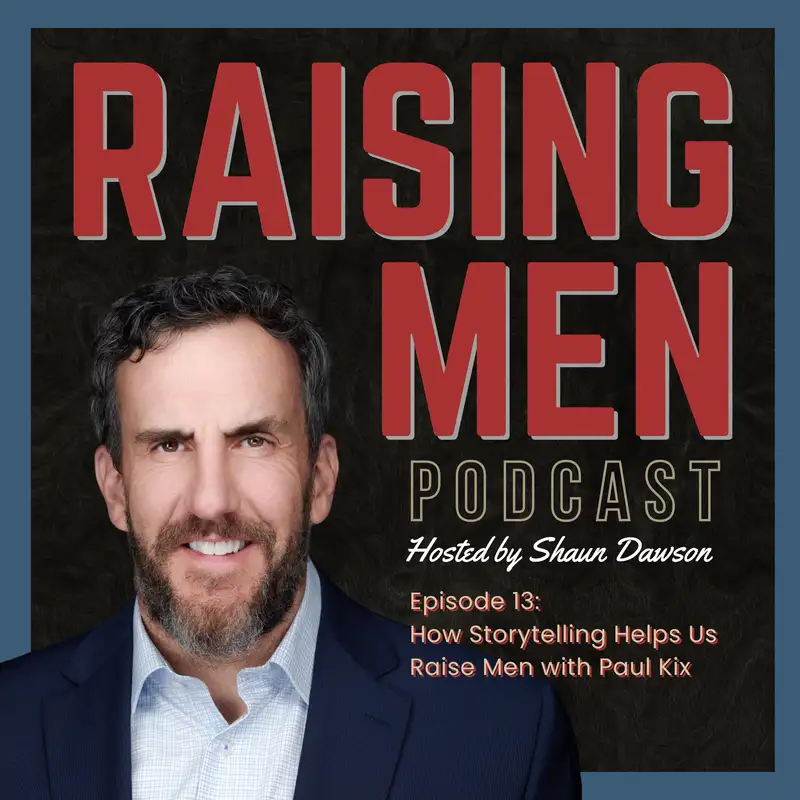
How Storytelling Helps Us Raise Men with Paul Kix
if we as men spend our entire time like
I'm a tough guy I'm this
I'm that if all you do is project that image man
you are brittle right
like you will yeah
there is nothing you can withstand
if you're constantly tense
today on Raising Men I'm joined by Paul Kicks
he's a journalist a storyteller
he's the author of you have to be prepared to die
before you can begin to live
Paul's work
has taken him deep into the heart of what drives people
especially in extreme moments
and some of those same things show up in fatherhood
and in raising men Paul
thank you so much for joining us
it is just an absolute pleasure to have you
it's likewise likewise
my friend thank you
uh now
your career has revolved around uncovering deep
human stories how has being a storyteller shaped
the way that you see fatherhood
and the narrative that you pass on to your sons
oh man
that's such a great question
uh I think probably
oh wow
I don't even want to be flipping with it
let me think that through
so um
alright
probably the best way to answer that is to say that
I think a lot now about raising the boys
not just with I guess what you would say
the traditional traits of masculinity
you know strength boldness
assertiveness
but also I guess you could say for
for a whole more holistic approach
like make sure that they do so with kindness as well
make sure that they realize that um
they realize that actually
what it means to be a real man is to lead a household
yes but then also be kind enough to
to everybody who lives in that household
and frankly like
I try to practice what I preach
you know but it's not I
I sometimes find short I fall short
like there are times where I'm yelling at the boys
or our daughter or
you know like I can be short with my wife
and I think it's like
I think it's something that I'll probably myself
how to be a father is something I'll probably have to
continue to practice until I'm yeah
until they're well until
until they're their own fathers
right until my
until my daughter is absolutely
yeah I
I uh I
I recognize that in myself
I did the same thing and part of that jury is
I mean obviously
ideally we would never make any mistakes
and we would never snap at our kids or at our wives
or something like that
but it's just as important in those
those moments are an opportunity to model the right
repair behavior too
yeah and
and so yeah
I think it's kind of important to have some Grace about
well okay
fine we all fall short
but you know this is what we do when that happens
yeah exactly
like
my wife came to me last week and was basically like
my mother in law she has dementia
and she's lived with us for about 10 years
she's had the condition for
the
condition has been pronounced for about the last two
and she came to me and she was just like
I need you to be more of a rock than you have been
and what she meant in that moment was
I need you to sort of like see me
extend the sort of kindness that
you know you used to do all the time to me
uh
cause I was concerned slash consumed with my own career
you know our kids are all teenagers now and
and there's a lot of activities
that are constantly going on
my days seem sort of busier than ever yeah
I'd sort of forgotten about her and that mix
and so it's just been like a
a conscious effort the last week or so to be like okay
here I am what do you need
um let's take a moment like check in with you
you know and by the way
like doing that you know
she said to me I don't know that
there have been times where
I don't want to bring my own problems to you
because I'm I see like
you know concerns you have about work
or concerns with the kids or whatever
and it's like why should I add one more thing
and that honestly man
like that was even worse because it's like
oh my God like if you feel that you can't come to me
then then this isn't like this
I'm not doing my job right
so there is something fundamentally broken
I mean that
that is the the wing is off the plane at that moment
yeah so then it's
then it's a question of okay
well it's actually
I feel better I feel in some sense rejuvenated
if I know that you can come to me right
so whatever
whatever concern you think I have
which is she's a we've been together more than 20 years
she can read me quite well
yeah um
just know that like if you come to me
I can pivot from that uh
and you know
like I
I so OK
so like what does it mean to be a modern man
my dad my grandfather
they were uh farmers
they grew up in Iowa they rent the
I'm the fifth I'm the sixth gen
well that was 1
2 3
4 5
I'm the fifth generation uh
farmer son of a farmer
and I did not farm but everybody before me did
yeah and so the men that I'm familiar with are guys who
you know fix everything before them
don't say a whole lot
are are reserved and strong
and I thought that
that would be the way to lead my life
and to a certain extent it is right
like for a long time
I was in corporate media and I would always
when I was used to bitch about where I worked
my dad would be like
I literally don't know how to help you here because
like I've been haha
right so he's like
I don't know what it means to have all these
this upper management I was at ESPN for a long time
so it's like yeah
you know just the
the layers and layers between ESPN and Disney
of management and navigating that anyway
the upshot is
I've been on my own now for the past 5 years
and a certain respect
like what I saw as a kid was very helpful for me to
like you know
figure out how to do things on my own now
at the same time my dad never saw a therapist
you know I see a therapist
I see it as almost like a physical check in right
like why not
talk to somebody about what's going on in my life
um I think that's very healthy
you know uh
so something that would have been verboten uh
in my certainly in my grandfather
I don't even think it was around right
like 70 years ago right
they didn't really exist right
yeah yeah
um and certainly like it
you know my dad would have never done that
but I talk with my dad about like
what my therapist has told me
and it's been incredibly helpful
you know um
so that's just it's just a
I guess that's what I mean
you know it's
it's just a willingness to say
okay where can I acknowledge vulnerability
where can I acknowledge my own weakness
how by acknowledging that vulnerability or weakness
can you sort of accept it
which is
it itself turns it into its own form of strength right
cause you come to understand yourself better yeah
so that's that's how I try to live my life these days
and that's how I try to
that's what I try to tell the boys too
you know in addition to like
trying to get them to come to my Saturday morning
boxing class which I go to
which is awesome right
but like it's there's just
it's just the Yin and Yang of
of life and and
and from that change from boyhood to manhood yeah
it's you know um
one of the metaphors that
that I like to use is who's the stronger boxer
the guy who has an impenetrable block
or the guy who doesn't have any block at all
he doesn't even need it
because you can just literally wail on the guy
and it doesn't affect him
yeah you know
and that's the difference between
putting all those walls up and
and being vulnerable yeah
and they so
so one of the I've seen a therapist
off and on now for about six or seven years
one of the things that he said that really resonated
this is years ago is he goes
you want the tactile strength of bridges
and his own father was some sort of engineer
I wanna say a civil engineer
which is where he would have Learned about this
do you know much about bridges Shawn
like how they're actually no restricted
OK so okay
I didn't know this either until my therapist and I
I don't know actually I never fact checked this
I just took his word at it
so right
if any engineer I think I'm sure people will chime in
yeah I'll be like
actually that's not quite so he's like
imagine he's like
imagine the Brooklyn Bridge right
and I said OK
I've been across it many times
he's like OK
what do you think that bridge is made of
and is it made of just you know uh
absolute like
tiled in metal
where you cannot turn a screw another inch
or when you look at a bridge
and if you take an area or see me a side view of it
as if as if from a drone were approaching it
he goes if you look at it closely
what you actually see is the bridge moving a little bit
yeah which looks almost scary right
but he's like that's actually intentional
cause it's it's
it's called you know
it's it needs to have a little bit of flexibility
without that flexibility
uh what would happen is the
the construction of it would ultimately just corrode
it would collapse beneath itself
because you're constantly
it's constantly so tense
so it's that what he called the tensile strength of
of bridges is to actually make sure
there's a little bit of fallability built in
yeah and it's so
in other words like to extend the metaphor
a little bit of vulnerability
yeah and I just think that's so true
like if
if we as men spend our entire time like
I'm a tough guy I'm this
I'm that
if all you do is project that image man
you are brittle right
like you will there is nothing you can withstand
if you're constantly tense
but if you allow yourself to accept basically
life and all your
all the entire emotional range that comes with life
I think I'll probably in your better spot
and I don't want a man
I hope that doesn't sound preachy
because it's not as if I always knew this
in fact again
like fatherhood
I would argue I'm still learning this day after day
but it's something I've come to learn
you know somewhat now yeah
I I think that that absolutely ring
that absolutely rings true for me as well and it's like
part of the definition of
masculinity is being a protector
yeah and the
almost trivial version of being a protector
is being a tough guy yeah
right being willing to get in people's faces
being strong you know
I can I can beat anybody up
all of that stuff
and yeah I mean
sometimes
that's what's necessary in order to be a protector
that's certainly what was necessary 30,000 years ago
to be a protector sure
but in our modern world
being a protector is about much more than that
and in fact
often times it's about not being that at all
because
if you're demonstrating this really tough facade
to your to your boy
and that's what you're modeling to them
and that's what they think they need to do
in order to make their way in the world
and a lot of ways
the world is not going to be conducive to that
especially now
and you're gonna I'm not protecting your kid yeah
I also think what you're doing
if you constantly project that image
that you run into conflict with people
who are doing the exact same thing right
you kind of attract it you attract that defensiveness
yes uh
and it just I don't know
I
I I don't wanna sound like old man shouting at clouds
but when I see like
when I go to the gym
and I can see the younger guys who are
you know teenagers or
and I was probably this way too
like when I was a teenager in my 20s
and I can see the guys where it's like
it's all I'm the alpha through here right
yeah and you can almost see man
there's something that
is probably broken inside of you
for you to project it like that
cause there isn't necessarily like a quiet
easy confidence
it's something that it's just it's performative
it's posturing yeah
and they don't even really understand
how silly they look to everyone else
I I used to have this trainer
uh back when I lived in Dallas and and the trainer
he owned this this uh
kind of fancy gym in North Dallas
and he was training me one time
and there were a couple guys in the gym who were
who were who were doing that
kind of making the performative noises and and
and stuff
and he told me this story about he used to train this
uh this old guy
this 74 year old guy but the guy was ripped
and these when he first opened the gym
there were these muscle heads that that were there
and they were doing that making a ton of noise
and they were um
they were doing chest presses with bar
with dumbbells and you know
hundred and ten pound dumbbells and just like no
I'm pushing it up there and then dropping the weights
and you know
you're not supposed to drop the weights
so so my trainer he takes this 74 year old man
over to the bench where they are
and he's very soft spoken guy
very built and he says do you mind if we work in here
and of course the guys are like
yeah yeah
no problem and you know
here they have this 74 year old man
who's now sitting down the bench
he picks up these hundred and ten pound uh
dumbbells and proceeds to do a set of 10 chest presses
using these exact same dumbbells
and then sets them down very gently on the ground
and then my trainer just goes
just nods at him and walks away
that is masculinity to me
that is that's so good
like I I love the NFL
well uh
I have actually a a
a love hate relationship with the NFL
cause I love to watch the NFL
um and I also see like the CTE and I'm like
oh god how many guys are gonna
when I watch Red Zone I'm like
how many of these guys are gonna end up in 10 years
you know like unable to move
but what I tell my own boys is like
what I remember from my youth
do you remember this what
what Barry Sanders would do
every time he'd score a touchdown
I don't know he just hand the ball to the ref
why because it was expected
like Barry
of course he's got Barry Sanders is basically like
of course I'm gonna score a touchdown
why should I celebrate that
yeah oh
that is so powerful I absolutely that's like
I love it it was like the ultimate flex
here you go I'm gonna go back to sidelines now yeah
we we talked a little bit about your um
your journalism
your journalism career and and ESPN stuff like that
you know
one of the things I just absolutely admire about you is
um it seems to me and you can correct me if I'm wrong
but it seems to me you looked around and realized that
journalism was collapsing
yeah and
and I can just imagine what you were going through
and just like I gotta figure something out here
and you reinvented yourself
and you reinvented yourself essentially
just by putting your craft out there
and inviting the world to comment on it and and
and experience it
and experience the world through your eyes
and that gave rise in my view to some really
really amazing storytelling
what oh
thank you
what what did that season in your life
and how did you think about that
and how what did that teach you about courage and
and failure and resilience and
and modeling that for your kids
well so I got laid off from ESPN when I was 40
I'm 44 now about to turn 45
and so what I could tell you is these
I Learned far more about myself
the last five years than I did in the first forty yeah
far more myself
and like one of the first things you learn
or I Learned
uh
okay so let me sort of set up the mind that like what
what my wife and I were thinking we
it wasn't
it wasn't hard to see that the magazine style
the magazine journalism I loved that I grew up adoring
that I thought I would do for quite a while
like come 20 2010
2012 certainly by like 2015 I was like
I don't know
so sure how much longer this is gonna be around
so I start to pivot at that point
just thinking about like what else could I do
and I thought well if I stay in corporate media
I'm just gonna basically be like jumping from you know
um
thawing iceberg to thawing iceberg right um
and I don't know how much longer I'm gonna keep myself
from above water
if I do that yeah
but maybe if I try to go out on my own
I'll be on a little bit like better Terra firma
and so what I began to think about like was what what
what would that look like
so I put I began to put in place
what I really started to do is put myself
through my own MBA like okay
well what does it mean to like go out on your own
and and
and what I Learned and I would say this to anybody
this isn't just relative to the creative types
though I would say this is particularly true to
to creative types you can take your existing skill
set and figure out the ways in which
it's applicable to the marketplace
so I had for instance what what did that mean for me
well um
it meant starting a newsletter first off
just so people would start to know who I am
and at first
it was gonna be in promotion of my first book
which was called The Sabbath Tour
and I quickly realized that like
like
if if I if I just promote the book week after week
nobody wants to read that
nobody wants to tune in for the commercials yeah
nobody wants that
so then so then like around like week 3
I pivot to well maybe I could sort of like
tell them what I had Learned
because I I had not only by that point
been like a writer and editor
but I had Learned from I had the good fortune
be published in The New Yorker and Esquire
and my my my agent was the former editor in chief
of Esquire magazine David Granger
who in the magazine world is like an absolute giant
like he's on the Mount Rushmore of
of giants in that field and so
what I basically started to do in the newsletter was
like okay
well
just like here's I was I was approaching for is like
here's what I've Learned right
and it's just like little hints and tips
and if you're doing this
consider that like here's how you do interviews
here's how you can consider writing an opening
like here's how you consider can doing a structure
and it started to you know
I don't want to say take off
because I don't have like hundreds of thousands of
of subscribers but there is like a dedicated audience
like there's people when I looked even today at
you know most
most of the time you'll get a um
you'll get an open I'm on substack now
but like
and it doesn't really matter what platform you're on
you'll get like
an open rate of something like 20 to 40%
mine has consistently been above like 50% for years
and it's again it's not a massive audience
but it's just like the people who come to it
like really do want to know this stuff and they want
and they check in week after week
so that was helpful and then from there I was like okay
well that's cool
and then like I started to get emails from people like
wait can you go deeper on this subject or that subject
and so that created that LED me to think well
what if I actually created like a digital course
and so by the time I get laid off
I'm like okay
well what if I started this digital course
and this course is called the storytelling you
and we're I actually have to revamp it a little bit now
um because it's like
the idea of just like doing stuff for long
form journalism like that is itself like
I gotta gear it more toward now
like entrepreneurship and maybe like um
book writing but be that as it may like it
it launched it
and I had cohorts and you were one of them
you you took it at one point
that's that's great thank you
and but it was just basically like
here's how to
here's how to do the things that I've Learned right
and then it's like okay
how else can I be helpful to people
um and I was like
well I've I have published uh two books uh
uh
like a couple of years ago and people were like
how do you write a book proposal
and so I started to help people with that
and then because I had experience
like I I was both writing my own books
and then helping to shape other books um
you know
like the memoirs of like famous people and what not
and couple of them have done really well
you know on the times best seller list
and so now it's like okay
well I can help other people do that
I guess my point here is that I never thought to myself
well actually I
I never thought to myself okay
I'm gonna just like completely reinvent myself
I thought how can I take my existing skill set
and basically figure out like
are there things that people would want
you know like
are there things that people desire are
do I know something that's just
maybe a little bit more advanced than what somebody
else knows and if so
would they pay for the privilege of learning
more about that or me helping them directly with that
right and I still like my
my primary focus is still writing books
I've had a little bit of good fortune with Hollywood
so now I also oscillate between writing books and like
production and and uh
and screenplays and whatnot
but when I'm not doing that
like the majority of my time these days is
is spent either
trying to consult people in a group setting
like what the storytelling you is
or consult people one on one with like books and
you know I'm not gonna say it's easy
but oh my god like that transition there was Sean
like there were some times
especially right around 2020
2021 when it was really scary cause I didn't
I never done this before
it took so it took so much to figure out how can I
how can I get past my own fear frankly
like honestly I still deal with that
I have this tendency to what if and
and just and just throw out endless contingencies right
um endless possibilities
and the what ifs can go two ways
the what ifs can go wow
what if this really goes right
and sometimes I'm on this high
I'm like wow
this could lead to
this could lead to this and other times
like if if I get a
in a bad run or like
a couple of deals don't go the way
I'm hoping they will couple of
you know arrangements with clients or whatever
or they back out or whatever um
then I can start to catastrophize
and even today five years later
I'm like okay
is that real or is that just a fear speaking
so you know
this is I'm sorry
a little bit of a soliloquy
but but like when you asked
you know what is it like
and I said well
I've Learned far more about myself than anything else
these last five years I've really Learned what it means
like to stare down fear and even leave aside that
like look deep within myself and say
what is it that is what is
where is that emotion coming from
what is what is motivating that emotion
is it real can I counter that emotion
if so how
journaling prayer
meditation sometimes a session with my therapist right
like whatever the case may be
and that's like
I think I've heard this from other entrepreneurs
and frankly people who are more successful than me
like you know
um make more money than I do though no
money shouldn't be the only marker
and they say that it's a good way to keep score
it's at least a number yeah
um
but what they talk about is something that I think is
really true in the end
like
it isn't so much about creating the business
as it is creating the sort of true self right
like creating the thing that's like
able to stare past that thing
that stare that really scares you
and what's on the other side of that
and what's it like to live out in that no man's land
and you know
how do you begin to navigate out there
I I really
I've for all of its tribulations
and there have been quite a few the past
you know five years
there have been a lot there's been success too
and I I've just really come to enjoy it
I get why my dad has been a farmer for
you know like 50+ years professionally right right
yeah it
it's almost like you took
you turned a career in
in journalism into a career in authenticity
oh thank you man
that's that's kind yeah
yeah I
I think I mean I
I think if part of the reason you get such a a
a great open rate on your newsletter is
and I'm I'm a member I
I read your newsletter
and that's what it drips with authenticity
you're just sharing your journey
and it's you're the character
and it is it is
you have a craft a storytelling craft
very good
and you're telling your own story in that newsletter
and it's really powerful and it's fun to watch
and it's and you get good
information out of it too
you can apply it to your own life wow
I yeah I could see how I could do that too
and it's yeah it's really fun
it's it's it's really great
it's a really great read well
thank you if I could just say like
there's something applicable here
to anybody else who's listening and thinking about
how do I wanna try to do something
I think I'm a big fan of chronicling kind of your point
Sean like you chronicle your own life
and if you have the courage to put that on the page
not just the triumphs because honestly
like like I've
the the times that I've gotten far more
responses from readers has been like
the times where like I'm like
I'm in a I don't I'm in a bad
I'm in a sort of an uncertain spot right now
and I'll put that in the newsletter right
and I'll be like this is what's holding me up this week
right and then the emails that those weeks are they've
they're they're just like far more voluminous
and that's amazing like yeah yeah yeah
and I'll bet you're really supportive
yeah exactly
and I do
I think it's because like people want to come back
the idea of authenticity
it's so easy to say
yeah I
I had the good fortune of
one of the story that I wrote this year
a couple years ago was made into a movie
this year and I talked about that in the newsletter
and people were like oh
that's great
but then like when I also said like two weeks later
you know what it hasn't like I'm the same guy
I thought it was gonna make me better and now I'm like
oh shit like I'm the same guy with the same problems
which I also wrote about like again
somewhere between 2 weeks to 1 month later
like that email got way more responses
than I'm making this awesome movie
yeah there is a lesson there
yeah
to close that thought out
I think that it's because
we are drawn far more to each other's flaws
than we are our best features
I think like when somebody actually says
this is who I am warts and all
it just sounds true
because the easiest thing to say is
I did this thing and it's awesome right
um it's much harder to say
and I see
and I don't even want it to sound self congratulatory
but the thing I've Learned in like I
when I've been interviewing others
what I'm always trying to get to is what my good friend
right Thompson
who I who I used to work with at ESPN
he calls the gripe
and the gripe is the moment when like he in
he's interviewed a lot of like very success
he's done like stories on Michael Jordan right
but the gripe is okay yeah
you're great but like
what's the thing that's actually bothering you
right now yeah
and the gripe can be something external
it can be something internal
but once you get to the gripe
then it starts to become real
because now you're relating to somebody else on like
an individual level where the pain
like everybody feels pain
everybody feels vulnerability in some way
and so that's the thing that you wanna try to relay
as a storyteller and again
like whenever possible
part of the reason I don't shy away from that
is because I know like
I know the gripe works right
so if I'm gonna if I'm gonna relay my own gripe in the
in the in the additions of the newsletter
then you know
I know that like
people probably relate to it
yeah and we have this
social media culture that is the opposite of that
like it's all about showing your world in a way
that is perfect
and I guess that's popular too for a different reason
but but the authenticity is way more powerful
yeah I think so yeah
now
you and your wife are raising interracial sons
in a world that
I think tries to weaponize identity somewhat yeah
um how do you manage that
and I mean
you know how do you think about that as a father
and how do you make
how do you keep your sons from becoming
a victim of that
well that's a great question
I mean they have a lot of questions these days
they're 14 the boys in particular
and our daughter's 16 the boys are 14
so we've always told them
Sonia's LED the charge here that you are biracial yes
but America is gonna very likely see you as black
because they're going to see you as something that is
other than white it's yeah
not white is the is the yeah
yeah and so like it's the
it's the you know
it's almost the antebellum era one drop rule right
like one drop of black means you're black those
there's some that thinking
certainly not those actions
but that thinking still exists like oh
that's that guy's
you know not so I don't I mean
the kids can identify themselves however we want to
that's what I try to tell them
but like I we've also stressed to them
you know America's gonna see you as not white and
you know you know
I think in a like 10 maybe 15 years
America will be a a not white majority I don't
I'd have to look at the census data to to verify that
but it's coming but they're gonna very yeah
they're gonna very quickly feel maybe even less uh
other than they do right now um
what I would say that's kind of remarkable is
so the identity thing has had its ebbs and flows
like we're married in Dallas in 2007
a former Jim Crow state
nobody cares like when we were dating
this is you know
the Deep South this is Texas
nobody cares who we are yeah
now when we move from uh Dallas to Boston
especially as we're going through like
some parts of rural Tennessee
and we I remember one day in particular
where we were gonna stop to go get a burger
we left within like 30 seconds of walking in
cause it was just obvious
the stares we were getting
that we were not welcome there wow
so like there's been these
but also like when we move out to Boston
we're going through we're like oh
we we go and we look at a place in South Boston
um to rent and the real estate agent who's helping us
she's like I actually wouldn't if I were you
if I were you too I wouldn't rent here
which is shocking
because there was nobody in Dallas who said
you know you can't live in any neighborhood but in
but in Liberal most Boston
there were still it was still sort of this these con
these enclaves where it was
you know tribal and um yeah
I so we dealt with that but like really like
like oh gosh
it's 2025 now
so like 2017 after Trump's elected the first time
there was definitely this divide between
are you on the side of I
I should say I'm just gonna state my identity
like my political identity
like I'm a moderate Liberal to sort of classic Liberal
and there was this push among the left
like how are you going to identify yourself
and we at first were like
we're just gonna
sort of hold the same values that we've always had
but we saw how identity began to take more and more
come more and more the fore
and people that were to the left of us
suddenly began to make identity
like a core sort of feature
to the point where it became its own segregation
and that's where we didn't really like it
you know like yeah
um you would see
I have to I don't remember exact
I think it was Oberlin
maybe it was NYU who had segregated uh
dining areas right
in their cafeterias this is in like 20 2017
yeah yep
um after George Floyd is killed
and there's a whole George Floyd story
that ties in with my own and Sonia's
but after George Floyd is killed
this white woman approaches me
like of the progressive left
and she's like
I just don't know how you can raise black sons right
now not meaning like
like she's literally saying
I don't know how you
as a white man can raise your own sons
which I had to walk it was a dinner party
and I had to literally like walk out of the room for
because I was about to explode at her right
so um
so that was a thing but then also it has honestly like
I felt that that sort of the peak woke era
I feel like we're past it
and I feel that there's I feel that there's the
I don't see
I don't feel myself and I don't think Sony does either
such an emphasis on race and identity as we saw
you know five years ago
but you know
I wrote you have to be prepared to die
before you can begin to live
for the kids in large measure
because I wanted them to see that like
there are people who look like you
who dealt with situations that are
far worse than your own
and that segregation that they faced
like you're facing a form of it today
either from you know
all right form like the
the bullshit of like
Nick Fuentes and all those people on the
the edge lords on the rights
like that's ridiculous and toxic
and I really hope that the conservatives
really get rid of that cause I hope
there's no home for that in American discourse
but if there is then like
my God what does that say about America
but in any case like if that's
if that actually is gonna run its course
in the same way that wokeness has run its course
on the left I feel
I'm hopeful that in the future
we can come to something that resembles kind of like
the way that Sonny and I were
again in the Deep South in like 2004
2005 through like 2015
which is just like nobody really cared
you know
like it was just kind of like you are who you are
yeah it was almost like
and I I was in Dallas around that same time
and it felt like Dallas was aware of its identity
as a former slave state
as part of the Jim Crow South and all of that
and celebrated opportunities to demonstrate that
that isn't the case anymore
yeah and that was
been nice to get back to that yeah
yeah I mean
like the Dallas that I knew 20 years ago
was the home of an evangelical pastor
like TD Jakes I think right after we moved from Dallas
it had its first I know it had its first um uh
Hispanic woman become the sheriff
while we were still there
wow
and then I think it had its first black police chief
I think right after anyway
my point is that like to your point Shawn
it
it was fully aware of its past
and seemed to try to move past that
and you know
it's honestly like
there are still some Liberal enclaves where
at least that we see now that we live in the northeast
where it's kind of
still a little bit stifling and annoying
but even then like on the whole
it's not the same
2025 is not the same place as it was in 2020
yeah I totally agree with you there
okay so I
wanna share a quick story
about something that happened last week
with my son and I wanna get your feeling about it
cause I didn't man
I did not know how to deal with it
and uh
so I'll share the story and then I wanna
I wanna know what you think
and then I'll tell you what I actually did
OK um
our school the my
my son's school is it's a great school
it's really close I can walk him to school
it's great
and they do this fundraiser thing
and there's a private company that comes in
and it does this fundraiser
and I actually don't know what percentage
of the funds they take but I doubt it's small
yeah and you know
you're
you're supposed to sponsor them on a per lap basis
and if you sponsor them at $3 a lap
then then they get this prize and if it's $2 a lap
it's this prize and
and they're supposed to raise money this way
and it turns they create
it turned into this freaking competition
between the kids about who can basically
convince their parents to sponsor them enough and
or shame their parents into sponsoring them enough
and the whole thing was so disgusting to me
that my wife and I decided
that we just weren't gonna participate
and I mean we've given money to the school
we've donated money to school directly to school
you want me to donate money to school
I'll do that
but I'm not gonna participate in this little charade
and so
this is a principal stand that we decided to take
and my son came home last Thursday
and he was very upset
and he was saying to me
he was trying to convince me that it's not too late
you know
they ran the race that day and it's not too late
you can still sponsor and all of this stuff
it's only $3 and I said to him I said listen
it's not $3 it's $3 a lap lake um
how many laps did you run
I ran 46 laps OK
what's three times 46
and he told me and I said
that's how much money you're asking me
to sponsor you for and that's fine
but the school doesn't even get all that money
and I'm opposed to it and he got really
really upset and he says
I'm so sorry and he ran out of the room screaming
and then I
I went out or crying and I went over to him and I said
I sat him down and he said to me
I go what why is this so important to you buddy
yeah and he goes well
the other kids in the class
they all got prizes and they're kind of bullying me
and they're making fun of me for not having a prize
and I got absolutely livid and I don't
I don't get that mad very often
but I was really mad at this point
and of course I'm not mad at him
I'm mad at the school and
and I'm sort of mad at myself also because this
my principal stance
caused my kid to have to endure this bullshit
yeah and uh
so that's the that's the preamble
what would you do what
how would you think about that
what would you do
or what would you advise me to do in that circumstance
oh um
well what immediately
springs to my mind is a somewhat similar situation
I was on our town's
Little League board in large measure
because there were some dads
and maybe you've run into them Sean
who took Little League very seriously
oh yeah right
uh and it's pretty easy to see why right
cause they see
their own success and failure in their son's eyes
yeah uh
and so I'm on that board
and trying to act as almost like a counter agent
and one day the head of the board is like okay
we're gonna do our raffle ticket
and we want to raise this much money
now the board that
that literally like
the league itself is actually separate from the town
which I grew up in
where like the town was kind of like
the town and the school was kind of like
one in the same with respect to sort of
the extracurricular sports that they'd have
so that was its first disconnect
but I'm like okay
whatever like our
our town's bigger than the one in which I grew up
so that's fine yeah um
but then I got a chance in the subsequent board meeting
to say okay
well they're like
we want to raise $15,000 because we have to
you know
keep the we have to keep the upkeep to the fields
we've got all this offseason stuff and I'm like
at first I was like okay
that makes sense we're gonna do this raffle
and it's the same
sort of thing as what you're describing
kids having to go around it's just basically like
you know
you gotta spend 20 bucks here and you're trying to
each kid is trying to raise something like 300
400 bucks and I'm like okay
that's you know
it's whatever right
that's kind of a lot but whatever
um'cause you're already you're already
you know if your kid plays baseball
those baseball bats themselves
even if the kids like in third grade
those baseball bats run for like 300 bucks now
it's ridiculous right
yeah and then you're
you're paying for the leagues and everything
it's crazy there's league fees
and now there's all this raffle stuff
and so it's just like
for something where it's just supposed to be fun
now you're dropping maybe 15
maybe two grand you know
just and I have two kids too
so you know
always double the expense anyway
I'm like okay
I'm begrudgingly gonna go along with the raffle right
until I find out
that the league itself has a separate savings account
that has something like 80 grand in it
and they're just letting the money sit there and grow
and I'm like we're not some sort of endowment
like we don't what are we
what is this for
if we're not like spending that money down
like why do we even need to do a raffle
like if the and I asked the
I asked some I asked a guy I knew
so
how much is the upkeep for the field in the offseason
he's like uh
we could probably do it for like 5,000 I'm like
well why are we why are we doing this to the parents
we're we're looking to raise somewhere between again
like 10 to 20 thousand dollars cumulatively like well
we just want to make sure we have enough I'm like
we have enough right um
and so I didn't I didn't have the boys participate
even though I was one of the coaches yeah
which set off its own sort of like between
so now there's a riff between me and the other dads
which had existed anyway
because I like refused to run that line of I'm
gonna make sure he starts and all this
all this other stuff right
um but now there's the other thing that oh
you know
kicks his he's stuck up he does or whatever it is right
he's not even gonna participate in the raffle and I
and I took this stand and sort of was an
I've ostracized a little bit from the league
but the boys they had a rough go too
they're like how come
you know their own team is like
how they're bringing the raffle sales
and boys don't have any
and they're like yeah
we and I just
I just said to the other kids
I'm like yeah
we chose not to do it this year
um but I know that there was a little bit of sniping
that the boys had to deal with separately
and they came to me like why did we do this
like why did you have to take this principal stand
yeah and honestly
I didn't have a very good answer aside from
I think it's stupid for them to do that
even though I knew that like
it was something that now they would have to endure
yeah um
socially right
yeah and it wasn't
there were prizes
there were other kids on other teams and
and some of their friends on other teams
and some of their
some of their teammates on our own team
like the top prize was like an iPad or something right
for like selling the most raffles right
so like wow
it's a it's a it's
it's not it's not like here's a pair of
here's a wristband Timmy
it's you know
here's a brand new iPad so which was it
so I
felt even more principled in my opposition after that
absolutely wait
that's a thousand dollar prize give me a break
so I how would I advise you
oh
I still wonder today if I did the right thing
what I can tell you is 4+ years later
in ways large and small
my boys I hope and cause I see this in them
they seem to have a better bullshit detector
than other kids and they seem to realize that oh
there are times when like
some of this stuff is just stupid peer pressure stuff
and I don't need to do that if I don't wanna do it
and they can take a stand against it
now of course they're still teenagers
so like it's super hard to be outside a peer group
and I'm gonna take a principal stand here
you know I'm just saying that I think that
in ways large and small like that choice then
and a few other signing I've made
has sort of set an example for
you know like sometimes the crowd is wrong
and sometimes
you should be in opposition to that crowd
and you know you gotta kind of state why it's wrong
and stick by what what you believe
even if there are consequences for it yeah
I don't know is that helpful in any way
yeah yeah
no I think that's that's issue
cause you and I ended up doing the same thing
and I so at that that night my
my wife had an event early in the evening
and I had an event later
and we were kind of doing a handoff from the kids
and just meeting uh um
uh on the go
and it was actually in our cars
and I rolled down my window
and she rolled down her window
and I was still very animated about this at this time
and I said to her I said
this thing just happened lake told me this um
and and this is what happened
and I got I got really
really upset um
and I want you to go up there and talk to him about it
and and
you know hear
hear what he has to say um
I wish I had the time to do it
but here's I don't want him to go to school tomorrow
I I'll take him to Legoland or something
I'll take the day off of work
and I'll take him to Legoland and um
and next year when this event comes around again
we'll take him out for the whole week
I don't feel like he should have to endure
bullying or even what he perceives is bullying
um for my principal stance
and so
we just won't go to school while this is going on
and everyone else can have it and
and but I'm not taking him
I'm not gonna make him endure it and I'm gonna
I'm gonna take him out of school
and he and I ended up uh
going
uh we got a little bit of a late start to the day
but we went to Legoland
got there around 11:00am and spent the day there
and it ended up being just this magical day
between just him and me and it was great
and he didn't have to go through that stuff
and we had a we had a talk about um
I said that I felt like this
fundraising thing was a scam
and we don't participate in scams and it's a gray area
and some people feel that way and some people don't
but this is the way we feel about it
and I'm sorry that as a result of that decision
you had to endure some hardship
but that's life sometimes
and I'll try to minimize it for you
yeah yeah
how did he respond uh
he was freaking thrilled
because he didn't have to go to school
he got to go to Legoland hahaha
do you think it
do you think the message you tried to relay resonated
I don't know he's 6 years old
yeah and so
you know I mean
it's hard to know what he absorbs
I I
I feel like the broad strokes are the parts
that I can really try to get through now and um
and I think maybe he got it
yeah yeah
they get more than you you think they do
I think that's so true Jim Henson
said a line that I think about all the time
he's like
your kids will almost never pick up what you say
but they will
they are watching every single thing you do yes
yes that's
that's exactly the deal yeah
so I you know
look as somebody who himself said
screw you crowd like I'm like
you did the right thing Sean
but again maybe I'm biased here
I think I did too and we'll find out
I mean the we
you can't just take your kid out of school
in California they
they frown on that and um
and so you have to get an excuse for the absence
and too many unexcused absences is a big problem
and you know
it's truancy and they'll come after you for that
and it's a little it
I mean I understand the spirit in which it's intended
but it also kind of creates some problems like this
and um
so we had to tell the school
why we were keeping him out of school
and were you honest with the school
yes and my instinct was to just say
he's out of school today
we're taking a mental health day or something like that
and my wife was like no
we're gonna use the term bullying
we're gonna say this and we're gonna
we're gonna give him the principal
I was like okay
haha and that's
and that's what we did and uh
you know they had
they never responded to us and it's um
we'll see what happens his uh
today is literally the Monday after that
and so there's no school today
and there's no school tomorrow for Veterans Day
and so the first time he's going to be at school again
is gonna be Wednesday
and I'm sure all this is gonna be died
it'll be all forgotten by then and so
and that's the by design
yeah kids move on real fast
oh yeah
especially at that age you know
yeah yeah
and that'll be an interesting lesson
I I I might try to touch back with him and say
hey listen you know
remember last week
the biggest thing in the world was this thing about the
the prize and now nobody cares
like there's a lesson in that
yeah I think you're right
yeah well
I always like to close these discussions with uh
the same question of everybody
I'm gonna put you on the spot
give me one principle that you admire
or like to live your life by
uh on the uh on the subject of raising boys into men
uh I like uh a line from Luke chapter 17
I don't remember the verse but uh
Jesus says something like
remember that the kingdom of god is within you
and I love that because what it means to me is
we are streaked with the divine
and if we honor that divinity within us
we allow we we lead not only our our
our best life we lead out our life's purpose
as somebody like Ralph Waldo Emerson would have put it
but I think that that streak of divinity
that light starts to shine outward
and hopefully
people start to see in ways large and small oh
I can do what I need to do with my life too
and you know
like that's
that's what I hope the boys will pick up um
from more than anything from
from the way I've raised them
you know like
I have it within me to lead the life that I'm
that is my purpose
yeah I
I think that's a relatively
underappreciated aspect of Christianity
that we were made in God's image
yeah and it doesn't say that we're just like God
it says that we're made in his image
which is by definition an imperfect image right
and you know I
I think the message of that is that
you want to strive for that
recognizing that it is
the striving that is a value there
as opposed to the actual attainment of it
because the attainment is impossible
yeah I think
I think completely yeah
yeah yeah
I think that yeah it's
it's to it's
it's um if
look
there are a lot of secular interpretations of that too
and I think that of that line um
but there was this uh
but but that
that has been increasingly
something by which I live my own life
and I
don't really talk about my own Christian faith much
unless people ask but yeah um
but I just let it sort of be known
you know like that's
it's one of the
that is like a guiding principle that I live by
you know remember that
remember that the kingdom of God is within you
that it just it just lights me up every time
I think that anytime you're having a bad day
anytime something's you know
going good or ill just like okay
how can I best respond to this moment with courage
compassion everything else
yeah I think that's uh
that's amazing I think that's a wonderful place uh
to leave off Paul
thank you so much for uh
sharing your stories and
and your perspective and your authenticity
um I just I
I love hearing about this stuff and about your journey
I love reading your newsletter and uh
it's just uh
it's been an absolute pleasure uh
to to speak with you today
oh I wish you the best of luck with this
with this podcast and and everything else you're doing
and stay in touch for real man
like I thank you so much
I absolutely will you'll uh
you'll definitely hear from me
uh Paul Kicks is a storyteller
a journalist and just on all around Fantastic Man
his newsletter
about the craft of storytelling is absolutely amazing
um you should definitely join it
uh the link is in the show notes uh Paul
again
thank you so much for taking the time to join me on
Raising Men
awesome
raising men is produced by Phil Hernandez
this episode was edited by Ralph Tolentino