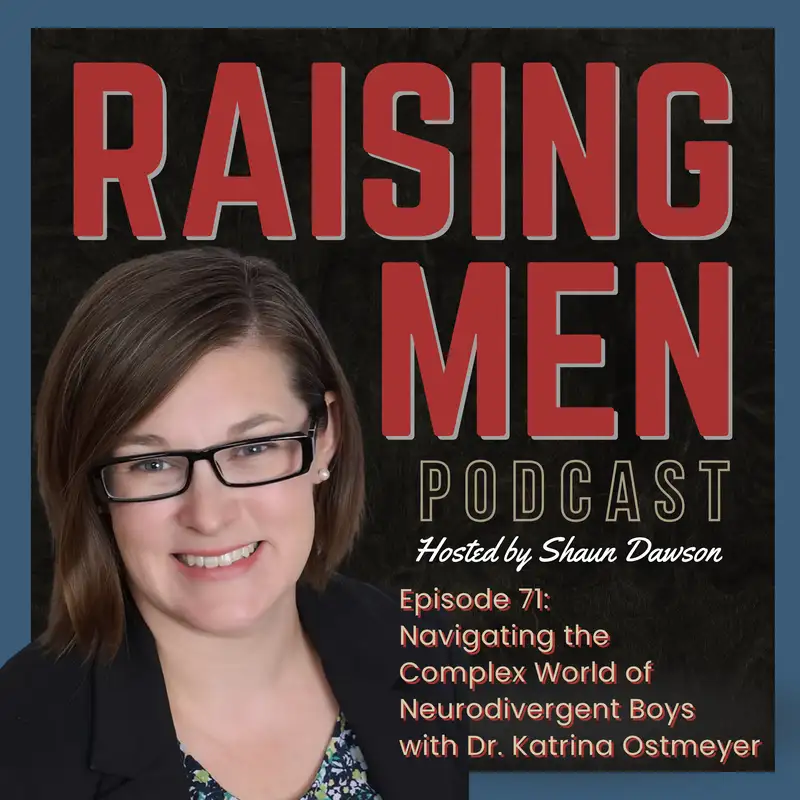
Navigating the Complex World of Neurodivergent Boys with Dr. Katrina Ostmeyer
In this episode of Raising Men, host Shaun Dawson sits down with Dr. Katrina Ostmeyer—CEO of Beyond the Individual, Associate Professor of the Practice at the University of Kansas, licensed psychologist, and Board Certified Behavior Analyst. Beyond her clinical and academic credentials, Dr. Ostmeyer brings invaluable lived experience as the mother of a neurodivergent boy. Together, they navigate the complex landscape of raising sons whose minds do not fit into standard conventional boxes.
The conversation explores the key diagnostic differences between boys and girls, how to distinguish normal boyhood energy from neurodivergence, and the delicate balance between behavioral interventions and medication. Dr. Ostmeyer highlights a transformative, strength-based perspective on neurodiversity, framing labels not as lifelong limitations, but as personal shortcuts for understanding a child's unique needs. This episode provides actionable insights and grounded encouragement for parents aiming to help their sons thrive.
Key Takeaways
- Diagnosis vs. Normal Development: Evaluating whether a child's behavior requires formal intervention comes down to whether it causes significant impairment and if simple environmental adjustments can resolve the issue first.
- Shift to Strength-Based Care: Modern clinical approaches are moving away from trying to "fix" neurodivergent children, focusing instead on leveraging their unique personal strengths to help them achieve their goals.
- Behavior as Functional Data: Misbehavior or defiance should be viewed as communication and analyzed functionally to understand why it is happening rather than simply labeling the child.
- Accommodations Build Skills: Accommodations at school or home are not about lowering standards permanently; they are tools designed to support children while they build essential skills.
- Parenthood Over Perfection: The ultimate objective of parenting is not raising a perfectly behaved child in every moment, but equipping boys with the independence and resilience needed to become happy, functioning adults.
"There’s a lot of variation in the population... and it’s really not a problem unless it’s a problem." — Dr. Katrina Ostmeyer
"A disorder says you have a problem... but moving away from 'let's fix this' to 'what do you want your life to be and how do we help you recognize what you're working with' is where the field is going." — Dr. Katrina Ostmeyer
"Our goal at the end of the day is not to have a perfectly behaved child; it’s to help raise functioning, successful, and happy adults." — Dr. Katrina Ostmeyer
Transcript Summary
00:00 Introduction
02:26 Balancing clinical expertise with raising a neurodivergent son
03:52 Gender disparities and diagnostic bias
04:54 Disambiguating natural male energy from clinical neurodivergence
07:01 Rethinking classroom environments and expectations for young boys
12:27 Evolutionary perspectives on ADHD and shifts in treatment options
16:30 Moving from negative disability labels
23:20 Understanding childhood defiance
27:46 Real world parenting stories
35:28 Early childhood milestones and determining when to seek professional help
39:50 Reframing neurodivergence through strengths and personalized support systems
47:08 Dr Ostmeyer's core principle for parents raising excellent men
02:26 Balancing clinical expertise with raising a neurodivergent son
03:52 Gender disparities and diagnostic bias
04:54 Disambiguating natural male energy from clinical neurodivergence
07:01 Rethinking classroom environments and expectations for young boys
12:27 Evolutionary perspectives on ADHD and shifts in treatment options
16:30 Moving from negative disability labels
23:20 Understanding childhood defiance
27:46 Real world parenting stories
35:28 Early childhood milestones and determining when to seek professional help
39:50 Reframing neurodivergence through strengths and personalized support systems
47:08 Dr Ostmeyer's core principle for parents raising excellent men
Books, Links and Frameworks Mentioned
- Beyond the Individual: https://www.beyondtheindividual.com
- PSYPACT (Psychology Interjurisdictional Compact): Telehealth authority framework across 44 states.
- Diagnostic and Statistical Manual of Mental Disorders (DSM-4 / DSM-5): Referenced diagnostic frameworks for ADHD and Autism.
- 504 Plan Framework: Educational accommodation framework used in public schools.
- American Academy of Pediatrics (AAP) Guidelines: Reference framework for treating ADHD.
- Berry Picking Paradigm: Evolutionary psychology framework regarding foraging behaviors and ADHD traits.