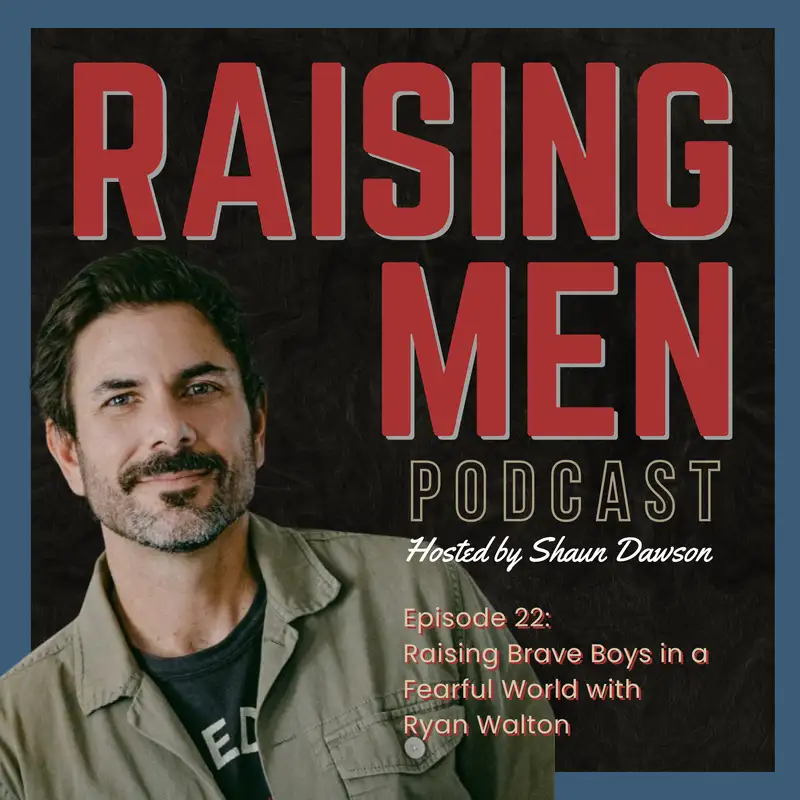
Raising Brave Boys in a Fearful World with Ryan Walton
that is not giving men an out for not experiencing
like the full breath of who they are
cause I actually agree with you that
I think it actually does cultivate a strength
but I think understanding the reason why men do that
and why
what's in our bodies and in our psychology to do is
is an important
like place to understand at the ground level
well and it's a virtue
being able to turn that valve is a virtue
hello and welcome back to Raising Men
today I'm joined by Ryan Walton
he's a husband a father
and the founder of a coaching program called
daring to Dad
Ryan's work calls men to live courageously
lead intentionally
and father from a place of integrity
Ryan thank you so much for joining us on raising men
yeah man I'm I'm so glad to be here
so grateful for the work you're doing
and putting out there for men and fathers
it it means a lot so thanks for asking me to be on
I really appreciate you being part of it now okay
so I'm gonna ask the million dollar question
why do we coast
why do we coast um
we coast because um it's easy
because it's easier to avoid than to confront
you know
one of my my favorite uh
psycho psychologists and and thinkers
Carl Jung
talks about that the greatest challenge we ever face
and battle we ever fight is the
the the inward one to get to know ourselves and to um
challenge and push ourselves
and that's that's truly the difficult battle we face
and so it's easier to avoid
I also think we are uh
part of a culture and a society
and a market that profits off men being numb
that's so true
yeah yeah
that is so true so how do I know
you know how do I know that I'm doing it
what is what is the difference between
coasting in an unhealthy way
and just kind of like
resting on my laurels a little bit after a victory
yeah
um it's
it's awareness so I
I think coasting in life
you know when
when we we
there's a deep knowing right
there's a feeling that
we are not living the life that we set out to live
there's a deep knowing inside of us that feels
that something is off
something is wrong in the stillness
right in the
the the early mornings
the late nights when we're alone with ourselves
I also think you know um
often coasting comes from a
a lack of awareness of of what is leading us right
so
um so often in our lives
we are being LED by our feelings
by our emotions it's driving us to do certain things
that we're not even not even really aware of
so we we find ourselves addicted
we find ourselves addicted to alcohol porn
weed um
sex whatever it is right
and we find ourselves driven to these things
because our lives are filled with these feelings
these emotions these experiences that are unaddressed
right and so going back to avoiding
we avoid them by doing these other things right
so it's not that
um
a a night of binging Netflix
right is a bad thing yeah
but often we are pulled into that
out of a place of like avoiding something else
you know it
it's our
what what I do as a coach
and I think the responsibility we have as humans
as men is to become aware of the forces in our lives
that are driving us to behave
or coast in a certain way right
what are
what are the things and how do we become more mindful
more aware of these things that are impacting us
and driving us forward
yeah it's almost
so
what I'm hearing from you is that it's intentionality
like okay
if you're meaning to rest between bouts of success
and you're doing that on purpose and
you know that's what you're doing
and there are guardrails around it
then that's fine yeah
but if you're falling into the trap of addiction
or you're falling into the
and you know
one of the most pernicious things
I think about social media is it
it is it feels like you're doing something
but it's actually avoidance
yeah and those are the worst possible things you can do
well it's kind of like
like you know
walking the dog who's walking
are you
are you walking the dog or is the dog walking you
yeah and
and often these things we have surrendered our
the agency that we have in our lives
the power we have to make these decisions consciously
to being driven by our um
our insecurities our shame
the things that we're avoiding in life
and we numb out by these other things right
and it's just much easier to do that
and again when we're in a container
or in a culture that profits off us being numb right
you mentioned social media right
they want that these these companies
these platforms want all of your time
they want you to numb out
they want you to doom scroll
right and so it feeds into
I think a
a place where we we can easily slip into what
what you refer to as like
as coasting or avoidance right
um so
yeah
I think that's a really useful way to frame it because
you know I think a lot of people
our American culture really um
rewards and admires iconoclasts
and there is nothing less iconoclastic than sitting
doomscrolling Twitter or or
or Facebook and yet
I think a lot of people feel like they're
you know fighting the machine somehow
when they're doing that and
but they don't recognize that no
no no
those people that's the way they make money
they make money sitting you
getting you scrolling yeah
and that is its own version of the man holding you down
or whatever it is
that you think you're fighting against yeah
you know that's
that's something to consider yeah
and you know again
if if there's an intentionality to it
then that's one thing but right
if there's but
but if but if it's a pitfall that you
that you're falling into
with spikes on the bottom of it
well then you need to be careful
right and
and we have a responsibility as well
like you and I who are a part of this
you know we
we create content right
to be to be consumed and
and we we put that out there right
and we have to always be aware of even our time
and doing that in a conscious way and and
and
we're trying to put some meaningful things out there
and but yeah
you're you're right and
and it's a message that one
I have to embody
it's also a message that I send to my kids about like
hey don't become a slave to this
cause it it
it will enslave you it's
it's designed to create an addiction right
um and
you know companies leverage this
you know the
the I think the porn industry leverages this
a lot of
these kinds of things create an environment for men
in particular
cause I know that account we're talking about
to find it really easy to numb out and to coast
and to distract ourselves
yeah the
the the model that I think about with respect to that
is that you know we
we we have two brains in us
I call I call one of them the Conan
the barbarian brain and I call the other one the
the Sherlock Holmes brain
and in in men and boys
especially the
the Conan the barbarian brain
the Sherlock Holmes brain develops much
much later it's the prefrontal cortex
and it develops much much later in
in boys and men than it does in girls and women
and um
and sometimes it doesn't ever get
take control at all
and these you know
these companies
what they're trying to do is hijack you and keep you in
kind of the barbarian brain
because that's where you're just reacting and you're
and you're you're not actually taking the signals that
that brain is telling you and
and applying it to your values
and making an intentional decision
you're just doing the thing
yeah yeah
well it keeps us
to
another layer is that it keeps us out of relationship
yeah it keeps us online and out of
relationship right
yeah and
and don't get me wrong I
there are genuine connections in relationships
with people via like
social media and things like that
that are good that's how
that's how you and I are here
right here in this moment right
that's right we
we met through an online environment
and I I
I want to make sure that I
I say that but I do think
it also has the ability to keep us out of real
in person relationships with other men
which is I think one of the key elements in the
the healing of men in their lives
is being in community and relationship with each other
to be seen to show up um
with with other men in an authentic
meaningful way and often times the ways that we um
numb out are often done in isolation
and isolation is I think the
the man killer and so uh
I I think yeah
again
this isn't a bull we
we can't just simply blame these
you know companies and these algorithms
although that's part of it
we have to be able to look at ourselves as well
and how we're interacting
so it's it's
it's not just it's not just one answer
it's it's
it's a layer of things
yeah blaming Facebook is fine
yeah but it's not actionable right
OK I yeah
Facebook is a pernicious force that is
ruining men's lives let's
let's go with that OK
so what what are you gonna do about it
yeah um
I think everything is holding
holding things those things in the balance and
you know we have to
come to a point in all of our lives
where we take ownership
of the way that we are showing up
and our and take ownership of our lives
and yes
are there systems in play in the world right now
that are that are hurting people
you know I
I I tend to work with a lot of just uh
working class men in the world
and yes there are economical
social
political things happening in the world that impact us
right and we have to recognize
the systems and structures in place
and we cannot let that absolve us of the responsibility
we have to take the next step
and take ownership of our lives
so both are at play and it's not just one or the other
it's kind of a both and yeah
um but I think it's important to recognize that
so we talked about coasting
we started off talking about coasting
let's talk about the opposite
what does daring look like in everyday fatherhood
and what what is yeah
what does daring look like
yeah that's a
I appreciate that question
and that's changed for me
like over the course of my time as
as a father and growing as a man
I'm in my 40s now and what showing up looks like
what leaning in to fatherhood
to my own life looks like
um it is a dare because as we've said before
it is easy to avoid it's easy to coast
it's easy to settle um
it's easy to um check out
but to lean in
and to face ultimately like yourself
I think is the greatest thing a man can do yeah
you know when it comes to
you know fatherhood
which is what I talk a lot about
the men I work with
we get into some of
like the tactical aspects of being a dad
right conversations with kids
and rules and structures and this and that
but a lot of what we face is
is the man himself and uh
his own reaction his ability to move and um
with his own nervous system and
and reaction um
un unpacking his
the relationship that he's had with his dad
and with people it's
it's more about
us
becoming the kind of man that we know we're capable of
and modeling that for the
for our kids and so stepping into that
leaning into that is is to dare
it's to risk um
because it means facing
the parts of yourself that you would rather avoid
the parts of yourself that you don't want to to
to see that you don't want others to see um
but in reality other people are seeing them
because those things find their way out of us anyway
yeah that's right
um but yeah
so that's what I think that it
what it means to dare to dad
and I I think it's a uh
an important mandate cause I think there is
a mandate on men and fathers in the world today
um we do not live in the same world that our fathers
and our grandfathers lived in
um
you know
something I talk about often is
I had this conversation with someone last night
you know it wasn't until
you know the
the 60s
that men were even allowed into the delivery room
when it came to a child being born right
for a long time it was like
no men
you stay out in the lobby
and it was and women you're
you're allowed in here right
and in a single generation time
it's like
there's an expectation that when your child is born
that you're there
you're a full engaged birthing partner
you go to the classes
you show up in the room and set the tone all
and so there's a big shift that
that's happened
and there's a call to men to step forward
we're we're tired of the narrative of the
the disengaged disconnected dad
we're you know
with the the world has changed a lot for a
for a lot of reasons yeah
and so I think the the
the call to men is to lean in and to dare ourselves
to be better than maybe what has come before us
we can appreciate that and we can
you know uh
to a to a certain degree
but we can also say no
we wanna do better we wanna do more
we wanna be engaged in all aspects of life
and our own humanity
when it comes to being a man and being fathers
so
that's what it means for me to lean in and dare to dad
yeah I have this I have this friend who
he recognizes
this is just for observation
but it seems to me that he recognizes the fact that we
we always put off the
the thing that is kind of unpleasant
that you don't want to do
uh huh and so you can see him
when he encounters something like that
he just does it right away
uh huh and so
it's like
he recognizes that the reflex is to put this off
and then
and then just stick it over in a corner somewhere
and come back and address it when you're ready
but instead of doing that reflex
he's trained himself to do the opposite of that reflex
and I feel like that's what we need to do
the easy thing is to rest
the easy thing is to is to
is to coast
and we need to train ourselves to
when we feel like coasting
we need to leap into action instead
yeah we need to dare instead
yeah well
I mean the key
the key to anxiety is action right
so I think leaning when you're anxious
action is the remedy I say this to my
my 13 year old son all the time when it comes to like
homework right
oh my gosh
you know
I don't want to do this math assignment or whatever
it's like it will literally like he's brilliant
it will take you 10 minutes
and the amount of time that you've spent
worrying about it complaining about it
you could have been done by now right yeah
but why are you signing up for this anxiety right
but I do the same
I do the same exact thing when it comes to like little
small tasks I'm like
why is everything in my body
not wanting to do this thing
yeah but when
when we move through it that feeling of like
being done and accomplished feels really great um
and and there are times to rest right
there are times to do that
but going back to the beginning of our conversation
it's about like are we doing that consciously
are we being aware are we doing it with intention
and are we moving into those times with um intention
so yeah
for sure taking action is um
is a huge part of um
healing growing and moving through anxiety
I've read a
I've read a really good tactic for dealing with that
which is okay
don't commit to doing the whole thing
just commit to doing it for 2 minutes
and then once once you're in two minutes
then you can decide OK
after two minutes you can quit or you can keep going
and the vast majority of the time you'll keep going
yeah like we
we yeah
we paralyze ourselves sometimes because
because we can't do everything
we do nothing right
and so yeah
breaking it down can be really helpful
and that's where someone like a therapist or a coach
and someone outside of you
can help you and offer those kinds of perspectives
to help you
break down your goals into those kinds of tasks
like I coach Little League
we do the same thing when it comes to a a
a kid hitting right
yeah and baseball is a very complicated game right
and like hitting is complicated right
there's all sorts of things
there's your lower body your upper body
your hands your eyes
your head your shoulders
everything that you do to get into the right position
to hit the ball
if you start talking to a kid about every single thing
and he's thinking
about all the different parts of his body
it
right
but if you begin to break some things down
one thing at a time that's what a coach does
so in the same way a coach can help you
um begin to move the needle in areas of your life
by giving you some of that perspective that
it's hard to have on our own
cause we get overwhelmed so yeah you know
yeah I had a
I had a had an experience yesterday with my boy um
about that exact thing
and so he's decided that he wants to get into golf
and he's only 6 uh huh
and uh
but so we're we're leaning into it my
my wife's getting into golf
I hate golf I have hated golf my entire life
and I'm starting to get into it
and starting to really enjoy it also
and so
he and I decided to go to the driving range yesterday
and I um
I started off by like
trying to explain to him all of the mechanics and all
you know
here's how you gotta stand and here's how you swing
and here's how you hold the club
and here's how you do this and here's how you do that
and I started seeing him get frustrated
I was like this isn't fun for him
this like
he just wants to hit some balls
yeah and so I went you know what
here's how to avoid getting hurt
and here's how to avoid hurting other people yeah
go hit some balls
and here was the crazy thing about it
I would sit there and I uh
I had just bought this driver
and about 75% of the time
I would hit the ball
and it would just go off in some crazy
random direction it's very frustrating
I was getting all mad at myself
and I was expressing my anger there
but then about every once in a while
I would hit the ball
and it would go perfectly straight
and it would go 300 yards
just would sail forever and it felt so good
and what I did in that moment is
I acted too cool for school
I just like was like yeah
you know that's that I'm that's the kind of golfer I am
but that's not true
the kind of golfer I am is the guy who sprays balls
all over the place yeah
right meanwhile
my son was out there
and he was spraying balls all over the place
and he would spray a ball and put another one down
and he would hit it
and spray a ball and then put another one down
and then he would hit one
and it would go 10 feet in the air and would
you know it land like 20 yards out there
and he's having the time of his life
he's having the time of his life right
he was having the time of his life yeah
and he's out there doing that
and he had way more fun
going to the driving range than I did
because he was having the time of his life
the 10% of the time that he hit the ball perfectly
uh huh and I was miserable that I was just miserable
the 90% of the time that I was hitting it poorly
and I was like there's a lesson here yeah
I've gotta do something
I've gotta do something about that
and I'm not quite sure what it is
I'm interested in your feedback about that
you know
we were talking a little bit before this show started
about
like the vulnerability of joy
yeah and
that at some point in our lives
joy becomes this thing that we hide
yeah as men
yeah and that we are afraid to express
um
and I I
I think it's because you know when
when if you were to sit in a
a great meditation is to just connect with um
a moment of joy that you had as a child
right and and
and hopefully you had one
I know not everyone's lives are the same
but when I think back to my childhood
and joyful moments it is
it is there's a depth there and a
something very very deep within me and
where we do need to grow up and mature and
and we initiate from boyhood to manhood
what we often do though
is completely cut off sometimes this
ability to just have joy yeah
and we encounter it with our children
and they have a way of reminding us
about that joy
and sometimes that reminder can be frustrating for us
we go how
like
we we all of a sudden see ourselves
we see ourselves in that moment of like
why am I why am I not having a good time right now
and he's having the time of his life
that's frustrating right because
because we have you know
in that moment lost connection with
with the joy of just of being and
and not not and have not
not performing yeah
not having to produce something
you know right
and um
it's an incredible thing and I think that's the
I think that's a
one of the magic pieces of fatherhood and
and being around kids
is this reminder of what it means to be like
a kid and to have joy um
and that takes conscious effort
you know to
to sit with our kids and to
to play games to
you know
just jump in I
I think that's why I love uh
with my kids
um like watching some of these
like old movies or getting into like
things like you know
Star Wars or like Marvel stuff
because when I step into that world with them
I get to step back into being a kid again for a bit
and just love it to love it yeah
there's no purpose for me or anything like that
other than just joy yeah
um and it's something that I think I would
I think we as
as men as fathers need to uh
cultivate a sense of being able to
you know
express our joy
that's so true
joy isn't cool
joy isn't cool or wasn't cool when I was growing up and
what a gift that we can give to our sons
yeah
to free them of that yeah
mindset yup
and we can do that I can yup
I can I can do that
I can cultivate that and
you know when we're at the driving range
I kind of suppressed it a little bit in him I
I I didn't want him to make so much noise
I didn't want him to disturb other people
you know yeah
I don't know man
there's something to that I
I don't want to disturb other people but
but by the same token
I don't know I need him to feel the joy too and and
and frankly I need to be learning from him
and I need to be experiencing the joy
rather than hitting that perfect ball
and being too cool for school
I should feel the joy and not only that
I should be helping other people feel joy
what would how would it
how would I feel if I hit that perfect shot
and I'm looking at it and I'm
even though I'm being too cool for school
and somebody behind me said man
that was an amazing shot
yeah that would make my week
yeah for sure
and yet I've never done that
yeah I wouldn't think of doing that
yeah why
uh huh why can't I cultivate that in other people
and other men especially
well and
you know that's
yeah I have a
I have a good I have a
one of my my good buddies was in Nashville
and on a number of occasions
I I have felt like I've
I've had experiences in life that are bringing me joy
and I've just keeping it in
and I I can
I can feel it like in my chest yeah
yeah and he's
he's one of the men in my life that just
you know I can
I can just completely be myself
and I'll calm like Ben
I need to just radiate with you for a bit
can you just
could you hold my excitement and could you just like
can we just and like
and I'll just call and I'll gush on something
yeah
and it's so important right
because I I
we have spaces like that as men that
that are like culturally appropriate
like we're talking about sports
the sports field is one of those things yeah
when when
when we score touchdown and we spike it in the end zone
and we do we do the dance
and there there are those moments that are kind of
culturally acceptable when it comes to joy
but what about other things
what about the like
what about the business idea that you have
what about the what about the joy of
of watching your kid do something right
what about a relationship and
and maybe someone that you're falling in love with
what about something that you're
what about you something that you're you're
you're learning in school or you're growing and
and you're excited about
I think sometimes those areas for men we
we tend to like oh
I don't wanna get too excited about that
I don't wanna share that like oh man
like cause maybe when we were a kid
we shared excitement about something
we got really excited someone's like
oh man
you're gay or whatever and so
we have these really dumb
like cultural things around being joyful that limit our
um
uh
we limit ourselves from being seen
yeah right
and so uh
cultivating Joy Man that's
that's a yeah
and it I mean just think about
just think about what you would do if your son were
some had some success
hit a home run right
yeah and was feeling joyful about it
was bouncing up and down everyone was
was hugging him and stuff like that
and someone came and stole that joy from him
yeah somehow like yeah
said
said something that made him feel bad about it or say
oh well
you know if you were really good
you would have hit it over the center fence
instead of the right field fence
or some crazy thing like that right yeah
how would you feel about that person
right what would you do as a protective instinct
as a father what would you do to somebody
who stole that moment from your son
and yet you and I steal those moments from ourselves
constantly yeah
it's sick yeah
yeah and so
we need to we need to be able to cultivate that
and you know what that's part of being courageous
that's part of daring yeah
in the way that you describe it
uh huh yeah absolutely
uh I think being able to
as men experience the full spectrum of like emotions
right versus often
what have been the culturally acceptable norms for men
you know to experience to
to be angry and to be joyful
but only in certain areas yeah
you know to allow ourselves
the full breadth of the human experience
to be seen and known as humans first right
and
and I think that is an invitation for men right now is
um where I think sometimes there's a
a message out there that men are somehow being
uh
stripped of
some of these traditional roles that they play yeah
I actually see what we're experiencing right now
is an opportunity for men to both be those things
and so much more to be fully human
and to experience the wide range of the human like
experience on this planet
to tap into all parts of ourselves
our our
our our joy
our anger our grief
our pain our hopes
our fears like all of these things
and in a in a really
really powerful way and so yeah
I'm all these things to lean into those areas
maybe
that we haven't always been comfortable leaning into is
is where the daring bit comes in yeah
what are some of the the
the the tactical things that
that men can do to help retrain themselves
to have a bias towards action
or to to
to have to reflectively
or to reflectively dare instead of coast
uh huh
yeah I'm gonna
I'll use the word that I I don't love this word
cause I have sometimes historical baggage here
but accountability
it's a big part that's where other
being in a group or space with other men
is where it's at yeah
it is where it is at Sean
so you know
to be around other men who are helping push you forward
not in in a in a in a loving way
men who are for you
who want your success where you can show up right
and that is that that's huge piece
like I said your tribe
yeah and isolation is the man killer guys
and so if if you're listening to this
find a group it doesn't have to be anything
it could be small if you don't have one
start one like be around other men who inspire you
right I
I say this to my 13 year old
you are an average of the five people
you hang out with the most yeah
so be around some other men
there's a lot of great communities
you know on even even if it's virtual start somewhere
I mean it's best in person
but even online be around some other guys
and get some accountability in your life
that's No. 1 um
you know
No. 2 is you being able to be honest with yourself
even those spaces of showing up in a men's group
working with a coach
working with a therapist
is only as good as you are honest
so being taking inventory
there's some great questions you can ask
if you're feeling like you're stuck
or feeling like you're coasting
one of those questions is
what am I avoiding in my life
so if you're a journaler or
or anything like that
these are some great like meditations
what am I avoiding in my life
what am I pretending isn't heavy but really is
right and um
what is one thing I can do today
to begin to move the needle
what's one thing I can do
you know um
I mean I think
I think if we all woke up every morning
and we asked ourselves those three questions
yep exactly
just imagine how powerful you'd be in a month
in a year in five years
yep and you just ask yourself those three questions
every day that's it absolutely
wake up in the morning
ask yourself those three questions
yeah absolutely um
I think another another one could be
you know what
what have I not
where am I not telling the truth
is another is another great question
where am I um
where am I lying to others and myself
I think that you know
I one of the things that I feel has come out of our
kind of hyper online culture these days is that we've
we're losing the ability
to encounter criticism in a healthy way
oh yeah
it it's almost like
anybody who criticizes you is your enemy in every way
and we have to we have to fight that yeah
and that creates a feedback loop where okay
if you're gonna react violently towards me
if I give you criticism then I just won't do it
it actually costs me to give you constructive feedback
uh huh and if you don't accept it well
well then I won't give it to you right
and then you end up in a situation where literally
nobody is willing to show you your ass
uh huh
and I got news for you your ass is hanging out yeah
nobody can read the label from inside the bottle
you need people to tell you what it says yeah
and if you can't accept that with Grace
it is a problem for you you're gonna look around
and you're gonna be at rock bottom
and there will be nobody there for you
because you've driven them all away yeah
there's something really
really powerful about a man who can stand
and listen to feedback
and hold that with
um
patience and perspective and understanding
it doesn't mean that even if the feedback is is off
right it might be wrong then yeah okay
but how many but
and especially I would say in in relationships right
you're in a relationship with someone
and someone has some feedback yeah
that is that is a powerful man
that's a very attractive man to I think
to women and partners yeah
is a man who can hear feedback
listen to it and
and get curious oh gosh
we can probably do a whole episode on the the
the power of curiosity in
in a man and getting curious and staying curious
um but that's
that's that's a really
really powerful thing to talk about is
is is
is getting feedback and standing in it
listening to it adjusting where you need to huge
mm hmm yeah
and and I'll tell you
one of the as as a father
sometimes the
the harshest feedback we can get is from our
from our kids so yeah
they who can be really bluntly honest and
and even
even the feedback that they don't say but that you
you begin to notice in their lives
yeah and the feedback that you're getting as a parent
um can be really
really hard and we can be hard on ourselves
so there's a lot of different ways we can
receive feedback as men
but to stand in it to hold it
to get curious about it
is a really powerful skill to develop
I remember this episode that happened to me with my boy
he was
he was about 3
and he had just recently been potty trained
and he and I were going I like to fly gliders
and we were going to the glider port
and uh
he used to love to go with me
and but there
aren't any good bathrooms in the glider club
in the glider port and so we stopped for breakfast and
uh and so at the restaurant I wanted to make I
I wanted him to poop
before we left the restaurant to go to the glider port
because we were gonna be at the glider port for
a while and I didn't want to run the risk
that he had an accident
and so I had a lot of pent up frustration about like
making sure that he poops
so we went in the bathroom
and he didn't want to sit there
and he didn't want to poop
and he didn't feel like he had to
and I knew he had to
he just eaten like I knew he was like
if he just sat there for a couple minutes we
it would come out and it would be fine
and I ended up getting really upset
and I started yelling at him
I was so frustrated it was all pent up
and I probably had some other stuff going on
and he says he's like yelling back at me and he says
I'm scared and I'm screaming in his face
I'm like what are you scared about
and he goes I'm scared of you
and
this is one of the most shameful things
I've ever experienced in my entire life
and I realized
yeah
he's scared of me right now about going to the bathroom
and
I just sat with that for a second and I
I said I'm so sorry man
I am so sorry
and I said let's
you know what
let's just go we're okay
it'll be fine and if we need to stop
we'll stop and if we need to go to the bathroom
at the Glider Club
we'll go to the bathroom at the Glider Club
it'll be OK and I'm really
really sorry but man
I mean I will remember that on my deathbed
hmm
as one of the biggest like if I could take that back
and you know what he probably doesn't even remember it
man thanks for sharing that story
that's a vulnerable share and I'm
I'm I've had those moments
and I'm sure probably I better what
listening has had those moments
yeah um
and yeah I
I understand like the feeling
I think the the important piece of that is
no none of us are gonna be perfect
we're all gonna have these moments of um
where we we messed up where we allow our whatever is
whatever was happening in your world in that moment
whatever was driving your agenda
to have him do that right then and there right
I mean
we could probably explore like what else is going on in
in your world and in your
your at that moment right
but I think the important piece
and the takeaway that I would say here is
is the repair
yeah right
um
and the importance of repairing
um in
in parenting and in our relationships with our kids
is that often that doesn't happen and so
being able to follow up
and to be able to work through that
to apologize you know
um
and to learn and to grow that your kid will remember
yeah is yeah
maybe the moment it was scary yeah
but he's also going to remember how you sought to
learn and grow
and apologize and admit when you're wrong
yeah and to self correct that is equally as important
yeah and as I'm thinking back on it now I
you know I
I um
uh I just recently had a conversation with a guy named
Ryan North
and he said in their family
they have they
they have a
a specific formula that they use for apologies
and um
and and part of it is you
first of all you
you you
you say I'm sorry
and you say the specific thing that you're sorry for
like I'm sorry I yelled at you and made you feel scared
mm hmm
and you ask for forgiveness
and I wish I done that I mean
like I would feel better now had I leveraged that
uh huh in that moment
and even if he wasn't ready to forgive me
you know in time he will be and cause it
that's true I mean
sometimes that maybe the moment they're
they're not there yet we're not there yet
you know and so
and that's yeah
that's okay then you know
well let's check back in
in a couple hours like
let's see where we are and yeah
it was man but yeah
and but I'm glad he gave me the feedback right
I mean they
going back to yeah
you're right
that was direct feedback sometimes
and we do
I'm glad he told me and I'm glad he felt like he could
in spite of the fact that I was in his face
I was screaming at him
I'm glad that he felt like he could say
I'm scared and that's not the appropriate way to be
like you're not being the dad you wanna be
it's basically what he's telling me
yeah and I mean
it hit me right between the eyes and I'm really
really glad he did that yeah
and we yeah
that's a really really powerful story to describe
when we're constantly getting that yeah
and I I again
going back to the the
the power of being a man who can receive feedback
also the power of a man who seeks it out right
the power man who who constantly wants to um
grow and develop
I think that's a powerful tool in a relationship
I'll ask my kids sometimes like hey
you know and when the moment is right
you know how can daddy
is there
is there a way that daddy can do better with you
or how how
what what would you change you
know where where
where are you maybe having a hard time with dad
you know what can I
what can I do to um
to help you
you know better
I try to keep the questions really simple with kids
but it's also important tool in relationships
hey
where where am
where am I not seeing you
hey where where
where can I um
how can I be a a
a better service to this relationship
this partnership this love
whatever it is it's a really powerful thing to do
yeah yeah
I thanks for sharing that story man
that's a that's a
that's a that's a great and a powerful picture of
of getting feedback in the moment
and the way that our kids reflect back to us
in a really powerful way thanks
that's that's
that's kind of you to say yeah
I mean fatherhood
I think it can why I'm in this work and doing this
fatherhood can be one of the greatest containers
for our formation as human beings
as men and um
it's really powerful yeah
yeah I yeah
I I definitely feel that way
what now how do you think we can help cultivate
this reflex for daring
in our sons
hmm
um
resiliency you know
being teaching kids to be um
resilient to um
believe in themselves
and their ability to do difficult and hard things
um it's sometimes easy to want
to just go out and clear the path before them
but to allow them to struggle um
I have a phrase that I use with people with kids is
is to don't steal the struggle
the struggle is a gift
yeah um
and so seeing our kids and
and seeing our kids struggle
can be an incredibly difficult thing yeah
um
but to allow that is to help them cultivate into build
build resilience so that can be on the sports field
that can be in the classroom yeah
that can be relationally um
when my kids are like fighting and arguing
you know
how much do I allow them to struggle through that
and to build and repair on their own
versus how quickly I step in
uh huh um
yeah it's
it's easy to do that I think
I'm gonna make a statement that
I know is kind of a general one
but I think it it is
mostly holds true that I think dads do
maybe this a little bit better than moms
um is to allow like the
the kids to take risks right
and to get out there and and to develop some resilience
but I think
it's something that we can continue to be mindful of
so when it comes to daring and leaning in
um also to allow us our
our our kids to
to feel right um
in in
in your bathroom moment
to welcome your son's fear and distress
and to not shame him for it and to experience like
that moment is is a
is a powerful thing and um
so I think those are some things that we can do to
to to build a sense of
of daring and leaning in with our kids and
and maybe the most important thing
after saying all that is modeling it
like that's for sure
yeah it is
I always start with modeling
my kids have seen me through
some really difficult things
you know I'm
I'm I'm divorced
I went through a divorce
and my kids had a front seat to my grief
and saw me have evenings where I
I would I would break down and saw me at
at have seen me at some of the lowest points of my life
they've also seen dad get back up on his feet right
they've also seen dad heal and grow and all of that
and modeling a resiliency
modeling what it means to lean in
and to pick yourself back up and to move forward is um
probably
the most powerful thing that we can give to our kids
yeah you talk about the
the the way our kids coach us a little bit
I uh
I had another one of those situations with the boy
one of the ways that I deal with difficult things is
with humor I've always been something that we
you know we joke about is gallows humor or whatever and
um and so when my son was upset and he would cry
I would try to make him laugh
and one day he says to me
he goes stop it dad
he's trying he's laughing
he's trying not to laugh he's trying to cry
uh huh he goes
stop it stop it
and I go what
and he goes just let me feel what I feel
I was like wow man
there's a four year old he's schooling me
and he was so right and
and my wife called me out on it as
as well after that I was like
you know what you're
you're right boy
you are 100% right yep
about that yeah
yeah that's
I mean that's a powerful thing to allow the kids to
um you know
we have a saying in our house
that feelings aren't right
feelings aren't wrong feelings are feelings
and all feelings are you know
there's a classic line you know
parenting all feelings are acceptable
all behaviors are not but when it comes to feelings is
is allowing all of that in um
to model it to um
yeah and what
and kids notice our reaction to their emotions
and what it and
and get a real deep sense of what is acceptable
and what is not
and when we think back to our own experience as kids
we can probably tap into
feelings that were more welcome than others
and it's probably in direct correlation
with how we experience those today
as adults and so all that is
is definitely stuff to be mindful of as
as we navigate with our kids
yeah I
I feel like the way that I grew up
it was
it was all about suppressing your feelings and about
you know soldiering through and all of that
and you know
I mean
that's not the worst advice in the world
I guess but it's really maladaptive
especially in our modern world it
you can be so much more powerful um
if you if you let yourself feel that
and you can you can
it's like the metaphor I like to use is
who's the stronger boxer
the guy who has an impenetrable defense that
you know you can't get a punch in
or the guy who doesn't need to have a defense
because you can just whale away as hard as you want
and it doesn't even affect him
yeah you know it's
it's interesting me there's a lot of
um trips about men these days
and suppressing emotions and thinking
you know hearing exactly what you just said
and I think when we we dig under the surface
there's a lot of really
there's a lot of reasons why that is right and
and the history of men and
and what men have been called to do within
in society um
and the expectation of
of men to be kind of the protectors right
um men
historically
have been the ones that go to war and do some of the
the toughest jobs and we expect right
you know
who's gonna run into the burning building and save like
the women and children right
I mean these are
these are just kind of ideas that are out there
it's like the men yeah and so
with that expectation culturally and historically
in our genetic makeup and in our
in our in our
in our bodies is this sense that
you know what
I might have to make a decision with my body
that's gonna require me to actually shut off
what I'm feeling about in the moment
mm hmm so that valve
right to turn off and on what we're feeling
has to sometimes happen really quick yeah
and
that is not giving men an out for not experiencing like
the full breadth of who they are
cause I actually agree with you
that I think it actually does cultivate a strength
but I think understanding the reason why men do that
and why
what's in our bodies and in our psychology to do is
is an important like
place to understand at the ground level
well and it's a virtue
being able to turn that valve is a virtue
yeah but we
we want that we want that from men in
in certain we
we want them to be these anchors
these rocks right
it's part of you know yeah
part of masculinity is being able to control that valve
but part of masculinity is also
having it be in the appropriate position yeah
yeah hundred percent yes yeah
so I think yeah
just understanding that but yeah
um I agree that vulnerability um
and emotion like when it comes to mental health
and mental health is something we hear a lot about
mental health what I
I take that to mean
and maybe this is helpful for guys is mental resilience
mental toughness
mental stamina yeah right
maybe those words might be help more helpful for
for men is to think about like hey
how mentally flexible are you so that in your mind
in kind of your thing you
you are able to adapt and bend and move
and that's less breakable
yeah right
so yeah
yeah I'm with you yeah I'm with you 100%
well I always love to uh
finish these conversations
by putting people on the spot
uh huh
so if you could
leave people listening with one operating principle
or one guiding principle for daring fatherhood
what would it be
I would say
leaving with one principle
maybe the most important thing when it comes to
fatherhood masculinity
is daring
to take a really honest look at your own life
yeah and leaning into the areas that you're avoiding
um I say this as someone who did that for a really
really long time
and what we hide in the basement of our lives
finds a way out yeah
and often it's doing it when we're not even noticing
and so to
uh face what Carl Jung
the famous psychologist talks about our shadow selves
and be able to face the things in our lives
that are tough
that are scary is the bravest thing you can do as a man
as a father and you
and you your family
your community
will benefit from it and will thrive because of it
I think that is
that is an excellent operating principle
Ryan thank you so much for joining us and
and sharing your wisdom I really
really appreciate it and
and to everybody listening
to every parent listening
let's
let's do our best to just dare a little bit more and
and not just for ourselves
but for our boys and for our children
and for our spouses and partners and uh and
and just everybody who's trying to watch us become men
worth following yeah
Ryan is the founder of the daring to dad
coaching program
you can learn more about what he's up to
with the links in the show notes
Ryan thanks again for joining us
my pleasure Shawn
thanks so much this has been raising men
I'm Shawn Dawson and you are a great parent
raising men is produced by Phil Hernandez
this episode was edited by Ralph Tolentino