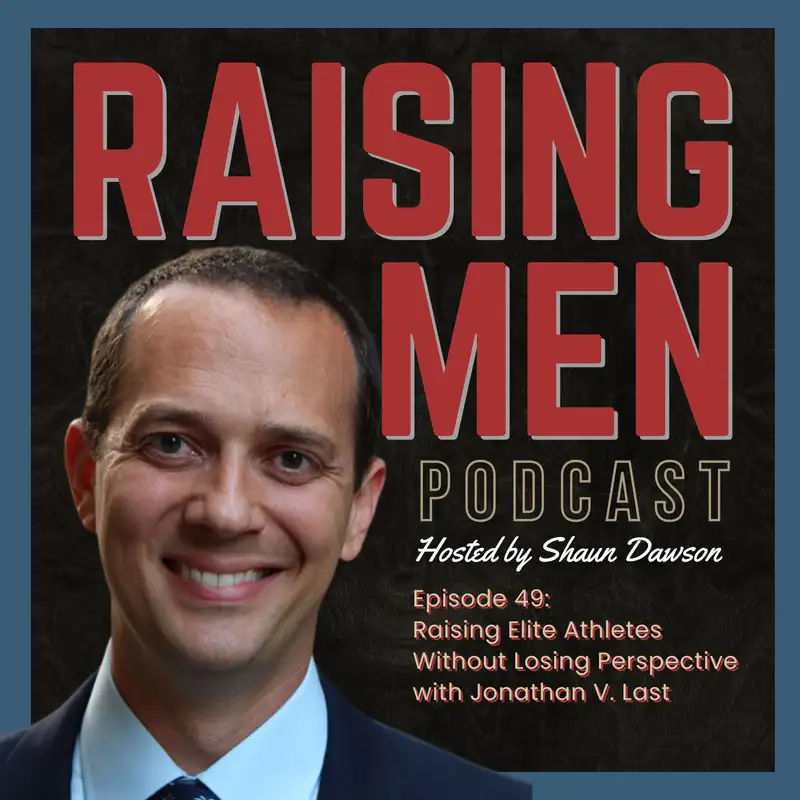
Raising Elite Athletes Without Losing Perspective with Jonathan V. Last
In this compelling episode of Raising Men, host Shaun Dawson sits down with Jonathan V. Last (JVL), editor of The Bulwark and father of four, to navigate the complex and rapidly evolving landscape of youth sports. Drawing from twelve years of experience parenting a high-level collegiate baseball pitcher, JVL unpacks the delicate balance between fostering an elite athlete's drive and maintaining strict perspective.
He shares powerful, practical insights on why parents must actively deemphasize outcomes—such as winning weekend tournaments—and instead fiercely protect the process, where true character and resilience are forged. From discussing the modern pressures of early sports specialization to highlighting why the ride home from practice is a sacred space for meaningful conversation, this episode serves as an essential, grounded roadmap for fathers striving to raise well-adjusted, independent young men.
He shares powerful, practical insights on why parents must actively deemphasize outcomes—such as winning weekend tournaments—and instead fiercely protect the process, where true character and resilience are forged. From discussing the modern pressures of early sports specialization to highlighting why the ride home from practice is a sacred space for meaningful conversation, this episode serves as an essential, grounded roadmap for fathers striving to raise well-adjusted, independent young men.
Key Takeaways
- Deemphasize Outcomes, Value the Process: In youth sports, individual plays, innings, or weekend tournament wins ultimately do not matter; what matters is the athlete's approach, conduct, and how they manage both success and failure.
- The Car Ride Home is Sacred Space: The drive home from practices or games is a precious window where parents have their children's full attention as they wind down, making it the premier opportunity for meaningful connection and life lessons.
- Expose Kids to Sports, But Let Them Choose: It is highly valuable for children to experience team sports, but parents must explicitly communicate that their love is not tied to performance and that kids are free to pivot to other passions like music or drama.
- Elite Talent is Obvious Early: Real elite athletic potential—enough to play at the collegiate level—is usually unmistakably apparent by age 10 to 12, meaning parents should avoid placing crushing performance pressure on kids who are not at that baseline.
- Sports Concretize Abstract Life Lessons: Properly understood, sports act as a tangible classroom for the human condition, teaching kids how to handle physical limitations, adapt to things being taken away as they age, and manage internal expectations.
"There are only two reasons to do sports... for money or for joy and pleasure and growing. If you're not having fun and you're not growing, why bother?"
"The most important part of any sports experience with your kid when they're young is the ride home... because the ride home is where you have each other's attention."
"Even if you play in college and get drafted... you will have more time of your life to figure out what it is that you want to do to contribute to this world without baseball in it than you will have had with baseball."
00:00 - Introduction of Jonathan V. Last and the elite youth sports landscape
02:04 - Defining the levels of elite talent and collegiate pathway
05:56 - The true purpose of sports as a classroom for the human condition
07:51 - How physical injuries like Tommy John surgery build life-long toughness
09:15 - The critical role of coaches as positive masculine role models
0:59 - Navigating parental ego and caging the instinct to live through your child
12:28 - Deemphasizing game outcomes to focus heavily on player approach and process
14:22 - Why the ride home from practice is a sacred space for connection
16:45 - Using car rides to pass down music traditions and build family memories
19:11 - Cultivating a child's natural passion without forcing performance
21:58 - The modern structural shift toward early sports specialization and club teams
26:52 - Recognizing elite athletic talent early and handling the "non-sports" child
32:40 - Teaching young men to turn the page and healthily manage failure
02:04 - Defining the levels of elite talent and collegiate pathway
05:56 - The true purpose of sports as a classroom for the human condition
07:51 - How physical injuries like Tommy John surgery build life-long toughness
09:15 - The critical role of coaches as positive masculine role models
0:59 - Navigating parental ego and caging the instinct to live through your child
12:28 - Deemphasizing game outcomes to focus heavily on player approach and process
14:22 - Why the ride home from practice is a sacred space for connection
16:45 - Using car rides to pass down music traditions and build family memories
19:11 - Cultivating a child's natural passion without forcing performance
21:58 - The modern structural shift toward early sports specialization and club teams
26:52 - Recognizing elite athletic talent early and handling the "non-sports" child
32:40 - Teaching young men to turn the page and healthily manage failure
Books, Links and Frameworks Mentioned
- The Bulwark: The online publication focused on preserving freedom and democracy in the US where Jonathan V. Last serves as editor. https://substack.com/@jvlast
- The Triad: JVL's newsletter and writing platform hosted via The Bulwark.
- European Soccer Club Model: A sports structure framework referenced by JVL to contrast the historical multi-sport high school approach with modern, early single-sport athletic specialization in America.
- Heisenberg Principle / Birth Parity Framework: A sociological concept noted in the discussion highlighting that every child is born into an entirely different family dynamic because parenting styles and household environments organically shift with each subsequent birth.
- The Socratic Method: A classical framework of dialogue based on asking and answering questions, humorously referenced regarding parental communication styles during long car rides.