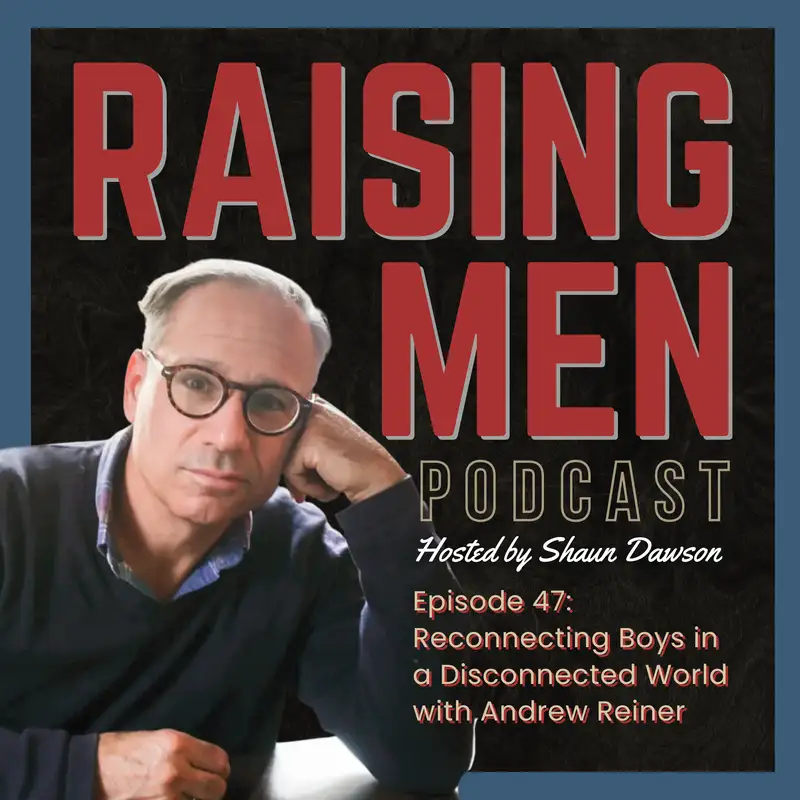
Reconnecting Boys in a Disconnected World with Andrew Reiner
as you said earlier
why wouldn't they go into these spaces if that's
if that's what they're getting
if this is the only safe place
neither one of us are saying that
we want them to stay in spaces
where they're getting misogynistic
misogynistic messaging
or messaging that is detrimental in any way
neither one of us are are
are floating that idea for a second
but I think we're both
we both understand something more nuanced
which is that boys are going there
sometimes for really valid reasons
of deeper needs that they have
that are not being met anywhere else
welcome back today on Raising Men
we're joined by Andrew Rainer
he's a teaching professor
a cultural critic and he's one of the leading voices
examining the emotional lives of boys today
uh he's a teacher professor at Towson University
he's the author of Better Boys
Better Men
The New Masculinity that creates greater courage
and emotional resiliency
and the upcoming book boys reconnected
the growing epidemic of alienation and how to stop it
he's written extensively about masculinity
and boys issues and men's issues
particularly mental health
he's written extensively for the New York Times
Washington Post Boston Globe
as well as for the NZ Herald and LA Repubblica
among other publications Andrew welcome to raising men
thanks John
it's really great to be here
it's great to meet you
I'm so excited to have this talk with you
let me get you just started by saying
like you've said
that boys are falling through the cracks these days
and I could not agree more with this
it's part of the founding uh
hypothesis of this entire project for me
what makes you say that
and why is it happening right now
yeah I mean
those are two great questions to start off with
um
it it definitely
it definitely is happening now
um you know
there are basically two schools of thought
really kind of predominating in the
in the in the public conversation
one of them is basically that um
boys are failing
you know the
the the extreme of that
that boys are really failing
the other one is that um
boys are doing fine um
you know they're
they're they're they
they they're damaged goods
but they're doing just fine thanks
and we need to stop um
saying that they're that boys
that boys we need to put the spotlight on boys
cause it really doesn't belong on them
it belongs somewhere else
that's a whole another conversation
um I
I tend to fall somewhere
that's about 2/3 over to the failure side
um ever since I
ever since I finished my last book
the thing that I that really kind of tipped me off
Shawn was that
at the very end of the research for my last book
I started talking to older boys and young men
and one of the things I kept hearing was
just this through line
was that they were struggling with their mental health
that was not at all
something that we were talking about at all
as a culture the other thing that
that I started hearing was that
this idea of independence
was a much bigger problem for them
they didn't really call it
you know independence but
but the ways that they were really wearing
this idea of independence
were breaking them down
because they had this extreme notion
that they had to do everything on their own
or they were falling short the
this this transcended race
it transcended sexuality um
because every young man that I spoke to then
and since then has really spoken to to
to a lot of these same themes
and then
the other thing I started realizing when I started um
really putting together a proposal for the book
I'm working on now is that
is that in the classroom
and this really starts pretty much at about um
anywhere from kindergarten to really
you know maybe 2nd or 3rd grade
and then it goes all the way through high school
and actually if
if if young men go on to college
it happens there too where they
they're completely falling through the cracks
in the educational system
and the the conversation um
when I was working on my first book
and really since then has very much been oh
you know well it's
it's a problem with toxic masculinity
you know that's the problem
the problem is toxic masculinity
the way they're being taught to be men
and to some extent I
I really kind of spoke to this in my first book as well
it's that
the script we've been handing boys has been flawed
and the ways as a result
that they're engaging with education um
because of this script is that it really
it really undermines their ability to want
to really learn and there is some truth to that
there absolutely is some truth to that
but it also goes deeper than that
yeah and
and and boys
are falling through the cracks
on every metric of education
um and again it
you know it starts
the latest it typically starts is
is early elementary school
but it goes all the way through high school
and we're seeing it in college too
because what we're seeing in colleges
we all know that um
young men are far less likely
to want to attend college today
and there's reasons for that
which we could get into later
but the other thing is that when they're there
they're falling through the cracks
you know they are
they're not attending classes
nearly as much as their female peers
they're not getting the grades
that their female peers are getting
here's a really great example
um I came across a really telling study
which was that
the one area that a lot of educators say that boys
and young men are still excelling in
are the stem classes right
the science the math
the engineering
that's not the case
because at the college level in America
the girls and young women
proportionally that are in those majors
are doing better grade wise than their male peers
proportionally wow
and to me that
that alone
is a great example of what we're talking about
and it's not that you know
in no way does this take away from the successes
the fantastic successes of girls and young women
because they deserve all credit for that
but what what
what it does to me is it says that there is a problem
it's the
that the boys and the young men aren't keeping pace
and and this is also happening
by the way we're seeing these upward ticks
at the graduate school level
as well law schools
medical schools um
and other graduate programs
we're seeing increasingly
less and less males going on to there
as well and so
you know the reason I bring up education
Sean as such an important place is because
I mean that's the job
right of
of all kids regardless of gender
that's their job when they're young
that's the place where we have to look to see
are they thriving or are they struggling
and for boys it's the latter
but it's happening for them
with mental health as I mentioned a few moments ago
um
boys and young men are far more anxious and depressed
than we've really been LED to believe
and I've I've been finding this out for
for years in the second book that I'm working on
with the research and a big part of that is because
the metrics we've been using
to gauge anxiety and especially depression in males
is different
than what they really need to accurately assess
whether or not they're depressed
for instance
and so um
a lot probably the
the area of mental health
that boys and young men are struggling with
the most is anxiety
but when we talk about depression
there still is this this
this belief and you can find this if you just Google it
you know this notion of
that
the proportion of females to males who are depressed
is the same as anxiety it's like 2 to 1
or it with anxiety might even be a little bit higher
but when you use metrics that better gauge
more accurately
depression and how it manifests in males
which typically is different than in females
the that gap narrows dramatically
and in some studies
is actually shown that males proportionally can
when the when the metrics are used that are accurate
can actually be a little bit more depressed
than a lot of females
and that doesn't surprise me because when
all we have to do is look at the suicide rates
oh my gosh yeah right
I mean that's a whole other conversation
but that speaks volumes right there
in terms of how it can translate into suicide rates
addiction rates yeah
um
and just so just so
just for the people who are listening
or not as aware of this as you and I are
what what
what are the suicide rates in
in men compared to women right
the suicide rates on average are 3 to 1 male to female
yeah and they go up
they go up even higher in
in in certain age
in certain age brackets yeah
so for instance um
in in uh
older boys and young men you know
when you're talking about uh I
think it's a 15 to 15 to 24 um
it's 3 to 1 males are
males are that much more likely to commit suicide
and a lot of women will say well
but yeah
but but
you know more
you know there
there are a lot more young women who unfortunately are
are attempting suicide absolutely
and and
and that's a huge problem
but but when you take that a step further
and you look at the ability to take your own life and
and to see it through all the way
that's something that that
that's a whole that's a whole different beast entirely
that you have to look at
yeah and when you get
you know and
and that gets even higher
it gets even a little bit higher for men
when they reach middle age
yeah that doesn't
that doesn't surprise me at all
and it's terrifying and
you know so much of the rhetoric around this
and so much of what you hear in the online discourse
and all of that
it
it sets the entire discussion up as this win
lose situation
and and you just you
you just enumerated it that you
is it oh
but you know
the the girls are struggling in this other way
or whatever it is or this is
it's almost like the unconscious argument is that
this cost to our young men is worth it
because the young women
who really haven't had the kinds of opportunities that
men have historically in our culture and all of that
which is true um
they they're
they're getting better and and
and so it's worth this cost
and that's not the case and
and it's almost not the case in
in in most human endeavors
it's hardly ever a win lose thing
there is usually a win win construct
and the fact is that if young men aren't thriving
then
young women aren't gonna thrive as much as they could
either and it's all this in
in our society
is not gonna thrive the way that we need it to
and so this
part of the entire nature of the problem here
is that we are culturally inclined
to gauge these things in this win lose mentality
and we have to
we have to cure people of that affliction
it is not a win lose thing
it is a win win thing
there is no reason our young men can
can can thrive and our young women can thrive
and when we do as a culture and as a society
we thrive absolutely
the thing that I
the thing that I've been saying for years
Sean is
you know it's a zero sum equation
which is exactly what you're talking about
and the way that I've always phrased it is that
you know the way that
it's the way that we're talking about
um boys and girls
young men young women
it's it's very much um
this either or proposition
that if if girls right
if that
if boys are struggling
then that's gonna take away the spotlight from girls
and what they need um
and they are
and they are doing so much better in so many ways
not always of course
because we know about mental health is as one big area
obviously and we
we can't get away from that
but across the board
there is a greater lack of resilience in boys
than there is in girls but it's
I always say you know
when you look at it and you say
it's an either or proposition
one has to rise at the expense of the other
then as you said that's gonna have ripple effects
that affect us all across the board culturally not
not just in terms of gender
it's gotta be a both and
because that's really what it is
you know
what we're talking about here is a both and proposition
that you know that
that it's it's
that it's it's
we're all you know
inextricably entwined and
and really you know
this really speaks of course
to a much larger conversation about
about who we are as a culture
because we very much are at that kind of
zero sum equation of that one has to
one has to excel at the expense of the other
there was a young man I interviewed who's 15
Sean 15
who said to me you know
I sit there in class and and you
know I hear all these
you know
these young women talking about all the problems of
of boys and men and how they're constantly
so many of the problems in our culture is
is all because of boys and men
and he said I
you know I sit there and I just think
you know how helpful is it to say that one group
in this case girls has to
has to advance at the expense of boys and men right
and he sums it up so beautifully
kind of where we are right now in the conversation
so talk to me about
talk to me about your new book about alienation
what what
what's the nature of that
how does it come about
sure yeah
well you know
so many of the factors that I talk about in the book um
in terms of alienation
really ultimately lead to a decrease in resilience
yeah but in terms of the alienation
you know what we're talking about
first and foremost is that it's true absolutely
you know
that boys and young men are falling through the cracks
in the educate in many ways in the education system
and it's especially true I
I really think in a lot of public schools
um and that's a much bigger conversation
because one of the things I find
when I do work with boys schools
for instance is that you don't see that problem there
right part of it
of course is the
socioeconomics right
you've got parents
who can afford to send their boys to these schools
sure and they're getting the kind of
support systems that they need right
um but when you also talk with boys in coed
private schools
um there is a little bit more of a disconnect than
than boys are experiencing in all boys schools
and when you get to the public schools
it's even more so so right off the bat
one of the things that you're getting in terms of boys
is a feeling that um
because when there are conversations
in a lot of schools
there often are very kind of covert and overt messaging
that as that young 15 year old male said
that they get in the classroom
that often happens in passing
you know these passing comments about toxic masculinity
these comments about um
uh you know that
that all boys and young men are predators
which is a whole not
which really is a kind of prevailing message
more and more
but there's lots of messaging that boys get in schools
that really make them feel that
this is not a place where I really
really feel that I I can really
I can and should extend myself
because what happens with boys
and this is not as true with girls
and research shows this is that
and this
a lot of times with boys when they start to struggle
they pull away
they pull away and then they
basically just kind of
they fall through the cracks or they implode
this is such an interesting point because they are I
I think culturally we send the message to boys
as you mentioned before we send the message to boys
that they are
responsible for solving their own problems
and to look for community is to look
is to be weak and to and to uh
express inability or difficulty to be vulnerable
really is a sign of weakness as well
and so of course they're gonna turn inward right
and the message to girls is no
no no
you have your community
you're here for you kind of thing and
and that second thing though
you have a community
we're here for you message is a way
more powerful way to live your life
oh it's
it's it's the way it is
I italicize it is the way to live your life
and you're exactly right Sean
what happens and there was a great small sample study
there were two of them
that both touched on similar dynamics
that you're talking about
one of them was that when the
when the freshman and early sophomore
young males were struggling
they would they would
they would pull back they'd stop going to classes
they'd stop getting in assignments
and what happened is that
when their professors or administrators would say
would reach out to them and say hey
you know we've got to get you back on track
um and
and these are some things that you can do
they wouldn't do them and another study found that
a big part of
the reason for that was
exactly what you're speaking to
is that they did not have a
what I call a safety net
they did not have a community safety net
that they would turn to
I'm not even talking about a counselor
a therapist I'm talking about going to other friends
and getting some of the strokes that they need to feel
you can do this and I
and I and
and if you need me to check in with you
to make sure that you're going to class
you're doing OK I'll do that
yeah and the study showed that
when girls
and young women were also academically struggling
they would get help from their professors
they would do what they needed to do to stay on track
and to add to that they had that safety net
they were so good as you said
at creating and maintaining these safety nets
and the big secret which clearly you understand as well
which shouldn't be a secret
is that when we have communities
when we have these safety nets
we thrive yeah
it doesn't matter what you're talking about
you can be talking about sports as well
it's the same thing
when we have these safety nets of community
of people
where we can go and give the support and receive it
we thrive and
that is a telltale aspect of resilience
and so when we talk about alienation Sean
that's one of the big areas
and so what happens is that
you know a lot of boys and young men
another area of their lives that they struggle with
in this day and age and this is a complex one
is dating you know
if they're heterosexual true
um because a lot of boys and young men
and I've heard this for a couple years now
really have a lot of questions
you know in the post me too era
of what's safe and what's not safe
and a lot of confusion right
and they don't have places they can talk about this
right
they don't have anybody that's willing to talk about
with them
and the times that there have been conversations
they often have felt that they've been shut down
that they should know the answers
to a lot of these questions which
oh
there are people that are perfectly
willing to have the conversation
with them people like Andrew Tate
that's exactly right right
the last people we want to be having conversations with
that's exactly right
and the message they're going to get is
women are trying to put you down
women are trying to control you
women are women are evil
women are you know
I mean that's not the message that that's
that's not that's a grift
by the way it's not a message that
that's not a good message
it's not a message
that you want to be living your life by
it's it's not at all and and and they've got you know
and it's something that a lot of one of the things I
I did this survey what's on our minds
and and in the survey that that I gave to
to older high school and young college men
one of the things I you know
I asked them at the end was to say um
you know some kind of
something you wish
you would hear from the adults in your lives
that are close to you and quite a few of them said
that they wish the people would tell them
that they're gonna find love
that that that that they will find that they're okay
they're enough as they are
to be a partner with somebody
now you know
that to me really kind of stopped me dead on my tracks
yeah
because that's the kind of thing that a lot of boys
and young men absolutely care about
and you know there was a study from Pew
which found that
that the majority of respondents who were um
high school juniors or seniors of boys
I think it was like in the 70s or
or 80% did
have this notion of wanting to be married
when they were older and that number for the
that number for the young women
you know was was down in in the was under
50% well under 50% I think it was 37% wow
so you know
and and part of the problem with that is that
the messaging we still have
around heterosexual relationships
is that they don't serve girls and women
and that that's all you know
that that's an important reason why
they should feel empowered
and not feel this pressure to have to do that
of course we don't want anybody to feel pressured
let alone women
to feel that they have to be in relationships sure
but that's not always the message that they're getting
a lot of the message they're getting is that
they shouldn't be getting into relationships
because they they are they are problematic
there's too much drama with guys
and they're gonna be the ones who end up losing
in this equation and and you know
that's not a the kind of conversation
that a lot of people wanna have
and I completely understand that
but when you talk to boys and young men
a lot of them are very self aware
they're very thoughtful they're very caring
these are not the kind of guys
who want to get into relationships
and want to be you know
want to be millstones around any girl
young woman's neck they want to be partners and they
they're very capable of of saying as much
so I think that there's I think that there is a
a kind of subtext to what's going on in this kind of
chasm that's created between the need to have
intimate relationships and I think that some of the
some of the messaging that's out there
really overlooks
the changing dynamics that are happening
for boys and young men who are very happy to level up
and wanna be in relationships
and wanna be good partners
but a lot of them don't feel that
they're getting that chance
and that's that by the way
is a trend that's happening for a lot of older men too
it's not just for for younger boys and young men
you know I
I wanna say something provocative here
and I wanna get your your feedback on it and
and that is that I can imagine that the
the women's outlook on that is rational
in the sense that they look around and they
I could imagine that
they see a shortage of suitable mates
absolutely for whatever reason
yeah and like that's because I
I mean
I believe that we're undergoing a masculinity crisis
right now that
that that men are forgetting how to be men
and um
and it's been going on long enough so that
you know a lot of young men these days they're
they're not they're really just boys in man costumes
and and so
you know if I'm a 28 year old woman right now
looking around at the various possibilities
I don't need a husband to to
to I mean
I might want one I might because
because I'd like a mate also
but you know frankly
that's not something I really need all that much to get
what I need out of life absolutely
maybe it was in the 50s but it's not today
and so I'm not gonna I'm not gonna sign up for that
and I think that there are a bunch of 28 year old boys
that are sitting around being like man I
I really wanna be that for that person
but I don't know how and so we've got this
we've got this real structural problem around
and by the way men
young men have a very
a shortage of opportunities to demonstrate excellence
to demonstrate the kind of
masculine virtues that women see
and are attracted to and want
you know that
that make them want to be part of their lives
and so it's what do we do about that
what do we do and how do we train our boys
to break through that cycle
yeah and and
and I agree with a lot of what you're saying just
you know what I was speaking to earlier
I know you know
it could sound provocative
and that's not at all my intention
um I mean
I agree as I as I just said a moment ago
with a lot of what you're saying
I think there are a lot of young women out there
who are open to the
idea of possibly being in a relationship
um and they feel
that a lot of the you know
the the young men out there
just really aren't viable candidates at all
for a lot of the reasons you know
they they
they just can't be
they can't check off on the checklist for
in a lot of areas
and I do think there there absolutely is truth to that
like you talked about in terms of income right
education work ethic
I mean these are all very understandable
reasons that a lot of young women would say okay
well hold off buddy
you know you really
you don't you don't
measure up in these areas
that are really important to me
and that of course makes perfect sense yeah
but I also do think that there is a bit of a backlash
right now that I agree
where that
that there is a bit of a backlash as well as that
that doesn't really get talked about
that I think is important
that a lot of boys and young men sense and feel
and feel like what's the point of bringing it up
because I'm just gonna get attacked
that's one of the things I hear from a lot of
of older boys and young men
why when when when I hear
you know guys being trashed in my classes
you know toxic masculinity
this toxic masculinity
that why should I speak up when I see
when either I have in the past
or I've seen other guys do it and
they just get cut down sometimes even by the teachers
what's the point and I get that yes
so what happens is that they
they really kind of retreat
you know that this is a vicious cycle
it is it is
so it's it's a bit complicated because
you know as
as you said there are some really important
really viable reasons why a lot of young women
are hesitant to be in relationships with
with a lot of guys that they feel that
that aren't really you know
aren't really measuring up
yeah and
and that said there also is a bit of an anti
male bias that's pervasive right now
yeah that really does
you know I think
really send the message that
you really don't need a guy at all
it's really unimportant because you've
you've got a great career
you've got a dog you've got
you've got your you've got your girls to
you know to go on trips with
and to go out and have your girls night out with
why do you need a guy yeah
and I think that's there really is a lot of
that mentality that's pervasive
that um
I think is is a different part of the equation
that doesn't get discussed enough at all
yeah yeah
I I
I totally agree with you and
and again I yeah
I mean like
like you said it's
it's a vicious cycle in the sense that
there's not enough masculinity out there
so the women look around
they don't see what they're looking for
but then the instant any boy sticks his head up and
and tries to assert masculinity in the way that he
that that that he wants to do it
he gets shot down all the other boys see that happen
they're like I don't want that to be me
and because we're like culturally really
really
insensitive to the fact that boys
need to be able to cultivate their masculinity
in a healthy way
and there are unhealthy ways to cultivate masculinity
and if we don't allow them to cultivate it in a in a
in a healthy way
they will cultivate it in secret in an unhealthy way
absolutely and culturally
the backlash that you're talking about
is creating a situation where they're not able they
they don't feel comfortable doing it in a healthy way
because because
because of
of the of that backlash you're talking about
so of course
we're just gonna drive them into the arms of people
who are grifting on them trying to get them to
to cultivate their masculinity in an unhealthy way
and I got news for you
that's doing a lot of damage to our society absolutely
absolutely and you know
that really you know I really feel like
it's such a natural
segueway to talk about the manifesto
right now because that's really where we're heading
you know exactly where I was gonna go next
the manifesto and then
and then the manifesto right yeah
yeah I mean absolutely Sean
it's it's exactly what
what what we know
what you just said is exactly what
I think is happening very much with the manosphere
because you know
when I would interview um
when I would interview older boys
and young men for this book
my next book one of the things I would ask them is
you know if they're familiar with any of the manifesto
influencers the most obvious being Tate
and a lot of them would say yeah
you know I've
I've followed you know
I've I would sometimes follow
you know Tate a little bit
and there's you know
like I like what he has to say in terms of business
you know because he has this kind of
like little business school online yeah
but some of them really liked his business model
and some of them like some of the messages he has
there are actually
really good messages that more young men need to hear
about stop oversleeping
stop over gaming you know
you know get up come
you know have goals
commit to them
do not let them out of your sight and see them through
yeah and that is something right
I think we can both agree
so many young men need to hear today
and then some of them would say
but you know what I like even those messages
but when he starts getting off on this misogyny
shit that's that's that's when I'm done yeah
and so that's a part of the conversation
that doesn't get discussed at all
in conversations about the manosphere
and it's an important one because we never say to boys
why are you there in the first place
for those who are aware of why they're there
and do you and and are you
you know
are you really susceptible to these really awful
noxious messages that don't serve boys and don't serve
you know girls and don't serve anybody
and I think that yeah of course some of them do
absolutely
but it's not as rampant
and it's far more nuanced than a lot of people realize
which I think is good news
I think if we would yeah
find ways to make boys feel safe
and have conversations with them about this
I think we would learn a lot
if we would just shut up let them talk
lead with curiosity
I think we would get a lot more understanding
of who boys are today
and why they're in spaces like that
I do think you're right I think that a lot of boys
find themselves in these spaces
part of it is algorithms right
that's right but another part of it right
another part of it is
because they are looking for community
one of the things right
that boys find when they go into spaces
when they're getting into bodybuilding
when they're you know
when they're going to spaces
because they want to learn how to be better at gaming
there are these communities there
and of course the algorithms there for the manosphere
you know they're
they're insidious that's where they go
because they know that's where they can find recruits
uh huh that's absolutely part of it
no question
but there's also these communities that boys create
you know as they're perpetuating
you know the these these
you know these
I wouldn't say obsessions
but these interests that they have
you know for older boys
it really has become about body image
and that's a whole it's a whole another conversation
but it's really very much about body image and
you know bulking up
and they're trying to find ways to stay lean
but bulk up with muscle
and that's become a huge community for them
and so what happens is you know
they go to these places
and they're getting the strokes
they don't get anywhere else
and that feel a lot safer to them
where they don't get vilified for showing up
you know as a straight male
yeah I mean
as you said earlier
why wouldn't they go into these spaces if that's
if that's what they're getting
if this is the only safe place
neither one of us are saying that
we want them to stay in spaces
where they're getting misogynistic
misogynistic messaging
or messaging that is detrimental in any way
neither one of us are are
are floating that idea for a second
but I think we're both
we both understand something more nuanced
which is that boys are going there
sometimes for really valid reasons
of deeper needs that they have
that are not being met anywhere else
yeah it would be like
it would be like putting uh
vitamins into heroin
and then the only way you can get the vitamins
the essential amino acids
that you need in order to survive
the only way you can do it is by injecting this heroin
then you're surprised when people are injecting heroin
you can't be these are essential amino acids you need
you need to learn that no
you need to make your bed and
and uh
and you should get up early
and don't get addicted to porn and
and all of these other things
you need to learn those life lessons
and if the only people telling you
are people who are also wanting to inject heroin
in your brains
then you're gonna get heroin injected in your veins
whether or not you're you think you're falling for that
like you say oh
when he gets into the misogyny stuff
I'm not up for that
is that right in your heart of hearts
is that really right
because are you still watching or aren't you
and
that's something that
you're not likely to want to admit publicly either
that's right right
and I mean what we've done as a culture
is we've created a situation unwittingly
that the only way that that
that the most likely way that young men have
to get that message is over here
in this heroin injection needle
and we have to
we have to give them that message other ways
those messages other ways
we need positive male role models
and frankly you're not going to find that stuff online
you're not going to find it online
because the algorithm
is trying to peg you over into this other space
or it's trying to peg you over into this other
really unhelpful space
which is just gonna make you feel guilty
for being a boy absolutely
yeah absolutely
it's you know
where boys are right now is very much in a place of you
you
you know going
tying back to that idea of independence
they're very much in the space of
I need to figure this out for myself
and this is something I've heard time and time again
from from boys and young men
yeah um
just as a quick aside
when I go to a lot of boys schools
and do work at boys schools
and I'll get a chance to talk with them
and I'll ask roomfuls of them
raise your hand if you feel like you believe that
most of the problems that
that come your way you really
as an ascending man you need to be handling yourself
many rooms it has been nothing but a sea of hands I
I can imagine and
OK and occasionally
occasionally Sean
there are a few hands that are
that are not up which is
you know which is slightly encouraging to see
but it's that notion that they're on their own
yeah and we also don't really interfere with boys
because we feel like well
I want them to become more independent because look
we know that
a lot of them really do need to learn independence
yeah
but the problem with a lot of boys and young men is
they think it's again
you know it's an all or nothing proposition
that if they're gonna be independent
it's gotta be across the board with everything right
and they don't understand the nuances of that
I have to constantly talk with my 14 year old son about
about you know
learning to ask for help you know that
that there you know
that there is a strategy to this
and that learning to ask for help is a
it can be a form of strength and a form of wisdom
which are two things
all boys and young men need more of
but the crazy thing about that is when you're that age
when you're 14 15
16 17
18 you're in school
there is nobody that won't help you
I know there is no man there is no
there is no 14 year old boy
who could come up to me and ask me for anything
that I wouldn't help
I would and
and I mean
that goes for everybody if you have a hero
you can ask the CEO of some company
you could probably and you
and you wrote him and you said man
I really love this about you
and I really look up to you
would it be okay
if I sat down with you for a cup of coffee
sometime within the next couple months
it would work
men want to be there to help other men
they just have to be asked
and yet we never feel comfortable asking
that's right that's crazy
that's exactly right we don't we
we you know
we part of it is because we are part of the problem
as I was saying earlier yeah
you know we
we unwittingly think that we're doing boys a good turn
but part of it is that we don't
we don't teach them really a kind of really healthy
risk taking independence
you know
we don't do a good job of really explaining to them
what really healthy independence can look like
and what really unhealthy independence can look like
we don't really break it down for them
we just kind of
expect them to pick it up through osmosis
yeah and you can't expect
as you were just alluding to earlier
you can't expect a boy who's 14 or 18 or even 19
maybe even twenty to pick this up on his own
if everyone around him that matters to him whose
whose um
you know
whose validation they seek all these kids their
their age
if they don't see them doing anything differently
why would they do it because as far as they can see
they're doing the same thing
that they've been taught to do
and so it really is this kind of unspoken
you know it's
it's like a bad sitcom you know
where you see
where like everything is unspoken and you see this
this character going through the scene
and you're just thinking oh no
he's gonna screw it up again because because you know
you know there's this unspoken expectation
everybody thinks
the other one knows what they're doing yeah
it is like a bad sitcom
that's the perfect that's the perfect simile
that's exactly right and you just know like
you know that it's
or he's like he's walking around in the dark and
you know he's gonna bump into all of these things
and everyone's laughing at him
and he knows everybody's laughing at him
and what a what an experience for that person
it's and we have we're setting it up like that
absolutely we
we are and we really do need to to find ways to really
you know to I wouldn't say hack
I think that that
that's kind of has a negative connotation for me
at least but I really feel like
we do need to find ways to tap into boys
and their beings you know
slash lives um
and it really it's up to us
not them you know
too often we we think that
part of the independence equation with boys
is giving them all the room that they insist
that they need mm hmm
and you know
when your brain hasn't fully matured your
you know and a big part of that is the frontal cortex
yep which has to deal with reactivity
yep and
and you know
making emotional making emotional
you know decisions and not having that long term vision
horizon vision that I call it
to be able to think about the future
you know why would we leave all of this up to them
at a certain point we have to say look
I know you wanna be independent
I respect that but there also are times that we at
you know me as your parent
we as your parents
need to kind of step in and we need to check in
and we need for you to work with us
yeah you know
one of the things that I think is so important is that
you know a
that we're not really doing that with boys
and B
is that you know
we also don't make them part of this dynamic
you know a lot of times it's
it's the it's extremes
we give them way too much rope because we think we're
we're we're giving them what they need
yeah or
or we we speak down to them
yeah which as boys are growing
older they want
more than anything to show that they can handle it
you know that that
that they're becoming these responsible young adults
it is more of a balancing act
and boys also will even though they
even though they will push back and fight
I defy anybody to say that any boy
deep down doesn't want to know that some parent
or parents have their back
even if they're not willing to come to them and say
all right let's talk about this
yeah I
I'll give you I'll give you a great example
yeah how many times
you know have we been out in public
and we're having a crummy day
and we drop something you know we
you know you know
we're coming out of the out of the grocery store
you know our arms are full
you know or
you know we're coming out of any store and
and you know
the bag starts to fall
or something comes through the bag
I don't find anybody to say that
when somebody comes by and says
let me get the door for you or here
you drop this I defy anybody to say
no matter what age you are
on some level that does not feel really good
we all need to know that
there are people out there who have our backs
and boys need to know this
because they don't get it anywhere else
yeah even if they don't respond to it
they just need to know if and when you're ready
I'm here I'm totally here for you
yeah I think maybe that is one of the primary
responsibilities of us as parents is
is they
if if you
if your son is 15 or 16
and doesn't feel like his parents have his back
no matter what
his parents are there for him and have his back
then we failed as a parent
we failed our son in that way
now let me
I would love to like drill down a little bit
you're in the trenches
you mentioned you have a 14 year old boy
this is the front line of the war
this is we're
I mean we're running experiments
we're running this massive experiment on our boys
on our 14 year old boys in particular
in giving them a device in their pocket
that gives them 24 by 7 access to gaming
24 by 7 access to gambling
24 by 7 access to porn 24 by 7 access to messaging
and all of this crazy stuff and rumor Mills
all of that stuff and they're there
how so
and I think I mean
10 years from now we'll have it a lot more figured out
God willing but you're on the
you're on the freaking front lines of it
what are the specific tactics that you're using
to try to help steer your boy through these times
yeah it's
you know and
and we are in these fraud times
there's no question about it and
and I do think the stakes are higher for boys
than girls um
for some of the reasons we've talked about the state I
I don't know if it's fair to say they're higher
they're just totally different
well it's
it's a it's a different dynamic
I think yeah
one of the things
the reason I say that the stakes are higher
I don't think for one second
and let me clarify this if it needs clarifying
I don't think for one second
that there isn't a world out there
that is deleterious to girls
and young women on
on social media especially
cause there's absolutely positively
100% is yeah
the difference
I think is that they don't go through the through
through through their lives
thinking all these horrible things that I'm taking in
and internalizing that I experience on social media
I've got to handle this on my own
that is a giant game changer
so when I say that the stakes are higher
I don't mean that the initial um
you know that the initial factors that are
that are really deleterious to them
are any different for girls
because they're exactly the same
I totally agree with that
the difference is the way that they manage it once they
once they receive and internalize it
that's a big factor that's different
and so I'll
I'll tell you something else that's different
in exactly that same way and you're 100% right
and it's important to make that distinction
and something else that's different is culturally
we acknowledge that the challenges that girls face
in that sense are not appropriate
they shouldn't have to face them like that
yeah but the challenges that boys face
oh this boy is addicted to porn
it's his fault this boy is addicted to gambling
it's his fault
let alone that we put a casino in his pocket
it's his fault he got addicted to it
yeah and
and so from a cultural standpoint
it's like we look down on the boys
we treat it like an addict
and we treat it the way we treat addicts right
it is oh
well you were too
you were so weak
that you got yourself into that situation
and we we and
and we treat the problems that girls face
much more like a disease oh
they caught this disease
and that is particularly unhelpful for boys
on the boys side of things
and so the stakes are higher
absolutely it's what it really boils down to Sean
and it speaks to and this really speaks to
what you're really talking about
is that we do a great job of protecting girls
and we don't feel that we should have to protect boys
yeah that's right
because boy because boys ultimately should be able to
to really kind of
pull themselves up by their bootstraps
and handle themselves yeah
and and nothing could be further from the truth
yeah um
uh
you to give you one really good example
um there was a really
great study that came out a while ago
which showed that when relationships end
romantic relationships you know
heterosexual relationships
when they end that initially
girls and young women struggle a lot more emotionally
than than the male counterparts do
but they get over it
because they've got that safety net
they learn how to process it
the males not at all
they might find somebody quickly to kind of
replace them in the moment right
but they don't get over
they don't process and they don't do the inner work
and that's the kind of thing we're speaking to
it's this Assumption and and that really that
that to me
that study is a good example we're talking about
we assume that because a lot of boys
and men will go out and get somebody
to maybe have some you know
have some party time with and some sex with
that they've gotten over it
and nothing could be further from the truth
because when they get back home
you know they're
they're drinking by themselves
and they're struggling with
with with the pain and the rejection that they
that many of them really will not get over in many ways
that's what we're talking about
you know and to
we have these assumptions that
you know we do
we do a admirable job of protecting girls as we should
but we need
to do a much better job of protecting boys as we should
and we don't again
it's yes and right
I mean it's yes exactly yes
protect both of them it's
it doesn't
it just doesn't have to look the same
it doesn't take away from one to protect the other
no it doesn't
and it doesn't have to look the same
you know you know
a great example of this dynamic
that we've been talking about
you know during this time is that
you know we think
we as Americans we look at suffering in
you know we look at suffering in
in very kind of you know
very kind of binary ways I have
I should
I should have nothing that I should be talking about
or complaining about or
or venting about
because the person next to me has really struggled
they have really struggled
yeah and
you know there was this in
in the this wonderful book called Man
Search for meaning by Viktor Frankl Frankel
talks about that suffering is
is like a gas in a vessel
no matter how little
or how much gas you put into that vessel
it's gonna diffuse equally to all parts of that
of the inside of that vessel the same
and he said suffering is like that
is that no matter how small
how medium or how large it's gonna be the same
and one of the things that
you know is that we think that well boys
are tougher they can handle the suffering
we like to tell ourselves that
because it really makes it convenient for us
yeah but boy
but we
all we have to do is look at the ways of what happens
when you see these documentaries of these older boys
and these young men in prison
and you hear them in these programs
where they're learning how to open up
it's the same story time and time and time again right
there was there was bullying there
there was horrible mistreatment
there was all these feelings
you know of
of deep wells of shame
suffering that
they always felt
like they shouldn't have to talk about it
they should be sucking it up and dealing with it
this is this is universal
doesn't matter if boys are lower socioeconomic or not
suffering is suffering is suffering
and we really need we really need to measure
we really need to level up and help boys learn
you know
how to deal with the suffering that they experience
because they all experience it in these quiet
desperate ways
so you know
and but another viewpoint to that
and by the way I don't agree with this viewpoint and
but I'm interested to hear what you would say to it
is that suffering makes you stronger
what it can yeah
what do you how do you
I mean so isn't suffering good in that sense
suffering suffering
the people who get the most out of
suffering you know
especially when you're talking about really deep
deep intense suffering
um are often people who have come through the fire yeah
right they
they they
they they have come through the crucible
and they've gone through the process
they haven't tried to just kind of like
like run around it they've gone through the fire yeah
and those are people who have worked through
all the different angles of their suffering
and they come out stronger because of it
but when people try to do an end run around suffering
and they're not really learning
the lessons of suffering it hasn't strengthened them
you know and
and you know
the the best example of that
you know is
is when you look at army vets
you know and
and they come back you know
and and they have
you know PTSD
you know
especially these ones who have been through combat
and
you know when they finally when
when especially these young men when
when they finally get to the point and you
you know you again
documentaries validate all this
it's the same thing like the young men in
in prisons
when they finally get to the point
that they're able to really open up
and not feel that
opening up and being vulnerable is a weakness
they learn that it's a strength
that's when they can look
get on that road to recovery
to really work through the suffering
and learn how to find the
value and the meaning in that suffering
I would agree with you that suffering is strength
only if
we learn how to really develop the inner courage
to work through that suffering
and to come out the other end through the fire
and to find the you know
the value in what we suffered through
I I'll add a little bit to that
which is something that made me think of
which is that it's also the case
that the world has a surplus of suffering
the world will provide all the suffering
your boy ever needs to become strong
you don't need to help it along
and in fact
on the opposite side of that coin
part of being a man part of
part of learning to be a healthy man
is a reflex towards Protection
meaning if you see something out there in the world
where somebody strong is preying on somebody weak
your reflex should be to prevent that
to stop that in some way to protect the weak person
that's part of what it means to be a healthy man
how is your boy supposed to learn that
if he doesn't experience that from you
if you're letting him suffer
in ways that you could have prevented
and again there's
there's attention here as there is with everything
there's attention you know
sometimes boys need to experience the
well it's not even sometimes
it's all the times boys need to experience the
the uh
consequences of their actions
but that doesn't mean but
but if they're suffering
not as a result of their own actions
if they're suffering as a result of societal pressures
or these other things
then you should be there to protect them
and it doesn't actually turn them into a man
to let them experience that necessarily
the world is gonna provide plenty of that absolutely
no question about that
but I would even take that a step further
I would say Sean that that you know
even when a boy is suffering
you know because of not external forces
but of of his own doing yeah
I think that is equally as important
to help him learn how to process through oh
so he went through yeah
and the suffering I I think it's you know
I I really do
I really do think that we do boys and in turn
society a horrible service when we just assume that
well there's certain kinds of suffering
you really need to go through your own
and you just need to kind of
suck it up and deal with it
I think that we make our voice stronger when we teach
when we help them learn how to like
process through some of the suffering
and then it really kind of
helps them build up some of the calluses that they do
need for when
you know when it will come through
and they can learn to kind of deal with it a
little bit better I think
to be honest with you
and I'm not ever saying that we should raise
you know boys to be girls
but I think that when you look at a lot of girls
and young women who are very resilient
one of the reasons
I really am convinced they are so resilient
is because they have encountered suffering
but they've Learned how to process through
and they've Learned to rely and and
and work and look for that safety net
to help them through that process
and it makes them stronger
it's like that that broken bone right yeah
that when it when it heals
it's stronger because of it right
I really do believe that
that we really do boys and in turn
the rest of us a horrible disservice
when we assume that the suffering is good for them
and that they should be doing it alone
because it just perpetuates that lone wolf mentality
yeah that's so true man
I love I
I like that perspective I've gotta
I've gotta think more about
about that tension and uh
because you know
I have this reflex
I have that reflex and it's not all that healthy like
like you know
come rub some dirt into it
you know that kind of thing
and uh
you know some of that might be appropriate
some of it's not I
I uh
yeah I've got to think about that a little bit more
yeah no
it's it's look
I mean it's
it's it's no question it
this really you know
this is definitely
getting into that whole idea of the independence
it's a it's a complicated one yeah
you know because we do yeah
you know as parents
we do we're not perfect
we do our best to figure out
when we need to pull back a little bit
and when you know
and when we definitely need to be there
um I think the important thing that really
we should always give to boys
is the understanding that
if and when you are ready
I'm right here for you yeah
because that that is a gift
I know that sounds overly simplified
it's not for boys and men
because a lot of us never get that
a lot of us never get that
knowing that there are people who love them
unconditionally and that are gonna be there regardless
come what may just
just say I'll
that door is open I'm here for you
that is not something a lot of boys still get and
and that alone is a great start
yeah and it doesn't go without saying yeah
exact yeah
it doesn't I mean
you need to show it too
but it doesn't go without saying absolutely
well I always like to uh
finish up these conversations with uh
by asking everyone basically the same question and uh
I I
I put people on the spot so
so uh
so apologies in advance for
that but
but the question is
if you could just kind of
I don't know if I ask you for one principle that that
that parents of young men should keep in mind when
when they're trying to turn their
their boys into excellent men
what would that principle be
well
there's a couple things that come to mind Shawn
but I'll lead with this
the more that boys push us away
the harder they push the more they need us
because there's so much dissonance within boys
on the one hand when they're really struggling
and we can see it if we're really looking
when they're really struggling
a lot of boys
you know a lot of the irritability
and the hostility and the anger
and I see this in my 14 year old son
yeah you know
I can see this inner fight within himself
this dissonance where on the one hand
he's really struggling
you know
and wants to be able to talk with his mother or me
or both of us together
about what it is he's wrestling with
but there's that other part of him
that other messaging he gets from outside of us
that tells him you're weak
you're you know
you're not measuring up if you go to your parents
what are you
gonna go to your parents all the time to help you
solve all your problems
that's the other voice on his other shoulder and and so
you know
when we need to let boys know we need to really I
I work with my son on this all the time and
and I do it a lot in the car rides to school
cause I've been really fortunate in that
is that really through you know
for many years you know
we've had to drive him to school
which is a blessing and a curse yeah
but cause it's a long drive
but it's been I really
at the end of the day it's more of a blessing
because I've used so many of those days
to talk about the kind of
things that you and I are talking about yeah
and I talk about this idea of with him
you know I try to make it really
I try to normalize it
and that's a really important thing with boys
is normalizing you know
and I know I'm covering a bunch of ground here
so I apologize but I think this is
you know it's all part of the same thing
it's really important to get boys to understand um
that we understand to some extent
what they're going through
and that and that
and that everybody goes through it
because so many boys think they go through it alone
yeah and to really let them know that the door is open
and the other thing that's really important is that
a lot of boys don't get this
is that if and when boys do come to us
it's really important that we lead with curiosity
that we not judge and we don't minimize
a lot of us are very uncomfortable with boys
when they get not just really angry
but even really upset
it makes a lot of us really uncomfortable
even our own sons
and it's really important
that we understand that
boys are paying close attention to the ways that we
respond to them when they are upset
they are they are paying close attention because they
because they they
they they're afraid of being rejected
and so
it's really important that we lead with curiosity
and we just be really good listeners
we just bear witness for them
yeah and I think that is a really important thing
to start practicing for boys
to just keep reminding them
once is not enough it doesn't get through with boys
I'm sorry it just doesn't
once is not enough and
you know I've worked with boys for a long time
once is not enough
but we need to keep reminding them at different times
that the door's open
and that if and when they want to talk
we are here and that if and when they do come to us
that it's really important that we be really present
and you know
and that we we not judge
we not minimize and again
that we make sure that they know
that we're really listening
and again like I said earlier
you know sometimes the best thing we
can do is just bear witness
because sometimes boys just need that
yeah
you know I
uh when I was in high school
before I could drive it's eighth grade
ninth grade that kind of time
um I went to a school that was 45 minutes away
in morning traffic by car
and my mom drove me to school
and it was two years right
of that five days a week she would drive me to school
she'd spend a lot of time
it was an hour and a half for her right
it was a round trip
and that was the best time of my life
it was
that connection that we got
and the stuff that we got to talk about
it was the most formative
most important part of my whole life
and you're lucky you're lucky to have it with your boy
absolutely so let me ask you a question
sure did you did
do you remember if you felt that way
in any shape or form back then
do you remember I don't remember
yeah I
did you ever tell your mother
I did I did
um I
I had a chance to tell her before she passed
I I had a chance
to tell her a lot of that stuff
that's great and we got lucky
I got lucky in that respect cause
cause um
and she was I mean
she was so amazing but I'll tell you there's
there's a story that I can
I can illustrate I don't
I don't think I I
consciously recognized
how important that was to me at the time
but then there was an when I was in a
when I was in ninth grade
I was getting bullied a lot by this one other guy
and man I was just struggling
and around the same time
my mom was going through some stuff
and so she was struggling
and as a result of my struggles
I was really acting out and I was being an asshole
and I remember this one time that she
was kind of snapping at me
she was like had enough of my stuff right
and um
and it was on the way home from school one day
and I
I had lost that connection for that car ride
I lost the connection and
you know I lost it from stuff I did but
I I thought
I mean I felt suicidal at that moment
I mean I was going through such tough stuff
and I had severed the this such
so important connection that I
I didn't recognize at the time
I needed
and uh
and so I don't think I consciously recognized it
but I think deep down I really
really understood because when it was withdrawn
for just that one car ride it
it felt like a an existential threat to me
it was it was uh
so yeah
I mean
I don't know I
I uh
cherish that time ha ha your
your boy is gonna cherish that time yeah
and and
you know well
I I I
you know
thank you for adding that to the conversation that
that's a really powerful anecdote Sean
well Andrew
thank you so much for for taking the time um
you know and for everybody listening
you can find Andrew's work including Better Boys
Better Men and Boys Reconnected in the show notes
you know take a look at these books
buy the books I'm telling you like it
you know this is
this is such powerful messages Andrew
thank you so much for putting it out in the world and
and having the courage to do this stuff
you started doing this stuff
at a time when these messages aren't as well received
as they are today um
and everybody I
I highly recommend diving deeper into Andrew's writing
especially if you're raising a son in today's world um
thank you so much everybody
for joining us on raising men
thank you for watching and listening
please like share and subscribe
and remember that you are a great parent
raising men is produced by Phil Hernandez
this episode was edited by Ralph Tolentino