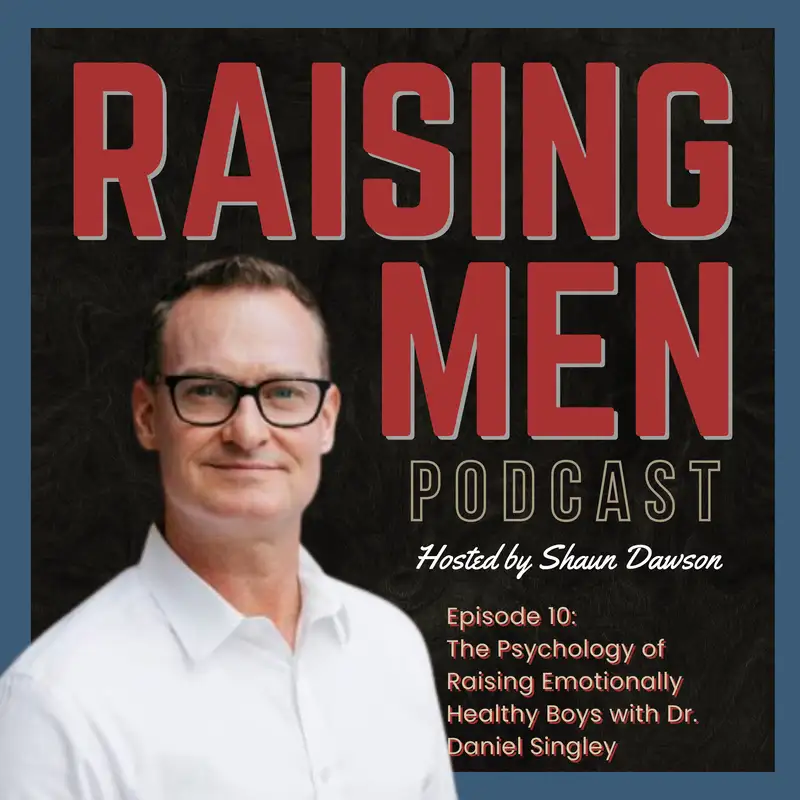
The Psychology of Raising Emotionally Healthy Boys with Dr. Daniel Singley
totally to me uncontroversial statement
that there's science
about why boys and men struggle and suffer
there is science about gender
sensitive
and informed ways to work with those men and boys
and I have an ethical obligation to go get on that
and that's what I'm doing here
it doesn't have to be everybody else's frame
but I'm I'm not looking to make converts
welcome back to raising men
when we talk about raising boys today
it's easy to get lost between extremes
about talking about toughness on one side
and emotional suppression on the other
but
we don't have to choose between cultivating strength
and sensitivity my guest today
might show us how
emotional resilience is one of the greatest gifts
a parent could pass down to their son
Dr Dan Singley is a psychologist
researcher
and the founder of the center for Men's Excellence
his work
helps men navigate the transition into fatherhood
strengthen their relationships
and build emotional tools for life
he's also the force behind
behind Men Excel a movement
empowering men to show up
with courage and authenticity in every area of life
among many other things Doctor Dan
thank you so much for joining us here today
you're a busy man thanks
yeah I appreciate you having me out
I'm like well
now I gotta teach everybody how to
you know have emotional resilience and
and get their kids straight
we're we got a lot to cover
here today in about in about 20 minutes
it's a it's a tall order
but I think you're ready for it
ha ha no
thanks for having me on now
you've dedicated your career
to something that barely existed as a specialty
when you went to grad school
which is the psychology of men and fatherhood
now that turned out to be a surprisingly brave choice
didn't it what drew you to this work
and what were some of the challenges you faced
so there's an old saying you know
research is me search and I ended up
I was in grad school I was doing like whiteness
like white racial identity development work
um and really
no one in grad school ever even talked about male
gender we talked about every femininity and
and trans
and gender non conforming and queer identities
and so forth
but sis masculinity was just completely off radar
and embarrassingly it I didn't even occur to me
and it was when I got out here to
to UC San Diego
that a now very good friend and mentor of mine
talked about early fatherhood
and the psychology of men
and that it was an existing area of specialty
I had a three week old at that time and was like
how the hell did I not think about like my
my fatherhood identity and like really what that means
and then from there I got and joined
you know joined the San Diego Psych
Association at the local level to do
they have a men's issue
we have a men's issues committee
and then I ended up getting involved with the
American Psychological Association and
and the division that focuses on the
on the psychology of men and
and just through the years
I have increasingly focused on the science
you know the psychological science of men and
and my research is on early fatherhood
so paternal perinatal and reproductive mental health
or just the due to dad transition
um and so we end up doing a lot of that
yeah you know
you you just mentioned that
how in your doctoral gender class
you covered everything under the sun
except cisgender masculinity
why do you suppose that is
and what are the consequences of that
so um
I work to stay the hell out of
of culture wars and politics and all of that
that's not my book my friend
my focus is on how do I take the information
the science the evidence based
the research and turn it into actionable work
and at the same time
like you're asking a fairly straightforward question
and the short version of it comes down to
because in many if not most areas of US life
men and boys hold unearned power of privilege as a
as a function of their gender
then institutions like the APA
which has has rightly focused heavily on
you know over the past 30 years
elevating girls and women
in the field uh
you know people of color
people with different sorts of disabilities
marginalized backgrounds
but it's never really been on the Apas
radar to focus specifically on men and boys
if you're talking about trans men
yes if you're talking about black men
yes but if you're just talking about like
boys and men writ large that's gotten very
very little attention over the years
and it's the APA who sets the training standards for
if you're gonna get a master's
or you're gonna get a PhD um
and a colleague of mine right now in
in the division on the psych of men
is actively working to get that added however
she's running up against a lot of
of blocks because wow
the same folks that tend to lose their minds
when they feel like the other side is taking
an all or nothing
zero sum frame themselves usually come from a place of
wait wait
you're trying to empower boys and men
that means you're pro patriarchy
and a men's rights advocate
and by doing that you're
you're holding women and girls down
and that's just not true like
like Jim Crow didn't hurt white people
no legalizing gay marriage didn't hurt straight people
supporting men and boys
does not hurt people of other genders
in fact the research generally says
the rising tide floats all boats
and so I just keep coming back to that
yeah and I mean
that feels true also it's
it's more than just the research it it uh
it's empirically
kind of obvious that the better everyone does
the better everyone does
yeah I'm like
do you are are you a father
no do you have one
OK so this is relevant to you right
like right
or or do you have men you care about in your life
or do you have boys that you want to turn into men
all of those things I mean
this is 95% of the population
and you're just ignoring it
yeah and it's one of the things that
particularly these days when
and we can back into this if you'd like
but um
young people but in particular young boys
have a much rougher go
in terms of what it means to be a man and a boy
and how to navigate that
then I would say a lot of previous
previous generations did
like the lines are getting blurred and
and what it means to be tough and a man and a boy and
and just just to your intro
I would say a lot of those aspects of what we call
like being sensitive or being emotionally intelligent
and then acting on that behaviorally
I would
I would submit that in many ways taking that risk to
to step out of the traditional guy box
is one of the most courageous and manly things
ironically that some of these people can do
I would agree
do you think that
there is a problem with masculinity today
hahaha okay
so let me let me tease that one out a little bit
absolutely I
I know you
how you like to avoid culturally sensitive issues
so let me ask you that question no
it's actually not that I'm a psychologist
if I answer a direct question
they'll pull my license like I'm not allowed
so I love it no
I what I would say is that um
what it means to be a man continues to evolve
and while some folks see
the evolving nature of masculinity
as masculinity being under attack
I see masculinity as being under construction
in such a way that allows
look also tobacco um
a lot of times when I'm training
I'll do a quick word association and say okay
just what comes to mind when I say
you know
like masculinity and it's 50% of the time it's toxic
yeah right
and
and there have been some pretty unfortunate messaging
in the past that equate masculinity
with being bad and with being toxic
but again I'm just very
very briefly the research in this area is
is is unequivocal
it is not being male it is not masculinity per se
which is which is problematic
it is being rigidly only willing to be that traditional
stoic aggressive independent
you know successful aggressive
like all this um
in all contexts so
it's the rigidity about only doing the Marlboro Man
routine yeah
even when the situation calls for empathy compassion
emotional intelligence
receiving influence from someone else
being able to have productive conflict
instead of talk first talk louder
stack the data and all that
and when when men and
and you know
beginning with boys
learn to have that kind of flexibility
or I can be super aggressive in a contract negotiation
over here or as a
as a warrior right
but on the other side I go home and I try to
you know tell my wife like
you better ask how high on the way up
like that's not gonna work
and I have yeah
I have had many opportunities with a front row seat
with my patients that doesn't work
but when you have that flexibility to enact that
that what a lot of what we have traditionally called
like feminized traits which they're not
they're just human but when you can do both
you live five to six years longer
divorce rates plummet
depression rates and anxiety rates plummet
deaths of despair drug use
like problematic covid like
all these things that we want for the boys and men
that we know
generally
come from being able to operate within the guy box
and do that traditional thing
when that's what's called for
but to also then
have the maturity to recognize
that isn't what's called for in this other area
and to take the risk and as I said before
that courageous risk to show up in a different way
cause you're running the risk of being shamed and
and being called a wuss
and when you look at the psyche of men
shame and vulnerability are two of the thorniest
most difficult psychological issues that we deal with
yeah that's so amazing
I think if if you marketed a pill on the internet
that you could take
that would have all of those benefits
that you just talked about
about the the depression rates and and um
and the feeling of belonging and divorce
and all of those things you'd buy it in a heartbeat
but for
there is this cognitive dissonance associated with
evolving away from or
or rising above this traditional masculine role
it protects you from shame
yeah that's what it is
and yeah and
and that shame you know
if if I were gonna push back on that
what I would say is that well
aren't you just trying to turn men into wusses
what what do you think about that
what what is
what is the answer to that push back
I don't I
I'm not sure how this fits
with the demographic of your listeners
but this is what George Carlin used to always call
the pacification of the American male yeah
and I bring that point up because this is not new
like the the historical records
going back hundreds and hundreds of years to um
you know England in the 17th century
had kings worried that the introduction of tea was
going to cause lethargy in boys
and you know
the Boy Scouts were founded early 20th century
because of fears that boys were becoming soft
and they didn't have a like
so this thing about
we're losing traditional masculinity is not in any way
new nor is it necessarily even true
what keeps happening is generation after generation
has to evolve and adapt to different circumstances
technological social
academic like financial certainly um
and we have to do the downstream figuring out well wait
who does this make and it's particularly different
like one of one of the very
very top issues when you look at the reports that
look at the state of men these days
is this sense of I don't have the financial
power that previous generations did
I followed the American dream
I went to school I went to work
I worked hard I'm supposed to be upwardly mobile
but the current generation
they're the first one in recorded history
in our country where they're not gonna do as well
as their parents did
even if you follow all of these things
now if you take that
that hit that a lot of these men are now experiencing
post 2,008 subprime mortgage crisis
post covid and into now and
and then you stand hard on the traditional
you're a dude so protector provider
mm hmm well
if I feel emasculated with respect to my job
let's say
my partner makes significantly more money than I do
then how do I square that with I have to be a protector
I have to be a provider and that's just one like
you get further away from that with like
mental health issues like if you're gonna be a guy guy
like a hardcore guy guy do you get to be depressed
hell no you get to have anxiety
that's for wusses right
actually
we've done research on this and generally speaking
depression is a feminized
mental health issues in general is a
is a feminized concept wow
which of course we all made up right
it's just socialized
but when you wanna understand some of the major
major issues that boys and men are facing these days
there's usually a broader
like societal context you gotta understand
and then
how that's coming into conflict with these Learned
male roles that are very old
it goes back to what you were talking about
the flexibility there
it's the inflexibility that is causing that distress
and and so what is what is the right vision of
of a balanced masculinity
as opposed to this kind of rigid view that
that we that we have by default
there is no one size fits all like who am I
who am I to come into your home and tell you hey
the way that you
and your partner are enacting your gender roles
is wrong like yeah
I that's that's totally up to you
like so like when you every curve
has two tails every normal standardized curve
and so there are gonna be people that are
you know hardcore in one way or the other
generally speaking for the men my message is
sit back and ask yourself
what parts of doing the traditional
like Marlboro Man guy thing
what parts of those are truly serving you
versus what parts of those are holding you back
but in in a given household
there's
there's just no there's no right or wrong way to do it
but so case example would be um
look at Covid like during Covid yeah
so my research is on early fatherhood right
so I focus a lot on dads but broadly speaking
men did way more of the domestic duties and child care
and care giving than they had previously
cause now they were at home yeah
but if they didn't work outside the home before
they were there and the dishes
he's standing right next to him
the kid that needs the diaper change
he's standing right next to it
and so it's not like oh
I gotta go to the office and set up my email
it's like boom
let's do this right
and so there was a spike in that
now plenty of other stuff was going on in covid
people lost their jobs women lost their jobs
workforce still hasn't recovered in that way and so on
but as we move on now we're like
you know five years past it's
regressing back to the me yeah
men are doing less and
and that's okay for any given family
but to be thoughtful and intentional about it
instead of that's man's work
that's woman's work you can do that if you choose
and that's the values of your household
but you're also setting up a greater likelihood that
actually
there's a lot of gray in terms of what's man's work and
and what's woman's work
now people respond to this differently
like people have different political takes um
certainly um
religious theological frames
draw the bear
about what's the identity of men and fathers
and so forth
and if that you take cool like incorporate that however
if you're having some difficulty with this
consider some ways to work in empathy compassion
emotional intelligence
doing a sort of communication
to have more productive conflict
like this isn't just made up hocus pocus
this stuff is very well researched
and pretty straightforward to learn how to do
so
what does the research actually show about men who can
like go outside the house and go to the workplace
and be a hardcore badass in business and all of that
but then be empathetic
and be vulnerable with their family
and their kids and their friends
well one thing that I would say is
that dude that has that kind of flexibility
is also much more likely to rise higher at work
right like where I am in San Diego
we're surrounded by tech and biotech
and engineers and computer science
and executives and so forth
and just because you're a great coder or scientist
does not make you a great administrator
a lot of what makes people really solid beyond
you know the political you know
brinkmanship and
and the resource acquisition and so forth
is you can work with people
and you can do that well
not just the like people will take advantage of you
if you don't step on their neck like
I mean sure
some contexts will be like that
but I guess the thing I want to say is
there are benefits at work to this more
more balanced flexible like those folk
a friend of mine's writing a book
has written a book called strengths with Heart
and it's all about heartful strength and leadership
in the work context some of that research very
very clearly shows
followers will follow leaders more
when the leaders
make the followers feel seen and understood
it doesn't mean the leaders gonna do what they say
it means they help them see that
and then in the other areas of life
looking to you know directly cultivate
you know how
how am I gonna do one of the
one of the resources that I really
really like um
Eve Rodski has done a really cool work with fair play
now that came up out of the me too and um
times up and so on
um and the work that
she's done
one of the things she developed was this card sort
I'm familiar with it people sit down
so I have people do this all the time
and when a couple does it
I'll ask them be like OK
bring your cards in to next session
and then we'll talk about which of this stuff is manly
which of this stuff is just for girls or what not
and just that one conversation tends to start shifting
the yeah
it turns out particularly the parenting end of things
this is more like this is
there's a lot more gray here
I would say that's that's one example
that then translates to they live longer
they have less depression
they you know
like you don't do as much fentanyl
you know all that yeah
yeah I
I uh
so I've gone through that card exercise
uh with my wife and and
and I've seen other people go through that exercise
and it it was a
it was very healthy experience for me and my wife
um but I've witnessed
some other people that really had a tough time with it
the um
both parties became very defensive about
you know what they brought to the table and all of that
and it just absolutely descended into a
a a melee
and I mean I've seen it ruin relationships too
or maybe it maybe it didn't ruin the relationship
the relationship was already ruined
and what it did is just shine
the light on the fissure there
right so again
when I'm when I'm working to do this
before having a couple do that
or an individual of mine go back and do it
we do some solid work on the guy himself
learning about his own emotional dysregulation
like some cognitive behavioral work around
here's the meaning that I'm ascribing to that
and how to manage that
and then how to do some productive conflict
like how to how to lead assertively
not aggressively because you're right
that can stir why do you have so many cards
and I don't have enough cards
or you have the right ones
or I just can't back off and
and all this stuff yeah
you don't have cards for the stuff that I do
but only the stuff that you do
yeah yeah yeah
let's tease out I wanna
I wanna drill down a little bit into this dude to dad
um transition and a lot of the focus of
of your work specifically now
you've called father uh
early fatherhood
the tip of the spear for contemporary masculinity um
what do you what do you mean by that
yeah so what I mean by that is that fatherhood
in a particular more so now than ever
any cohort of of um
new dads in in history in our country
they're expected to be involved with pregnancy
with the birth in in the immediate postpartum
now there are all kinds of caveats we
can make here about different cultural groups
and geographically and so forth
but just generally speaking writ large
most people including the fathers themselves
expect to be more involved than statistically
their own father would have been
and to be involved not just in
you know keeping the saber tooth tigers away
and food on the table yes
that but now there's more of an expectation of well
can they make it to a well baby visit
can they go you know visit
you know
when they're gonna image their babies in utero heart
you know there
they can be part of the actual birth planning
for the experience and this is all brand new
and in part why I say this about the tip of the spear
is
men are being encouraged to be caring and caregiving
and in particular with their children
to a lesser extent with their partners
but it all kind of goes together
and so where I'm coming from is
this whole thing about balance and flexibility
and being a hardcore guy guy over here
and being able to be more
more flexible
and work the room in a more strategic way
with empathy and compassion and so forth
that can really begin in early fatherhood
when we as a society
give the dad permission to be caring and a caregiver
and to do some of these things that are a bit
in violation of like
you know traditional guy guy like who's gonna stand
up and be like dude
it's cool to be like an absentee father
like that's not the most popular opinion
you know these days now
what that looks like and how you're gonna be involved
there's no right or wrong way to do it
but that's that's one element of it
and and what I'm looking for a lot of like
you know policy and
and advocacy level work is now
let's look at some
ways to take the research around gender sensitive work
like like
uh programmatic development and work to continue that
like to stoke that spark of caring and caregiving
that starts in fatherhood
and then keep it going to romantic relationships
to friendships to extended family of theirs
not just a high like it's
it's kind of safe for a dad in some ways
to be very caregiving in a hierarchical relationship
like with an infant yeah
right that infant
and you can use that to help build that muscle
in other relationships yeah
that's it that so that's that's to me
that's the tip of the spear in the
in the evolution of what it means to be a man
because the evolution of what it means to be a father
is more of a yes
and than a you have to you have to be this or that
yeah I I think that formulation is really
really really helpful
and if you think about that as an opportunity
to cultivate this side that you
might not have had an opportunity to cultivate before
because of societal pressures or that sort of thing
it it really feels like wow
this is something I really wanna
you know it's something I wanna get stronger at
I mean especially if you think about our culture
you know it
it tries to put men in a box and
and tries to turn them into the
the marble man
but think about the way that our culture views a man
who is both strong and a caregiver
it's I mean
it's laudatory wouldn't you say
yeah haha
I'm right there with you I mean
I think I think there's
there's very little that is
that is as praised in our culture as a man who can
who can be that flexible and yet
it's not something that we're really taught to do
or it's
it's not something that we feel comfortable with
yeah yes
I guess that that scarcity is what makes it valuable
it can be very upsetting and scary
two people who for a variety of reasons
have come to count on that traditional guy
guy way of being when you start saying yeah yeah
that's okay and this other thing
because the other thing can seem very
very threatening uh huh
in that way
now some of your research focuses on this
paternal involvement with infants
and helping men make that dude to dad transition
as healthy as possible
so what are the key psychological shifts
that happen during that and
and what separates fathers
who really thrive
from those who end up struggling with that
so um
there are several factors
which best predict
the father's involvement with his infant
um factor 1 is his involvement during the pregnancy
right with the
it's very clear that
fathers that are more engaged during pregnancy
are also more present and engaged during the birth
and then are also more present and engaged
during the postpartum so
there's a strong argument to help
get their head in the game early
to start developing
what's called paternal role salience
or just the extent to which
I have an identity of being a dad
and the dads that have a higher paternal role salience
are more likely to be then involved and engaged
um another really key factor
is the extent to which the father perceives
that his
that that
that the relationship with his co parent is supportive
that's that
that across not just my research
like across across the whole field
typically one of the strongest
strongest factors
that predicts the father being highly engaged
with his infant is
he feels
a supportive and solid relationship with his co parent
when it's the opposite
and he feels really negatively about it
and his perception is this isn't going well oftentimes
um that translates to worse mental health
both for him and for his partner
and oftentimes
causes his partner to go into a gatekeeping
or gate closing mode
that controls the extent to which he has
access to the kid and so he can't be as involved
or involved in the ways that he wants to
this is by no means universal
but it's a fairly common dynamic that most of us
so it's either a virtuous cycle or a vicious cycle
and you sort of get to pick which one you're gonna
you're gonna fall into yeah
and so there are other factors like
you know you know trauma history depression lessons
certain kinds of involvement
part of what my team
did was to work to expand the concept of
father's involvement it used to just be
does he live there and does he contribute money
and then it was does he play
which all those are cool however
that doesn't encapsulate really
what's the modern frame on
on fathers and involved fathers of infants
and so we developed a scale that's multidimensional
it's got five different aspects of involvement
basically work and play and emotional involvement
and kind of like a meta perspective and indirect care
and that has changed the conversation from
is he involved or not to well
is he and what does that look like
and what are the factors that
support him being involved
and when he's involved in those ways
how is it helpful not just to his baby and partner
but to him himself and so
including fathers as a dependent variable in research
meaning how is the father impacted
by this that's fairly new
wow yeah
you know that you're
when you mentioned about the partners
um being supportive of each other it
it brings to mind a story from my own journey when
when my boy was first born um
my wife and I I mean
we thought we were prepared
but we were we were not
and we ended the first two weeks
she and I were just at each other's throats constantly
we were just it was like and
and I remember thinking I can't do this
like I cannot live my life this way
and then the next thought that occurred to me was that
I'm not gonna have to live my life this way
well I mean
it's gonna be so different in a year that it's
this isn't I mean
this is just a short term thing
like just just let it go and
and I remember sitting down with my wife and said
alright we need to make a deal
and our deal is we will not get divorced
no matter what happens
we will not get divorced before the baby turns
at least one
and so that actually gave us a time box where
where it'll
it actually freed us up to be supportive of each other
because we didn't have to worry that any given pain
or any given
negative situation was gonna last for very long and
and it enabled us to do that
and that's that was our
crazy little
weird mechanism of cultivating that in each other
I love that you did that as direct
like that's stopping
and really indexing on the fabric of the relationship
and saying yeah
things are changing
we don't know what's gonna look like in a year
we're not gonna make any rash decisions
between now and then
now let's figure this out together like good on you
yeah and you know
there's probably a positive way to to frame that like
no matter what I'm here for you
at least until this time
I don't know it was it was a weird way to do it
it worked for us and uh and um
I I
I don't know
I don't know if I would recommend it to anyone else
because actually there is a problem because when the
when the when the boys started turning a year old um
we had an issue where my wife actually
she broke down at one point in time
she's like oh
and you're gonna divorce me after he turns 1
I was like no man hahaha
that wasn't the deal it's the anyway
it was kind of a funny moment
I'll tell you another story along
along the lines of something you mentioned before
and that is
and I turn my cheek and my wife asked me she said
why did you turn your cheek
why didn't you just kiss him
and I said and I and I said to her I
said men don't kiss each other on the lips
and I realized in that moment like that is messed up
and I caught myself and I
and I didn't catch myself until about the next day
and I and I went back to my wife and I said listen
you know actually
that's really unhealthy and I'm gonna not do that
and then I started kissing my boy on the lips
and uh it was
it was it was a weird thing for me to go through
you know I love that because of the concreteness of it
and frankly when you get down to it how arbitrary yeah
it is and and I'll I'll I'll go you one for it's funny
it was just like you know personal bit a singly family
my grandfather kissed my dad on the lips
my dad always kissed us
I have two older brothers and like
I didn't think anything of it
until some kid in the second grade
like shamed me for it at the um
you know
in carpool and I was like it didn't even occur to me
I was like there's nothing like
you know sexual happening there
but I'll go you one further
the same kind of direct equating of
physicality and body parts
exclusively with with sexuality
has manifested in a series of fathers of
of little girl babies
who are terrified of their daughter's vaginas
because to them
their whole lives that was a sexual organ yeah
and now they have a little girl
and they can't rectify in their minds well
turns out it's not just a sexual organ
it's just part of your body that
you know variety of thing
but like and it
and the dads don't articulate it that way
they're just like
they're just kind of like Tinky or I don't know
but unfortunately they're
they're trapped in the room with a psychologist
and I'm like alright
we're gonna get into this and in many ways it does
it boils down to that like discomfort
and it's I would
I would say those are in the same basic arena of
we've sexualized it given sure
I mean kissing is physical intimacy no matter what
but from there we say all physical intimacy is sexual
and that is not true
wow that is really
and I'll tell you I mean
just as I'm examining that myself
I struggle with that too with my daughter
I and
and part of it is is discomfort
and part of it is there's a social stigma about that
and I I wouldn't want to go anywhere near being accused
of things and and uh
but yeah it's
it it feels
it feels risky at the same time
somebody's got to clean that baby
I mean you can't
you know you can't let the poop be in there
exactly right that's yeah yeah
actually it's
it's funny the other day um
she had a dirty diaper and
and literally
we're walking into her room to go change her diaper and
and uh
and she says to me she says dad
would you make sure to clean my vagina
she's she's 3 years old
yes baby
I will I get discomfort around it
my point isn't it shouldn't have discomfort
my point is let's look at where that's coming from
let's really look at where that's coming from
and then make a mindful intentional decision
about how I wanna show up as a parent
instead of you know
knee jerk reactivity
I think that's the perfect way to put it and
and just be thoughtful rather than just on autopilot
work on what your unconscious mind is telling you to do
bring it into your conscious mind
and make an intentional decision
to do whatever the thing is
and that's that's fine
going on autopilot is not fine
because autopilot will steer you the wrong way
sometimes it can sometimes it can be great
right right
it's just it's just stopping and
and it's like there's a way to look at
at plain old walking which is not just locomotion
it's putting one foot in front of you
to keep from falling uh huh
which is an analogy for mindlessness
I'm not being intentional about this
I'm moving my foot so I don't fall however
if I were to simply just stand in one spot
look around scan and say
now I'm gonna lift up my foot and
go that way and my center of gravity is up and down
and I'm not just keeping myself from falling
it's a completely different journey
and that's the way I like to think about
about the fatherhood journey
yeah yeah
well so let's talk a little bit about practical tools
now when fathers come to you
and trying to figure out how to raise
emotionally healthy sons what are some of the first
concrete steps that you tell them
first of all it's not really
all that different from raising emotionally healthy
girls sure
you know daughters
um but briefly
it begins with a look at authenticity
and then a kind of basically a visioning exercise
when you think about 10 years from now
how do you want your relationship with this child to be
and what kind of
other relationships are you hoping this child
will have right
and and one really important piece of that that's a
that's a that's a critical mirror
that I'll shine on some of these dads
is to say for example
um if you're partnered or married or whatever is
is your relationship with your partner
what you would hope your child will have
is the way that you express love
is the way that you express communication
is the way that you handle conflict
certainly if it's in front of those kids or that kid
are you
modeling the kind of relationship that you're hoping
for that kid if so
good on you if not
don't be a wuss do the work like
and lean into the relationship
there's so much fear and stigma about it
but like at the end of the day
like that you
you can do quite a lot with that
the other is for these fathers
um
just being highly engaged with their infants during the
just the first year of life predicts
both for boys and for girls
um really
for the research I've seen is for kids of any gender
um they have higher emotional intelligence
they are more
they have more words when they get to school
they engage in more controlled risk taking
less involvement with the juvenile justice system
and this is just being around and being hands on
now from there
I would say that fathers can play a really
really important role
both for their children by when they when
when we engage in a parenting fail
which we all do to go own it to the kid
hey when I did blank
that was the wrong thing to do
in the future going forward
I am going to do blank
and often times being able to name
and when I did that I felt ashamed anxious
worried right
you don't tell this to a three year old developmentally
they're not ready for it but what you can do is say hey
daddy was upset daddy
you know blah blah
but what you're doing is setting a family culture and
a relationship with the child that very
very very clearly includes
this man is talking about his own emotions
and is showing attunement to his young child
and trying to understand the child
and you wash rinse repeat this over time
and it's very likely to have the effect of simply
normalizing
being able to talk about feelings and emotions
like when you get dysregulated
that's one of the reasons why
having a highly involved dad
predicts children being much better emotional
regulators when they get
when they get further down that and
you know different aspects of um
kind of the
the paternal activation relationship and risk taking
and and so forth
but having a dad that will say emotions
good and bad are not emotions
and sure angry yeah frustrated
uh huh
but that's all kind of the same secondary emotion
but a dad that will go to a kid and say look
I was feeling kind of helpless
or feeling ashamed about this
and you know I was anxious
and so I know I looked angry
and and you're giving them the gift of modeling
emotions are not off the table here
you have them I have them
let's talk about what they mean
and then
they're likely to go through life with the expectation
of if I'm in a relationship
and we can't talk at that level
it's probably not gonna work for me and sure
the therapist thinks
everybody needs to talk about feelings fine
I walked into that one
and just look at the evidence space
right the guys that can't talk about their emotions
the fathers who only have conflict by like
being super confrontational and aggressive
they get divorced more yeah
they die sooner like all these things like
like and so I'm sorry to keep coming back to this
cause there's a whole contingent of
of people in particular dudes
that don't wanna hear be more emotionally available
and learn how to interact with certain important
close people in your life at that more affective
emotional relational level
and you're ultimately gonna be happier
once you get past the awkwardness
and your kids are gonna benefit hugely
yeah I've heard you
we haven't talked about this yet
during this conversation but I've heard you refer
to that kind of thing as upgrading your OS
and I think that is such a perfect way to put it and
and maybe in in terms of thinking about your job
as you wanna make sure that your son or your daughter
has a better OS than the one you have
and in doing so
you also wanna be able to upgrade your own OS
to model that for them is that a good way to put it
hundred percent yeah
I love that that that image of upgrading your own OS is
is a very powerful way to think about that
I think and it's controversial right
for folks who want to preserve a
more traditional kind of masculinity and
and fatherhood which they get to um
the prospect of an upgrade is very unwelcome
the problem is when you come back to
when you really want to understand
the most significant issues facing uh
boys and men these days
it is usually the results of the confluence of broader
societal systemic factors
and
internally Learned lessons that don't feel flexible
I have to be this kind of man why
and then you ultimately dig down to it
and you get to the existential stuff about
you know unlovability
rejection isolation
meaningless and
and you get away from well
because evolution says no
it doesn't sorry yeah
yeah you know it
it I
I feel like there's an interesting paradox at work
there and
and it's probably it
it might even be a false paradox because
you know a lot of the discourse out there
all the loudest discourses
at either ends of the spectrum
but on one side you have this
these like avid men's right types that are just
you know
absolutely completely resistant to even examining the
the possible merit of anything you're saying
and on the other side
you have these well meaning progressives
with what is essentially misandry
and it's completely unexamined for them and
and so how do you I mean
how do you navigate I'm sure that
you must see that all the time in your work and
and so I'm interested to know how you deal
with that and you know
how are we
muggles supposed to deal with that sort of thing
but with what specifically
well with this
with this paradox where you know
on on our culture seems to
to to force people to be on either one side or another
where where you have to
you almost have to be kind of
almost a men's rights types
where you don't even want to examine um
the the possibility of the truth of this or no
you wanna be a progressive that is
that is deeply feeling and
and you don't you don't even realize that
some of what you're espousing is just
not even particularly well disguised
not even particularly well disguised misandry
right uh
well I can tell you
uh for me personally
in the in the work that I do professionally
I'm not in any way trying to convert or appease
the more extremist types that are out in the tales yeah
that's that's not that being said
I'm in plenty of meetings with folks who do come a
come from a you know
significantly more conservative
or significantly more Liberal frame and
and we've got work to do and
and while I'm not gonna get on board with
with aspects
that just are not in line with the research
or the science and
and don't don't add up to me
generally speaking
I'm a kill them with kindness kind of a person yeah
like folks I mean
I always look like an idiot to the people on the left
cause I don't go far enough
and I look like an idiot to the people on the right
cause I don't go far enough
and that's fine but my guess is
the vast majority of people are probably
pretty well aligned to that
and they're not and even though they're the most vocal
people are that way
and the most online social media people are that way
the vast majority of people are kind of
run the gamut in the middle
don't you think it's it it
it is a profoundly uncontroversial statement that
in some ways men and boys struggle and suffer
and so let's figure out ways to help support them
sure in the context of power and privilege and all that
yeah but just as a test case right
folks will want to say like all men and
you know and patriarchy and and the so forth
which which has its own interesting like you
you talked about misandry
like it has its own sort of interesting frame
it's like well
a lot of times
the way that the misandry comes out is not
people saying screw men and boys yeah
it's they're not important
it's benign neglect yeah
cause this other thing is important
it's a zero something this other thing's important
right but half the population
you know slut
just under half the population
is not really that important
and so for me just coming
back with the totally to me
uncontroversial statement
that there's science
about why boys and men struggle and suffer
there is science about gender
sensitive
and informed ways to work with those men and boys
and I have an ethical obligation to go get on that
and that's what I'm doing here
it doesn't have to be everybody else's frame
but I'm I'm not looking to make converts
I'm looking for folks who honestly
probably don't think about this stuff very much
but they know a boy in their life who's struggling
they know a man in their life who's struggling
they themselves
may be that boy or man who are struggling or suffering
and they're open to they're
they're open to expanding a bit
that's who we're going for
yeah I
I think that's the perfect way to look at it
now you have two sons right
they're 21 and 18
yes looking back on your journey as a father
and now seeing them as young men
what do you think the most important thing that you did
right is
and what do you think you would do differently
I was around I had to travel
you know I did did
did did a lot of work and
and certain jobs had me on the road quite a lot
but no matter what I was
I was present with them a lot of camping
you know we would do trips and so forth
but beyond that I was there
most nights to make dinner and for us to be together
just to just to kind of
you know BS or
you know snipe at each other or whatever the thing was
but one of the aspects of it is I was there
I was involved I was engaged
far from perfect just as many
you know regrets and guilt as
as any other parent I know
and I've talked with thousands of them
yeah over the years but
but that that
and I've always I've always tried to follow and
and I think done a fairly decent job of following
the advice that I gave earlier
which is to own my mistakes and own them to my children
to go to the boys and say hey
when I I got angry
I talked with you snarkily
I just said something that if somebody else said to you
I would lose it
and it's not okay for them and it's not okay for me
and I feel embarrassed I know I looked angry
but the reality was what you did was making me worried
and that's
and so going and having that conversation with them
unfortunately repeatedly
cause
I would be enacting parent fails over and over again
yeah um
that's another element of
of what I'm what I'm proud of in my
in my fathering
that seems to have really played out with
with the two of them no
I I owe my son one of those conversations
uh today actually
cause we we walked to school and we had a
we had a problem and and uh
and it was my fault and uh
so I I will make you this commitment I'll
I will have that conversation with him today
I love it
you you use emotion words when you do
I double dog dare you
I love it I
I have two more questions
so uh
the first is a father is listening right now
who wants to break the cycle
wants to be emotionally available to his son
he wants to upgrade his own OS
and he's starting from scratch
he doesn't know where to go
what is the one thing he should do right now
this week today
in order to start on that journey
find other dads that you think are cool
and begin to develop a community of like minded dads
I think as men
I think we under estimate the importance of community
my wife has nine friends
that she shares every detail of her life with
and I have many fewer than that
and it's yeah
I mean it's not just you right like
like the onset of parenthood
certainly for men
is a well documented inflection point
where we become less healthy
we sleep less we try to get all of our emotional
support and intimacy needs met
generally by our partner
we start eating cold dino nuggets
because that's what's on the counter
when we get home from
work instead of like a salad that I'd have to make
and this
this isolation piece and the letting friendships go
I mean it's huge the I mean
the the
the Surgeon General of the US couple years back
issued an entire report just on
loneliness and social isolation
and part of that finding was that
being lonely
and experiencing unwanted social isolation
which is different than introvert recharge time
overall health effects are in terms of morbidity
mortality
about the same as smoking a pack of cigarettes a day
wow let let that sink in
so my advice to the dad that's listening question 1 Dad
are you fairly isolated sure you're around people a lot
but are you actually connecting
like do you have 2
3 other dads that that you can talk to him and be like
dude I don't know how you do this work balance thing
or like my relationships you know
kind of a nightmare over here or what do you do with
you know what's the best five point titanium reinforced
dot endorsed
you know car seat or or whatever the thing is
but often times dads will take that um
rugged individual like
independence aspect of traditional masculinity
and run with it and the problem is
they'll use that to bolster the fact
that bro dating is awkward right
if if you're used to like dropping
like you dropped your kid off today
guaranteed you were walking by some other dads with
their kids who might seem cool
they had a snarky T-shirt that you were into
or they kind of seem to have like a cool vibe going on
or whatever it is
and the prospect of going up and talking
and pulling man digits is often times so awkward
and so anxiety provoking but when you ask the dad
it's like
I just don't want to or I just don't have time for that
it's like hmm
you don't you sure you don't
cause I've seen avoidance
due to anxiety in pretty much all its forms
at this point and that's a pretty straightforward one
I invited a guy out to lunch not too long ago
about a couple weeks ago now
and I had a couple different reasons to do it
one one of one of them was a businessy kind of reason
but the other reason was
I just like him and I wanted to be friends
and I told him that I
we were sitting across from each other at lunch
I said you know
I mean the reason I wanted and I know that you don't
you and I don't know each other very well
but the reason I wanted to invite you to lunch is No. 1
I thought we might have some of these business things
but more importantly man
I think you're a cool guy and I want to be your friend
and as I was saying this I felt so uncomfortable but
then when it was done I felt great
yeah I love that you did like
it's sort of like like when I think about this
I look like developmentally
like I think about
like a second grade boy or a third grade boy
and he's on the playground and he
like breathlessly runs up to some other
some other kid and goes hey
I like you let's play and be friends
and they run off and like each other
and they play and be friends
but you know
by the by the sixth grade
it's like no
no no
no no
that's not cool it's not cool to like things or care
you know it is what it is and blow stuff off
but I love that you had
like a mandate where you were like bro
I think you're cool let's play and hang out
and like and I did
I mean my son taught it to me
my son does that all the time on the
let's be best friends and then they go off together and
and and I thought to myself
well that's the way I should be too
I mean and what a gift
if I can keep my son from having to experience that
sort of anxiety is
so when he gets to 6th grade
I want him to still feel that way
about being able to go up to people and be vulnerable
and and
and ask him to be friends with him
then I'm telling you
you modeling that and talking with him about
about what you're doing and yeah
and the behavioral and what you're thinking and
and and the emotional aspect of it
like keep it up man
I love that
I appreciate that alright
I like to close these discussions
by asking everybody the same question
and that's this what is one principle
that you like to live your life by
when it comes to raising powerful capable men
be kind
have the strength to be kind
I don't think it's more complicated than that
cause what's the opposite of that
being cruel and what what gets people to cruelty
usually they feel anxious and helpless and hopeless
but the ones that can be kind
even when it's a challenge
are enacting a kind of strength
that I would really like to see more of in the world
particularly these days and you never regret being kind
do you you regret being cruel a lot
and you're never proud of being cruel
no I mean
you might be kind to someone who throws it in your face
or or shames you
and that's the risk you're running by being kind
I'm gonna feel weak
I'm gonna feel like I got taken advantage of
there are risks to doing this
which is why I see it as courageous
and really called for for young boys to learn
this is this is a kind of strength and power
I think that is a beautiful place to end our discussion
Doctor Daniel Singly
is the founder of the center for Men's Excellence
where he's dedicated his career
to advancing men's mental health
and father inclusive Psychology
his work with Men Excel
continues to empower men to lead with strength
empathy and emotional intelligence
helping fathers everywhere
to raise the next generation of healthy
resilient young men Doctor Singley
it has been an honor to have you here today
thank you so much for your valuable time
thanks for having me
raising men is produced by Phil Hernandez
this episode was edited by Ralph Tolentino