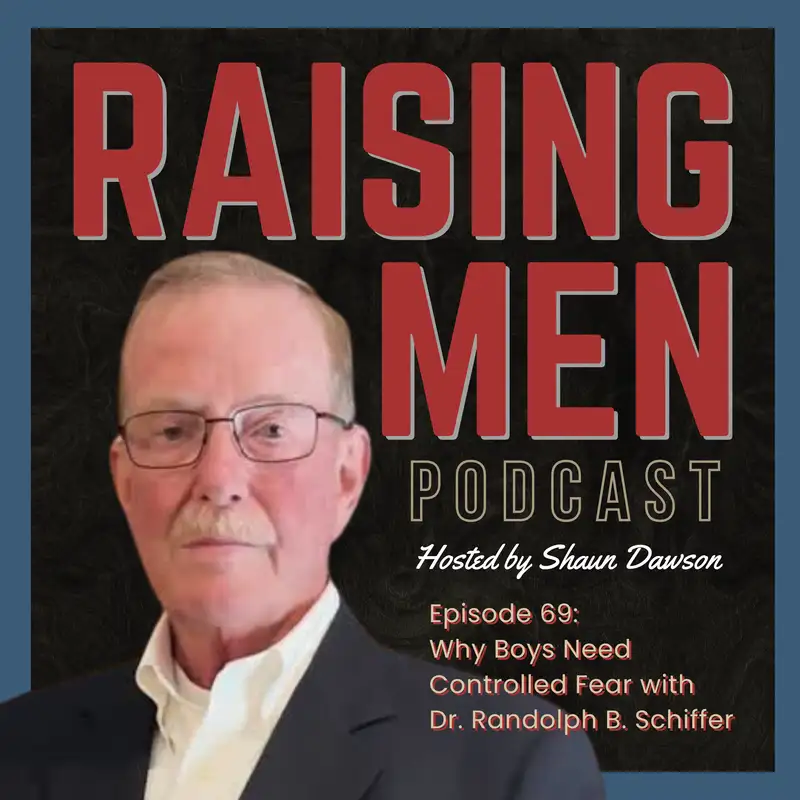
Why Boys Need Controlled Fear with Dr. Randolph B. Schiffer
In this episode of Raising Men, host Shaun Dawson welcomes Dr. Randolph B. Schiffer, a neurologist, former Marine infantry officer, and founding director of the Cleveland Clinic's Center for Brain Health. Together, they examine how modern parenting culture often protects children from discomfort, inadvertently creating a fearful society that avoids failure, responsibility, and risk. Dr. Schiffer explains that while fear is built into human biology, courage—the capacity to think, speak, and act despite fear—is a skill that must be learned. Drawing from his experiences in combat during Vietnam, decades in medicine, and creating stories for his young son during a battle with leukemia, Dr. Schiffer highlights the transformative power of storytelling. By internalizing heroic figures, children learn to process fear, build resilience, and cultivate self-curiosity. This conversation provides actionable insights on modeling emotional processing to raise courageous men.
Key Takeaways
- Courage Is Learned, Not Innate: While fear is hardwired into infants and young toddlers, courage—the capacity to think, speak, and act despite fear—must be actively learned and modeled by adults.
- Overprotection Creates Cultural Anxiety: Shielding children from upsetting experiences or fearful situations creates long-term societal anxiety, leading to a fear of failure, responsibility, and life itself.
- Dads Must Model Fear Processing: Parents often fail to talk explicitly about their own fears, missing a crucial opportunity to model for their children how to process and overcome frightening situations.
- Storytelling Serves as an Emotional Anchor: Fictional and heroic characters stay with children forever, giving them internal models to navigate moral conflict, pain, and adversity.
- Self-Curiosity Is the Ultimate Operating Principle: Developing self-curiosity about who we are and who we wish to be is the most valuable skill for raising men of character.
"Courage, the capacity to speak, think, and act in spite of our fears, that is not built in. We have no courageous infants or young toddlers that I ever saw. That has to be learned." - Dr. Randolph B. Schiffer
"If the lead figures, the heroes in the story, are shown to overcome fear, frustration... those figures from the story stay with them forever." - Dr. Randolph B. Schiffer
"Self-curiosity about who we are and who we wish to be—if that can be begun and nurtured and modeled, that's the most valuable skill of all." - Dr. Randolph B. Schiffer
CHAPTER MARKERS
00:00 - The distinction between innate fear and learned courage
00:37 - Introduction to Dr. Randolph B. Schiffer and brain health
01:58 - How overprotective parenting creates a fearful culture
05:45 - Navigating modern cultural expectations for young men
09:07 - Why parents must model processing their own fears
12:26 - Using storytelling to teach children resilience and values
14:12 - The neurological connection between memory and emotional arousal
18:47 - Redefining truth and lying in parental storytelling
22:52 - Lessons on internalized hero figures from combat in Vietnam
24:46 - Writing bedtime stories to help a son battle childhood leukemia
30:13 - The long-term psychological impact of war and medical service
32:05 - One key operating principle for raising men of courage
00:37 - Introduction to Dr. Randolph B. Schiffer and brain health
01:58 - How overprotective parenting creates a fearful culture
05:45 - Navigating modern cultural expectations for young men
09:07 - Why parents must model processing their own fears
12:26 - Using storytelling to teach children resilience and values
14:12 - The neurological connection between memory and emotional arousal
18:47 - Redefining truth and lying in parental storytelling
22:52 - Lessons on internalized hero figures from combat in Vietnam
24:46 - Writing bedtime stories to help a son battle childhood leukemia
30:13 - The long-term psychological impact of war and medical service
32:05 - One key operating principle for raising men of courage
Books, Links and Frameworks Mentioned
- Book: Bedtime Stories That Will Terrify Children by Dr. Randolph B. Schiffer https://www.amazon.com/dp/B0FVG5S1RH?lv=shuf&channelId=500&plpRedirect=mhFallback
- Literature/Pop Culture Reference: Frank Merriwell (fictional heroic athlete from Yale used as an internalized model of courage)
- Framework: Learned Courage Model (fear is an innate biological impulse, whereas courage requires adult modeling and intentional practice)
- Framework: Emotional Memory Colocation (the brain's memory and fear systems are co-located in the medial temporal lobes, making emotionally charged stories stick permanently)